
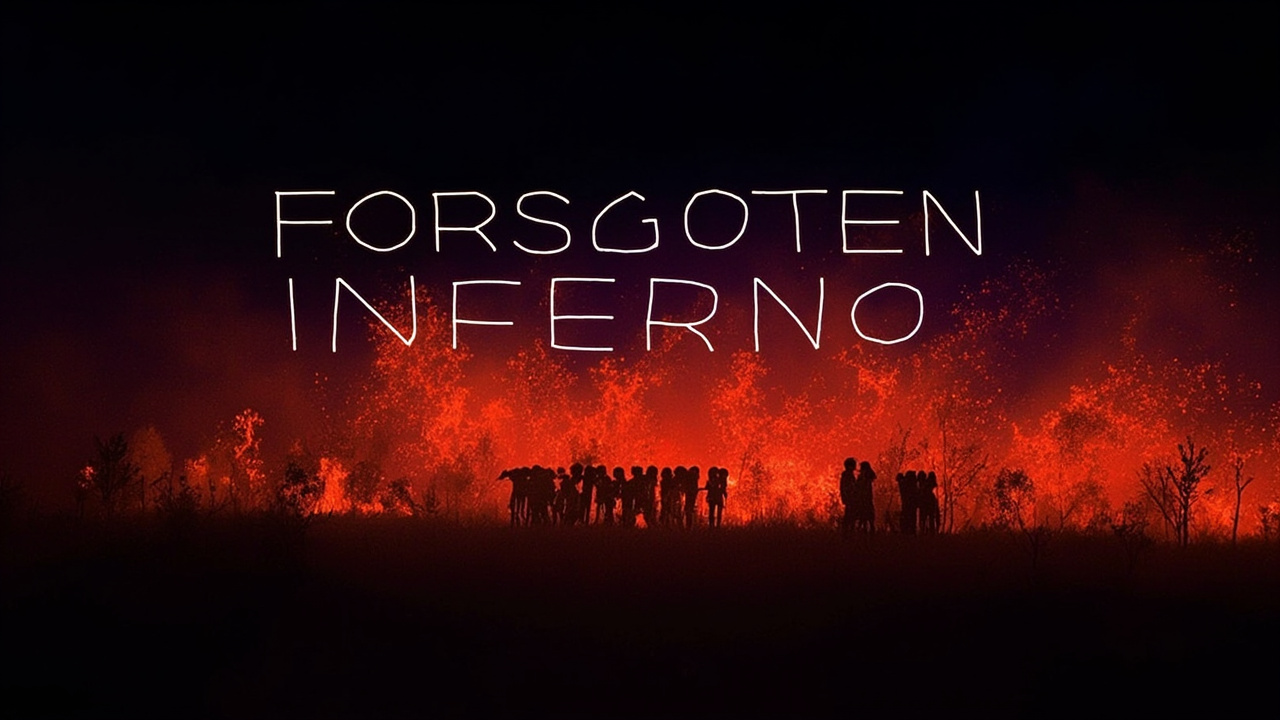
The Town That Vanished in Flames
Let me tell you about a tragedy that history forgot, and honestly, that fact kind of bothers me.
Picture this: it's October 1871, and you're in Peshtigo, Wisconsin. You've got about 1,700 neighbors, a river running through town, and you're living in what feels like the heart of the American wilderness. The lumber industry is booming—tall white pines stretch as far as you can see, and life seems pretty good.
Just one month later, nearly everyone you knew would be gone.
Two Fires, One Week, and a Tale of Unfair Memory
Here's what really gets me about this story: while the Great Chicago Fire of 1871 became forever etched into American consciousness (and honestly, who hasn't heard of it?), the Peshtigo Fire—which happened just a few hundred miles north and killed far more people—barely registered in the history books.
On October 8th, 1871, both blazes started within hours of each other. Chicago got all the attention because, well, it's Chicago. A major city. Newspapers covered it extensively. Survivors told their stories. Songs were written. The narrative stuck.
Meanwhile, up in the Wisconsin woods, a different kind of horror was unfolding.
What Actually Happened
The official story (based on survivor accounts) is that railroad workers clearing land accidentally started a brush fire. Now, this wouldn't have been a huge deal under normal circumstances—but nothing about October 1871 was normal.
The region had been suffering through a brutal drought for months. The U.S. National Weather Service notes that a persistent high-pressure system had been sitting over the area since July, essentially cooking the forests dry. Add in some extremely strong winds that picked up that afternoon, and that small brush fire became something else entirely.
Within hours, it was an inferno.
Survivor accounts describe a low rumbling that grew into "a heavy roar, variously described as the noise of thunder or a mighty wind." People ran to the river thinking they'd find safety—only to watch helplessly as the flames consumed everything they owned.
The True Death Toll
Here's where it gets really heartbreaking.
While Chicago's death toll was around 300 people, the Peshtigo Fire killed somewhere between 1,200 and 2,500 people. In a town of fewer than 2,000 residents. Let that sink in for a moment.
Many bodies were so badly burned they couldn't even be identified. Families were interred in mass graves because there was simply no other way. The devastation was almost incomprehensible.
The fire destroyed 12 different communities and burned across 1.875 million acres. When it was finally over on October 10th, smoke hung over the region for weeks.
The Legacy Nobody Talks About
Here's what I find fascinating: despite being largely forgotten, the Peshtigo Fire actually changed America in profound ways.
It exposed the deadly consequences of unregulated logging. Lumber companies had been stripping the forests without any concern for fire prevention, leaving behind massive piles of flammable debris. After Peshtigo, people started paying attention to these practices.
Even more significantly, this tragedy became a rallying cry for conservationists who were pushing for federal protection of American forests. These advocates lobbied hard, and their efforts eventually led to the creation of the U.S. Forest Service in 1905—partly sparked by the realization that our forests needed responsible management.
Why This Story Matters Today
With wildfires becoming increasingly devastating due to climate change, I think we should remember Peshtigo. Not just as a historical curiosity, but as a reminder of how quickly disaster can strike when dry conditions meet careless practices.
The next time you hear about a major wildfire on the news, think about those 1,200 to 2,500 people who died in the woods of Wisconsin while the rest of the country was focused on a city burning 300 miles away.
Sometimes history's most important lessons are the ones we almost forgot entirely.