
We Have a Storage Problem (And It's Getting Worse)
Let's talk about something that keeps IT professionals up at night: data storage. You know how your phone storage fills up seemingly overnight? Well, multiply that by about a trillion, and you'll start to understand the scale of our global data crisis.
By 2040, we're looking at storing 350 zettabytes of information. To put that in perspective, that's like having every grain of sand on Earth represent a gigabyte of data. It's mind-boggling.
But here's the kicker — all our current storage methods are basically digital mayflies. Hard drives die, SSDs wear out, and even those fancy enterprise storage systems need constant babysitting. Every few years, we have to play an expensive game of digital musical chairs, migrating data from old storage to new storage before the old stuff craps out.
Enter the Glass Solution (No, Seriously)
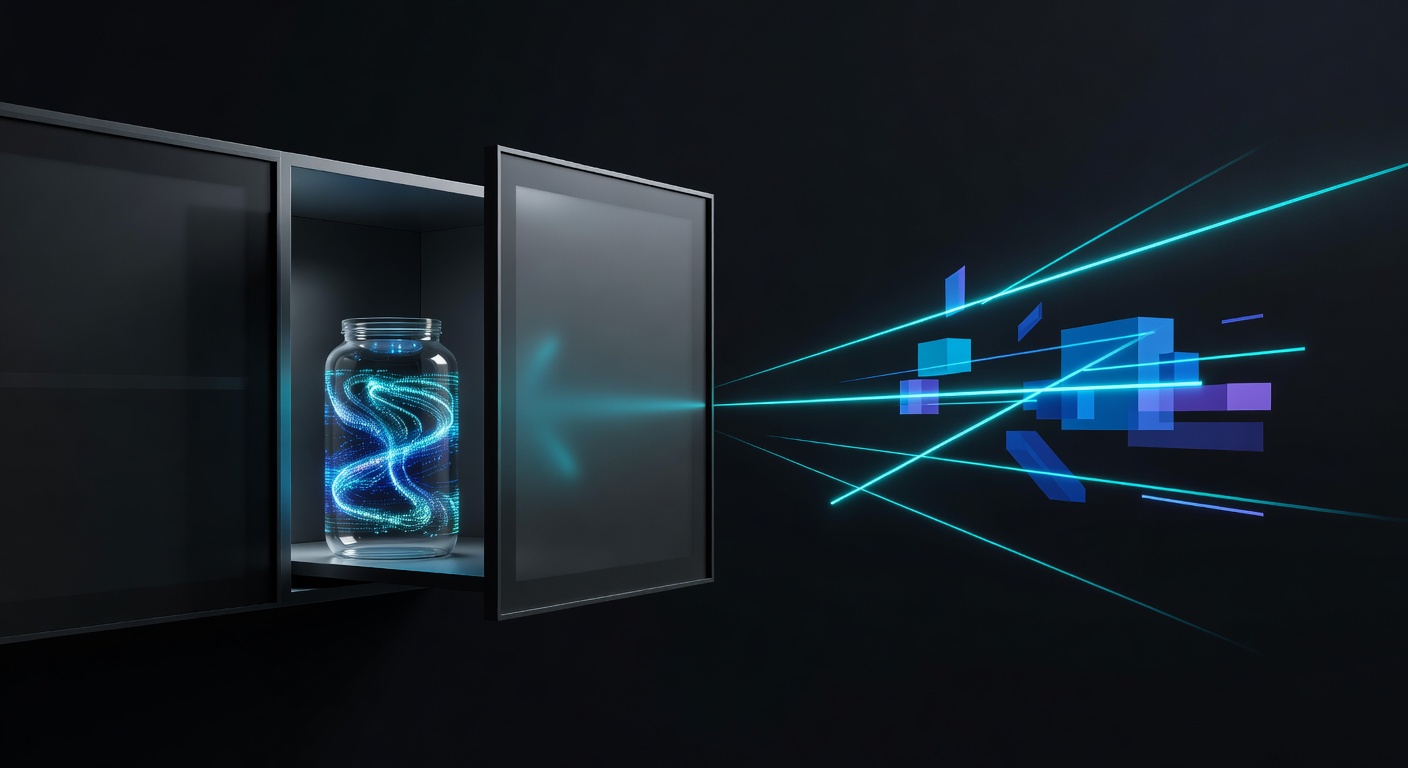
Microsoft's research team has been cooking up something that sounds straight out of science fiction: storing data in glass using lasers. And I'm not talking about etching your initials into a window — this is next-level stuff.
They're using something called femtosecond lasers (think of them as ridiculously fast light pulses) to write information directly into glass wafers. The result? Storage that could outlast civilizations. We're talking about data that might still be readable when your great-great-great (add about 300 more "greats") grandchildren are around.
How Does This Magic Work?
The technical details are pretty wild. These researchers figured out how to create what they call "voxels" — basically 3D pixels inside the glass. Think of it like writing in three dimensions instead of just scribbling on a surface.
They use two different types of these voxels:
- Phase voxels that change how light bends through the glass
- Birefringent voxels that split light rays like a prism
The really clever part? They can stack over 300 layers of data in a single piece of glass. It's like having a 300-story data skyscraper in something the size of a coaster.
The Numbers Are Insane
Here's what blew my mind: they managed to cram 4.8 terabytes of data into a single 120mm square glass plate. That's enough to store about 1,200 movies in HD quality, all in something roughly the size of a CD.
And get this — the data density they achieved is 1.59 gigabits per cubic millimeter. To put that in everyday terms, you could theoretically store your entire digital life in a piece of glass smaller than a sugar cube.
Why Glass Is Actually Genius
You might be wondering, "Why glass?" Well, glass is basically the Nokia 3310 of materials — it's nearly indestructible under normal conditions. It doesn't care about:
- Moisture (your basement flood won't kill it)
- Temperature swings (from freezing to desert heat, no problem)
- Electromagnetic interference (solar flares? Whatever.)
- Time (seriously, we have glass artifacts from thousands of years ago)
The researchers ran accelerated aging tests that suggest data stored this way could survive for over 10,000 years at room temperature. That means data written today could theoretically outlast the pyramids.
The Reality Check
Before you start planning to back up your photo collection on glass coasters, there are some practical hurdles. The pure silica glass that works best is expensive (shocking, I know). They mention borosilicate glass as a cheaper alternative, but we're still not talking about something you'll pick up at Best Buy next weekend.
The writing speed is also currently limited to about 25.6 megabits per second per laser beam. That's not terrible, but it's not going to replace your SSD for everyday computing anytime soon.
What This Means for the Future
I think this technology represents something bigger than just a new storage method — it's a potential solution to digital preservation. Think about all the data we're losing right now because old formats become unreadable or storage media degrades.
Libraries, museums, governments, and corporations all struggle with how to preserve digital information for future generations. This glass storage technology could be the answer to creating truly permanent digital archives.
Imagine storing the entire contents of the Library of Congress, Wikipedia, and every scientific paper ever written in a small room filled with glass plates. That's the kind of future this technology could enable.
My Take
While this won't replace your laptop's SSD anytime soon, I'm genuinely excited about the possibilities. We're living through an unprecedented explosion of human knowledge and creativity, and most of it exists only in digital form. Having a way to preserve that for millennia feels profoundly important.
Sure, the technology isn't ready for prime time yet, but the proof of concept is solid. Microsoft has shown they can write data, store it reliably, and read it back accurately. The rest is just engineering and economics.
Who knows? Maybe someday archaeologists will be deciphering glass plates from our era, marveling at our memes and TikTok videos preserved for eternity. Now that's a time capsule worth making.
Source: https://www.popularmechanics.com/science/a70487360/scientists-found-a-way-to-store-all-of-our-data-on-pieces-of-glass-forever-almost