
The blog content with markdown formatting
Darwin Thought He Knew These Islands — He Was Wrong
Okay, I have to admit — every time I think we've figured out everything about evolution, the Galápagos Islands prove us wrong. Just when scientists pat themselves on the back, these volcanic specks of land in the Pacific Ocean whisper, "Hold my beer."
If you've ever studied evolution in school, you probably remember Darwin's famous finches. Those little birds with different beak shapes that inspired his theory of natural selection. Well, turns out the Galápagos have another trick up their sleeve, and it's honestly one of the coolest things I've read this year.
Meet the Galápagos Giant Daisies — Nature's Shape-Shifters
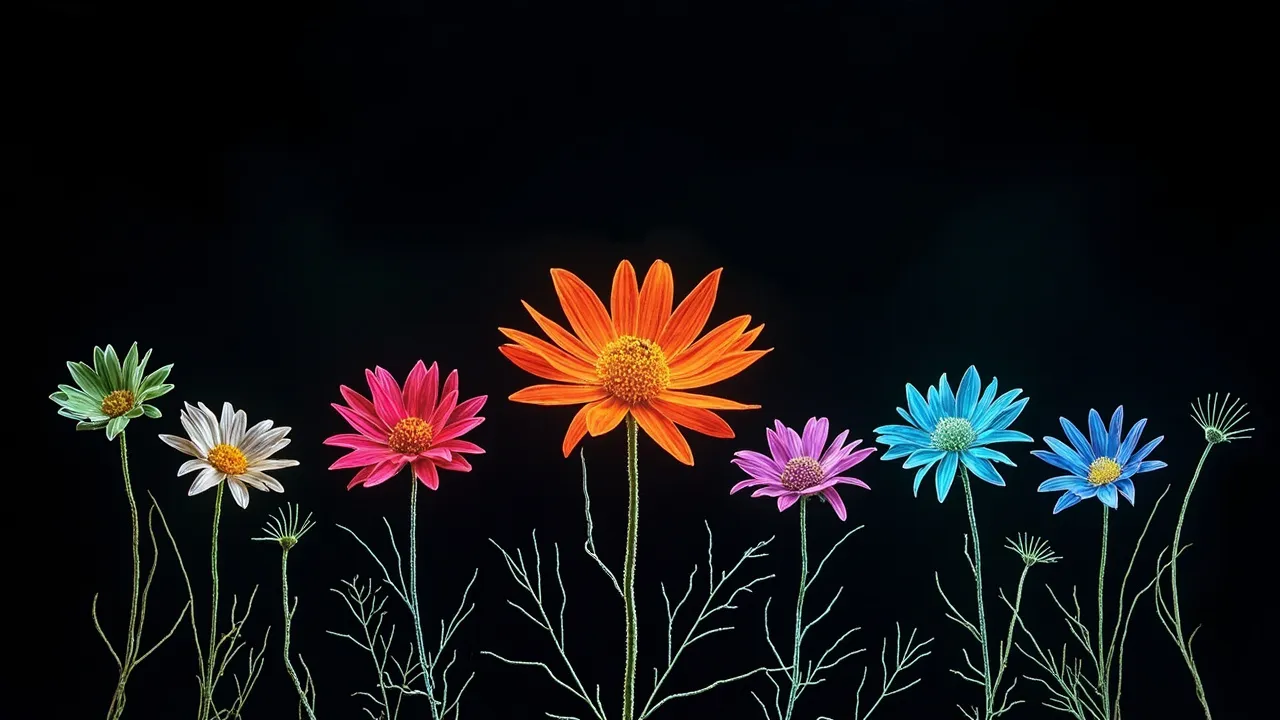
Scientists recently took a deep dive into a group of plants called Scalesia, which locals call the Galápagos giant daisies. And here's where it gets interesting.
These plants arrived on the islands from mainland South America — just like Darwin's finches did. But here's the wild part: every single Scalesia species we see today evolved within the last million years. In evolutionary terms? That's basically yesterday.
Now, here's what really caught my attention. These plants look ridiculously different from each other. Some are short shrubs hugging the ground, others grow into tall trees. But the most striking difference is their leaves.
Some have big, smooth leaves. Others? Deeply lobed leaves with intricate, serrated edges that almost look like little works of art. Scientists think those fancy dissected leaves help the plants survive in hot, dry conditions by losing less water and releasing heat more efficiently. Pretty clever, right?
But Here's the Really Crazy Part
When researchers sequenced the complete genomes of every single Scalesia species (yes, all of them), they discovered something that completely flipped their expectations.
Those lobed leaves? They evolved independently multiple times in different branches of the family tree. That's already cool — evolution solving the same problem in different places. But wait, it gets better.
Each time these plants "decided" to grow lobed leaves, they did it through completely different genes. Not just variations of the same gene — totally different parts of their genetic toolkit.
Think of it like this: imagine you need to build a faster car, and one team figures out how to upgrade the engine, while another team achieves the same goal by redesigning the aerodynamics, while a third team just tweaks the wheels. Different methods, same result.
Evolution Isn't Following a Script
This is what's so exciting about this discovery. Scientists used to think complex traits like leaf shapes were controlled by specific "master genes" — kind of like a genetic on/off switch. But this research shows evolution is way more creative than that.
Instead of relying on one genetic trick, these plants modify different parts of a whole network of interacting genes. And somehow, those separate changes all produce similar physical results. It's like evolution has multiple keys that can unlock the same adaptation.
This process has a name — parallel evolution — and it means nature is even more resourceful than we imagined. Given the right environmental pressure, life finds a way. Often, it finds many ways.
The Islands Aren't Done Yet
Here's what really got me thinking. The researchers say their genetic data suggests the Scalesia story isn't over. Many populations show huge genetic differences from each other and have been isolated for long periods.
Translation? New species might literally be forming right now as we speak. Scientists may not have formally recognized them yet, but these plants are in the middle of becoming something new.
This means conservation efforts might need to change. If each isolated population is potentially on its own evolutionary path, treating them all the same might not make sense anymore. Each one could be precious and unique.
Why This Matters
I don't know about you, but I find this absolutely thrilling. The Galápagos Islands were already the most famous laboratory of evolution on Earth. Darwin visited them in 1835, collected some birds, and fundamentally changed how we understand life on this planet.
And here we are, nearly 200 years later, and these same islands are still surprising us. Still revealing new biology. Still teaching us that nature is more inventive, more flexible, and more wonderful than we ever imagined.
Sometimes I wonder what Darwin would think if he could see this research. Would he be amazed? Confused? Probably both, honestly.
One thing's for sure: evolution isn't just something that happened in the past. It's happening right now, on these islands and everywhere else life exists. We're just lucky enough to be watching.