
The Day Everything Changed
Imagine waking up one morning and learning that your town is literally burning from the inside out. That's essentially what happened to the residents of Centralia, Pennsylvania, though it took a while for the full horror to sink in.
The story begins with good intentions, which—as we know—can pave roads to pretty dark places. In May 1962, the town's volunteer fire department wanted to tackle a nuisance: an abandoned mine that had been converted into a dumping ground. It was smelly, it was attracting pests, and it needed to go. So they decided to burn it out.
Sounds reasonable, right? Wrong.
How One Fire Became a Civilization-Ending Catastrophe
What the firefighters didn't know—and what nobody had bothered to document—was that there was a 15-foot hole beneath that trash dump that connected directly to the underground coal seams. Think of it like accidentally punching a hole in the hull of a ship. Once that fire found its way into those tunnels, it was game over.
At first, nobody panicked. Life continued on the surface. Shops stayed open. Kids went to school. People had no idea their town was literally becoming an inferno below their feet. But by August, miners started noticing something terrifying: carbon monoxide was creeping into the mineshafts. That's when everyone realized this wasn't a small problem—it was existential.
The Slow-Motion Apocalypse
Here's where things get genuinely dystopian. For the next two decades, the fire just kept burning while residents watched helplessly. The government tried to stop it. Multiple times. They threw money at it, they deployed engineers, they attempted containment. Nothing worked.
By 1979, a gas station owner decided to check on their underground storage tanks and discovered something alarming: the gasoline was nearly 90 degrees Fahrenheit hotter than it should have been. Meanwhile, state officials were taking temperature readings that showed areas reaching 1,300 degrees Fahrenheit.
People started getting sick. Burning eyes. Persistent headaches. Respiratory problems. The ground beneath their feet was literally trying to kill them.
The Moment It Became Undeniable
In 1981, a 13-year-old kid named Todd Domboski was playing in his grandmother's backyard when the earth decided to swallow him whole. A 250-foot sinkhole just opened up. He managed to grab some roots and hang on, but he was suspended over absolute darkness and smoke so thick he couldn't see anything. The kid basically stared death in the face and lived to tell about it.
That moment crystallized everything. This wasn't theoretical anymore. This was real, immediate, and dangerous.
The Price of Giving Up
Here's the part that really gets me: When officials finally calculated the cost to actually extinguish the fire, they came up with a number that made them all sit down. Around $663 million in 1984 money (that's roughly $2.2 billion today). That was considered impossibly expensive.
So instead, they did the only thing they could afford: they abandoned the town.
The state essentially wrote off Centralia. They bought out residents and relocated them. By 2013, only seven people were allowed to stay. When they eventually pass, their properties will automatically become state property. It's bleak, but it's what happens when you can't fight the fire anymore.
The World's Slowest Disaster
Today, Centralia is a genuine ghost town. The fire is roughly six square miles in size and growing at 50 to 75 feet every single year. Scientists estimate it'll keep burning for another 250 years. That means someone born today could have great-great-great-grandchildren who would still need to avoid playing in this haunted landscape.
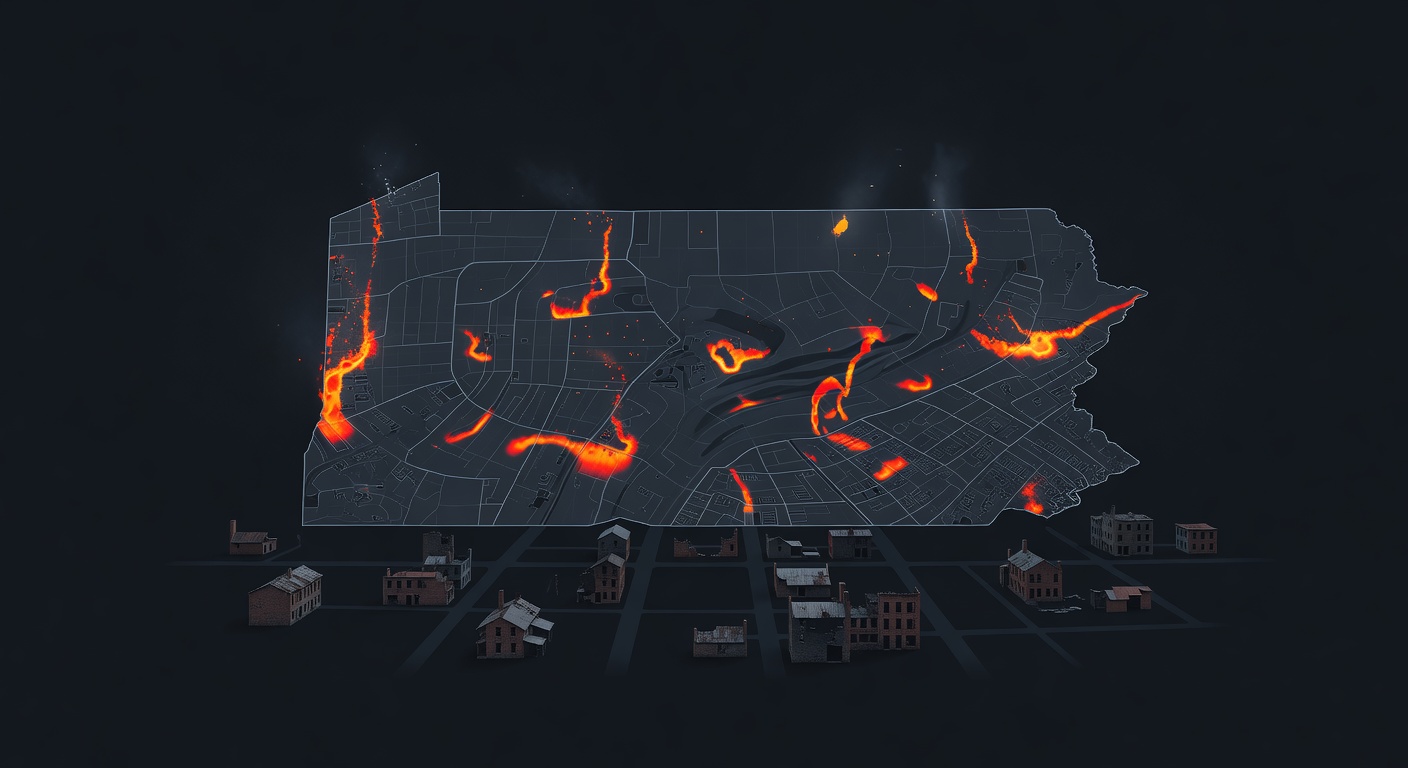
And here's the kicker: Centralia isn't even alone. Pennsylvania has around 40 active coal mine fires. There are thousands more burning throughout the world right now, threatening other communities.
What This Actually Means
This isn't just a wild historical anecdote. Centralia is a warning wrapped in concrete and ash. It shows what happens when we assume human ingenuity can always fix our mistakes, when we underestimate geological forces, and when we cut corners on regulation and documentation.
One bad decision in 1962. One undocumented hole. And an entire community ceases to exist.
The coal industry created enormous wealth and powered America's rise, but places like Centralia show the hidden costs—not just to our climate, but to the actual people living above these mines. Sometimes the bill comes due in the most literal way possible: the ground under your house catches fire, and there's nothing anyone can do about it.