
The Glaciers Are Talking — And Scientists Are Finally Listening
Picture this: You're standing on a massive glacier in Antarctica, the coldest, windiest place on Earth. It's dead silent, right? Just you, miles of ice, and that eerie polar quiet.
Well, it turns out that silence is an illusion. Deep beneath your feet, the ice is constantly shifting, cracking, and — believe it or not — earthquaking.
Yes, you read that right. glaciers can have earthquakes too.
What in the World Is a Glacial Earthquake?
Let me break this down in the simplest way possible. Regular earthquakes happen when tectonic plates in the Earth's crust suddenly slip and grind against each other. They're violent, they shake the ground, and they can devastate entire cities.
Glacial earthquakes are different — and honestly, they're kind of beautiful in a terrifying way.
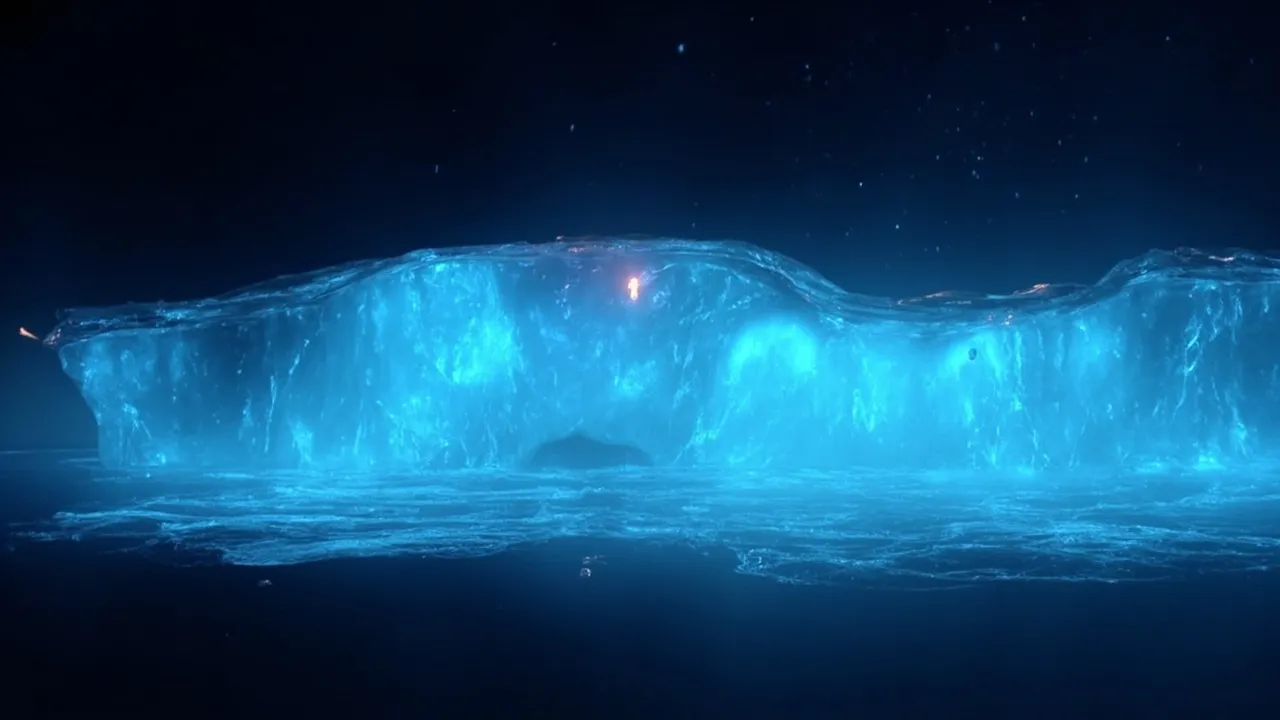
These quakes happen when enormous chunks of ice break off the end of a glacier and tumble into the ocean. When these icebergs flip over (scientists call it "capsizing"), they crash into the glacier they came from with tremendous force. That collision sends vibrations through the ground that can travel thousands of miles.
Here's the weird part: these glacial earthquakes don't create those high-frequency waves that our usual earthquake-detection equipment picks up. That's why scientists didn't even know they existed until about 20 years ago — we simply weren't listening for the right kind of signals.
The Doomsday Glacier Has Something to Tell Us
Now here's where it gets really interesting. A new study has discovered more than 360 of these hidden glacial earthquakes in Antarctica, and most of them are coming from one particular glacier that scientists have been watching with growing concern.
The Thwaites Glacier.
If you haven't heard of it yet, let me introduce you to what might be the most alarming piece of ice on Earth. Thwaites is sometimes called the "Doomsday Glacier" because if it collapses completely, it would raise global sea levels by about 3 meters. That's enough to flood coastal cities from Miami to Mumbai.
And here's the really unsettling part: Thwaites sits on unstable ground. Its base actually rests below sea level, which means warm ocean water could potentially eat it away from underneath. Scientists have been worried about this glacier for years, but we haven't had a clear picture of what's actually happening there.
Until now.
The Numbers Are Surprising
The study found that roughly two-thirds of all detected glacial earthquakes in Antarctica were happening at Thwaites — 245 out of 362 events between 2010 and 2023. That's a lot of icebergs flipping and crashing.
But here's what surprised the researchers most: these earthquakes don't seem to follow the same patterns as similar events in Greenland.
In Greenland, glacial earthquakes tend to happen more in late summer when temperatures warm up and glaciers melt faster. It's a seasonal thing, kind of like how some animals hibernate in winter and come out in spring.
At Thwaites, though? The biggest burst of seismic activity happened between 2018 and 2020, and satellite data confirmed that the glacier's floating ice "tongue" was actually speeding up during that period. Something was pushing it faster toward the sea, and that something appears to be related to ocean conditions rather than air temperature.
That's a problem because ocean conditions are harder to study and predict. We're talking about water circulation patterns and temperature changes far below the surface — variables that are much more difficult to monitor than a simple thermometer reading.
Why This Matters (A Lot)
Let me be honest with you: I found this research genuinely unsettling, and then I found it hopeful.
Unsettling because it shows that Thwaites is more active than we realized. All those icebergs calving off and flipping over? That's the glacier shedding mass at a significant rate. The more active it is, the more we should be paying attention.
But hopeful because now we have a new way to listen to what's happening. Seismic monitoring could become a powerful tool for tracking glacier behavior in real-time. Instead of relying only on satellite images (which can be blocked by clouds and polar darkness), scientists can literally hear the glacier working.
Think about it: every time a chunk of ice breaks off and capsizes, it's sending us a message. "Hey, something's happening here." The question is whether we're smart enough to listen.
There's Still a Mystery
The researchers also detected seismic events near another glacier called Pine Island, but here's the puzzle: those quakes were happening 60 to 80 kilometers away from the ocean. That's way too far from the water's edge to be caused by flipping icebergs.
So what are they?
The honest answer is: we don't know yet. And I think that's worth celebrating, actually. Science works by finding questions we haven't answered yet. Those mysterious signals at Pine Island are a mystery waiting to be solved, and personally, I can't wait to see what researchers discover next.
The Big Picture
Here's what I keep thinking about: we're living in an era where we're finally developing the technology and methods to understand our planet better. Seismic networks, satellite observations, ocean sensors — these tools are giving us eyes and ears in places humans could never survive.
The Doomsday Glacier isn't going to collapse tomorrow. Scientists estimate we have centuries to figure this out. But every piece of data we collect helps us understand the risks better and prepare accordingly.
The glaciers are talking. Thanks to this research, we're finally learning their language.
Source: ScienceDaily — Hundreds of hidden earthquakes found at Antarctica's Doomsday Glacier