
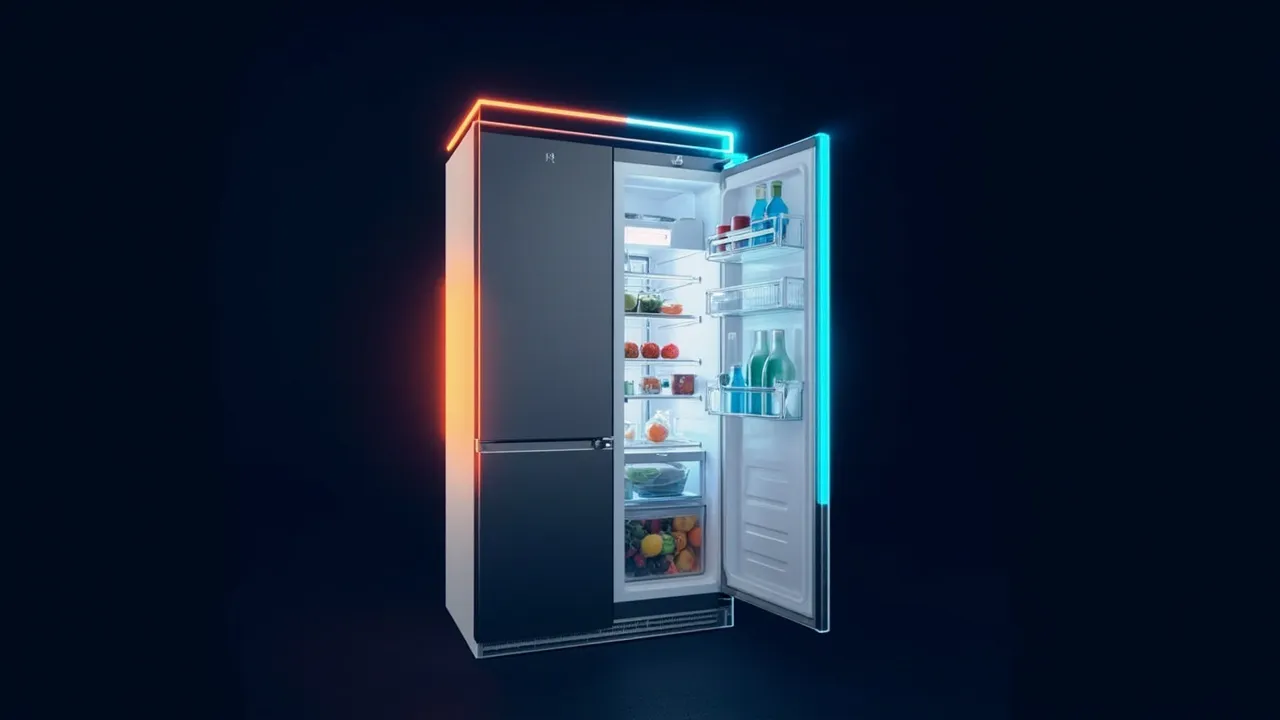
Imagine walking into your local grocery store early in the morning, expecting a crisp, cool aisle of frozen peas and ice cream, only to be met with a wall of humid, 50°C (122°F) heat.
That was the reality for workers at hundreds of supermarkets across France last week. They didn't walk into a heatwave; they walked into a hack.
The "Defrost" Disaster
In a move that is as clever as it is devastating, hackers managed to break into the digital controllers that manage supermarket refrigeration. Instead of stealing credit card numbers or passwords (which are usually well-protected), these hackers went straight for the temperature settings.
They essentially told the fridges: "Hey, stop cooling and start defrosting!"
The result? Temperatures soared, food spoiled, and in some extreme cases, the sudden heat caused small fires. It’s a bizarre way to cause millions of dollars in damage, but it highlights a major lesson in cybersecurity: The most obvious target isn't always the most guarded.
Why was the fridge even online?
You might be wondering, "Why on earth is a refrigerator connected to the internet?"
It’s actually a very smart move for efficiency. By connecting these systems to the web, technicians can monitor cooling levels remotely without having to drive to every single store.
However, there was a massive "oops" moment here. Many of the controllers were sitting out on the public internet without a VPN (a digital security shield) to protect them. Some of the hardware was even "end-of-life," meaning it was older tech that wasn't getting the latest security updates. It’s a classic case of "smart" technology meeting "old" security.
The Silver Lining: Fridges as "Cold Batteries"
While this hack was a headache, it highlights why we are working so hard to make these machines "smart" in the first place.
Supermarkets are massive energy hogs. In the U.S., refrigeration can account for up to 60% of a supermarket's energy use! Because of this, scientists are playing around with a fascinating idea: using fridges as "cold batteries."
Here’s the concept:
- When electricity is cheap and plentiful (like when the sun is shining or the wind is blowing), we run the fridges extra hard to get them extra cold.
- When the power grid is stressed and electricity is expensive, we momentarily turn the fridges off.
- Because the food and the air inside have "thermal mass" (they hold onto cold well), the food stays safe for a while even without power.
Companies like Tesco in the U.K. are already testing this to help balance the national power grid. It’s a brilliant way to save money and help the planet, but as the French incident shows, we need to make sure our "smart" grid is a "secure" grid first.
My Takeaway
This story is a perfect example of the "Internet of Things" (IoT) growing faster than our ability to secure it. We are connecting everything—from our lightbulbs to our milk cartons—to the web to make life more efficient. But as we saw in France, if we don't lock the digital door, a hacker can turn your frozen pizza into a lukewarm mess with just a few clicks.