
You know those stories that restore your faith in humanity? This is one of them.
Picture this: It's 1999, and paleontologist Dr. Richard Kőhler is exploring a remote island off the coast of New Zealand. He spots something extraordinary embedded in a nearly inaccessible cliff face — a fossil fish so remarkably preserved that it's essentially a 3D mummy of something ancient.
But here's the thing about fossils. It's not just about what you find. It's about knowing exactly where and how you found it. The geological context — the layer of rock, the surrounding materials, the precise location — that's what transforms a cool bone into a scientific time capsule.
The Ladder Adventure
To reach this fossil, Richard had to walk 3 kilometers back to his lodging, grab a ladder, and haul it back up that cliff. Then he carefully extracted the specimen in several massive, heavy blocks. I don't know about you, but I'm already impressed by his dedication.
Once the fossil reached the University of Otago, experts immediately recognized something special. Professor Daphne Lee and the late Professor Ewan Fordyce knew right away: this was unlike any fish fossil previously found in New Zealand.
A Tarpon From the Dawn of Time
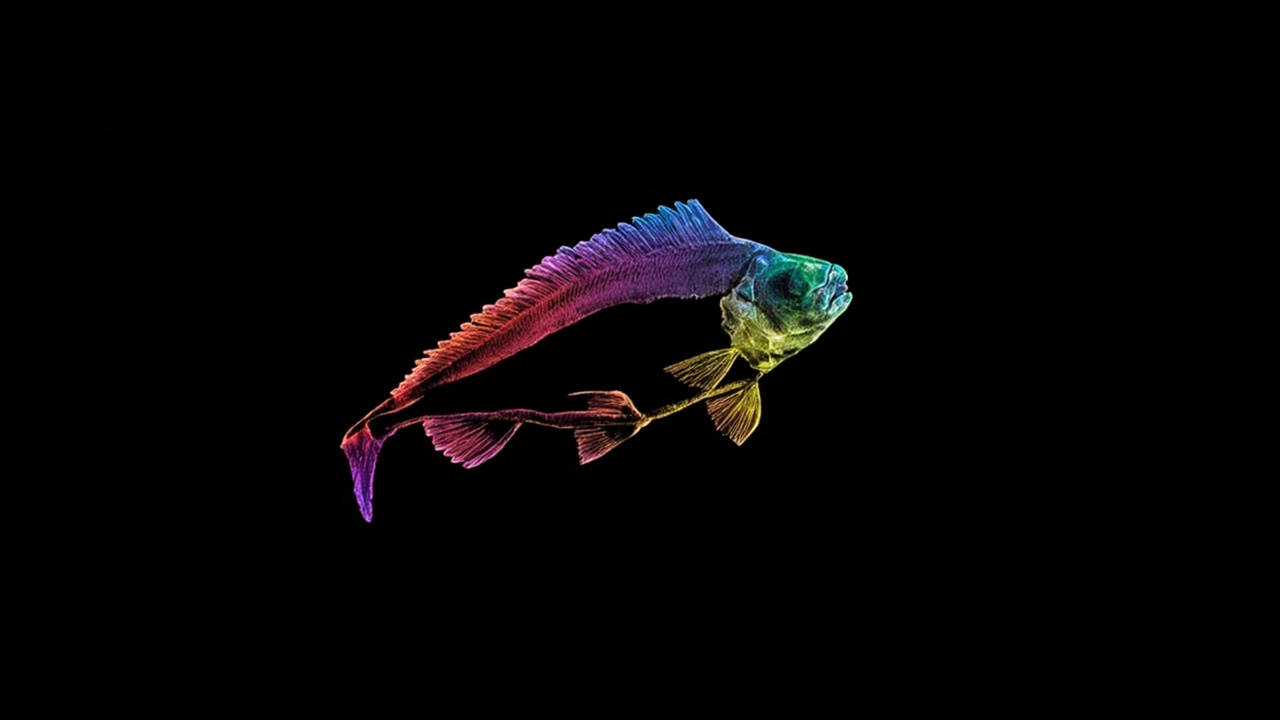
The fossil turned out to be a tarpon — a large predatory fish that would have ruled the waters around what was then a much warmer New Zealand, some 55 million years ago. At 1.2 meters long with powerful fins, thick scales, and a mouth designed for swallowing prey whole, this was definitely not a fish you'd want to encounter while swimming.
What makes it so significant? Researchers say it's the first evidence of a high-level predatory bony fish from that particular geological period in the region. It's like finding the apex predator of an ancient ecosystem.
The Missing Piece of the Puzzle
Here's where the story gets tricky. By the time researchers were ready to formally describe and name this species, Richard had passed away. And without his field notes — the exact details of where the fossil was discovered — they hit a wall.
You see, in paleontology, location data isn't just administrative details. It's essential for understanding the fossil's place in geological time and the environment it lived in. Without that information, the paper couldn't be completed.
For years, the project sat in limbo. A draft existed, but it was stuck.
A Happy Discovery
Then, in early 2025, something wonderful happened. One of Richard's children was studying at the University of Otago and stopped by the Department of Geology, hoping to find old photographs of their father.
During that visit, Richard's family made the decision to donate his field notebooks — including the ones from that original Pitt Island expedition.
Can you imagine opening those pages and realizing you're holding the key to solving a decades-old scientific puzzle?
Those notebooks provided exactly what the researchers needed. With the specific locality information restored, they could finally complete the documentation and publish their findings.
A Fitting Tribute
The fossil has now been officially named Ikawaihere kőhleri — honoring both Richard Kőhler and the location where it was found. It's described as one of the most important and impressive fossils ever recovered from New Zealand.
What's beautiful about this story is how it demonstrates the collaborative nature of science. Richard found it. Ewan Fordyce and Daphne Lee recognized its significance. Andrew Grebneff prepared it with painstaking care. Professor Mike Gottfried from Michigan State University helped analyze it. And in the end, Richard's own family ensured his work would be completed.
It's a reminder that scientific discovery isn't just about the "aha!" moment in the field. It's about preserving knowledge, passing it forward, and sometimes, the people who come after us finish what we started.
Sometimes the most important discoveries aren't in the rock at all — they're in a dusty notebook waiting to be found.