
The Dirt Under Our Feet Could Be Worth More Than Gold
Imagine discovering that the thing your country desperately needs to stay competitive militarily is already here—just buried in waste. That's essentially the plot of a real-life project happening right now, and it's way more interesting than it sounds.
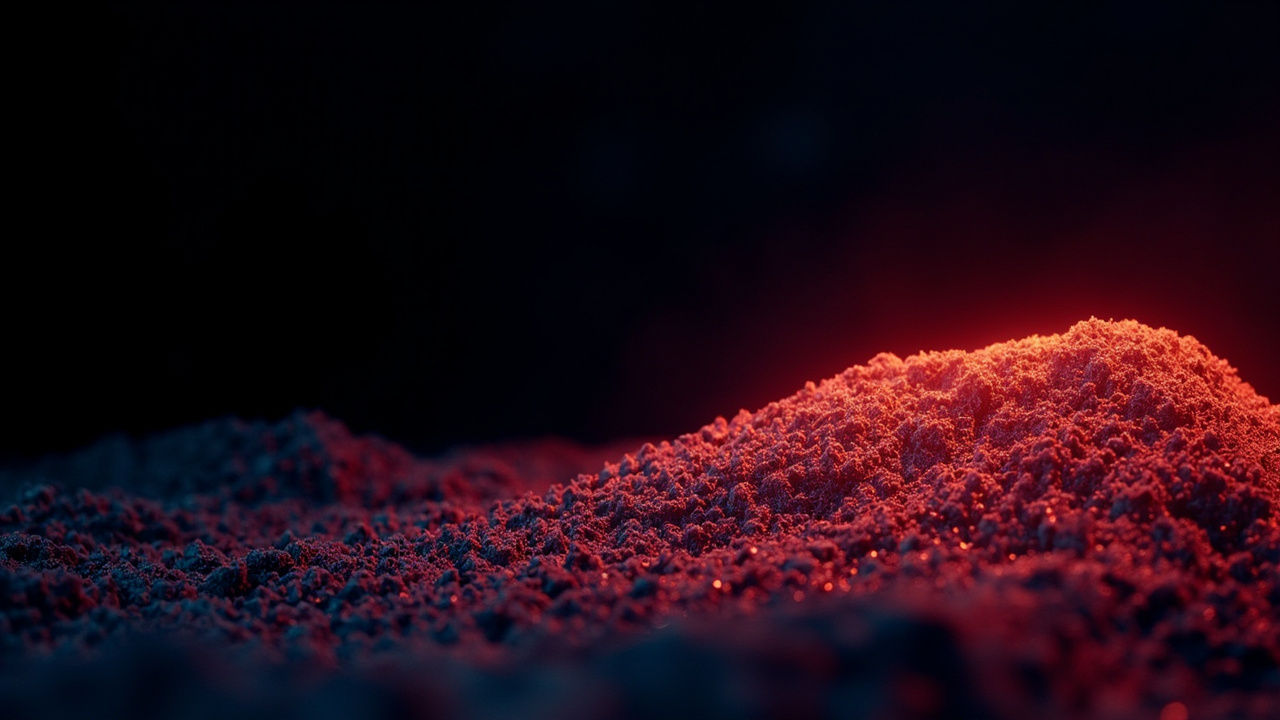
Red mud. That's the everyday name for bauxite residue, the crusty, rusty-colored leftovers from aluminum production. For years, it's been treated as junk. Factories produce millions of tons annually, and mostly they just... get rid of it. Environmental headaches, nasty heavy metals, generally something nobody wants near their backyard.
But what if I told you that hidden inside all that discarded muck are two metals that America desperately needs, and we're currently dependent on other countries—especially China—to get them?
Meet Gallium and Scandium: The Metals Running Modern Warfare
Let's talk about what these metals actually do, because this is where it gets genuinely fascinating.
Gallium is basically the invisible backbone of modern technology. It's in your phone's touchscreen, solar panels, satellites, and—this is the important part—the guidance systems and semiconductors that make hypersonic missiles work. We're not talking about some niche military component here. An estimated 78 percent of weapons the Defense Department produces rely on gallium as a critical ingredient.
Scandium is the cool one. Scientists literally call it "the miracle metal" because it can bond with other metals to create specialized alloys that aerospace manufacturers absolutely love. Want to build fighter jets, military landing gear, or precision-guided missiles? Scandium is probably involved.
Here's the kicker: America doesn't mine either of these metals domestically. We import everything. And when China decided in 2023 to start restricting exports and eventually cut off access completely, it exposed a massive vulnerability in our military supply chain. China now controls about 99 percent of global gallium production—not because they have tons of it lying around, but because they've strategically crushed competition for years to create a monopoly.
The Red Mud Project That Could Change Everything
This is where the story gets optimistic. A Utah-based company called U.S. Critical Materials partnered with Columbia University in 2026 to launch something called the "Mud to Metal" project. The goal is straightforward: figure out how to extract gallium and scandium from red mud at scale.
Here's what they're trying to do: take all that industrial waste, dissolve it using special chemical solutions, and separate out the valuable metals hiding inside. It sounds simple, but it's not. Gadikota, the Columbia professor leading the research, explains that you can't just look at red mud and tell how much metal it contains. The metals are invisible to the naked eye. You have to go through a painstaking, multi-step process to find them.
And here's the really good news: there's a LOT of red mud in America. Between 30 and 50 million metric tons are sitting around the country right now, just waiting to be processed. Even better, America's domestic gallium needs fall between 20 and 30 million metric tons annually. The math works out. We could potentially solve this problem ourselves.
Why This Actually Matters (Beyond the Military Stuff)
I know it's tempting to dismiss this as just another military-industrial news story, but the implications are bigger than that.
Rare earth metals power the modern world. They're in renewable energy technology, advanced electronics, precision manufacturing, and yes, military applications. When one country controls the supply, it controls leverage. China realized this years ago, which is why they've been tightening their grip on mineral exports.
The lesson here is that self-sufficiency matters. It's not about isolationism or protectionism—it's about making sure your country isn't held hostage by geopolitical rivals over essential resources. Right now, America is learning this lesson the hard way.
The Trump administration has already started responding by reopening old mines (like a historic antimony mine in Idaho) and strengthening mineral partnerships with allies like Australia. But the red mud project represents something even better: turning our own waste into resources.
The Bottom Line
There's something deeply satisfying about this whole situation, if you think about it. We've been throwing away the exact materials we need to maintain technological leadership. The solution was literally piling up in warehouses and industrial sites across the country.
If the "Mud to Metal" project succeeds, it could be a game-changer for American manufacturing independence. It's the kind of innovation that takes a problem—industrial waste—and converts it into an advantage.
Plus, it's a pretty elegant reminder that sometimes the answers we're looking for have been sitting right under our noses the whole time. We just needed to look at the waste heap differently.