
markdown formatted content with headings
The Routine That Became a Death Trap
Let me tell you about something that still haunts me every time I step into an elevator.
Picture this: It's 1995, deep underground in a South African gold mine. We're talking over a mile down—about 5,500 feet below the surface, on what's called the 56th level. One hundred and four miners have just finished their shift. They're crowded into an elevator cage, ready to ride up toward daylight, toward their families, toward another day survived.
They'd done this hundreds of times. It was routine. Just another ride home.
But something was already moving toward them in the darkness. Something that shouldn't have been there at all.
The Machine That Shouldn't Have Moved
Here's where it gets truly terrifying.
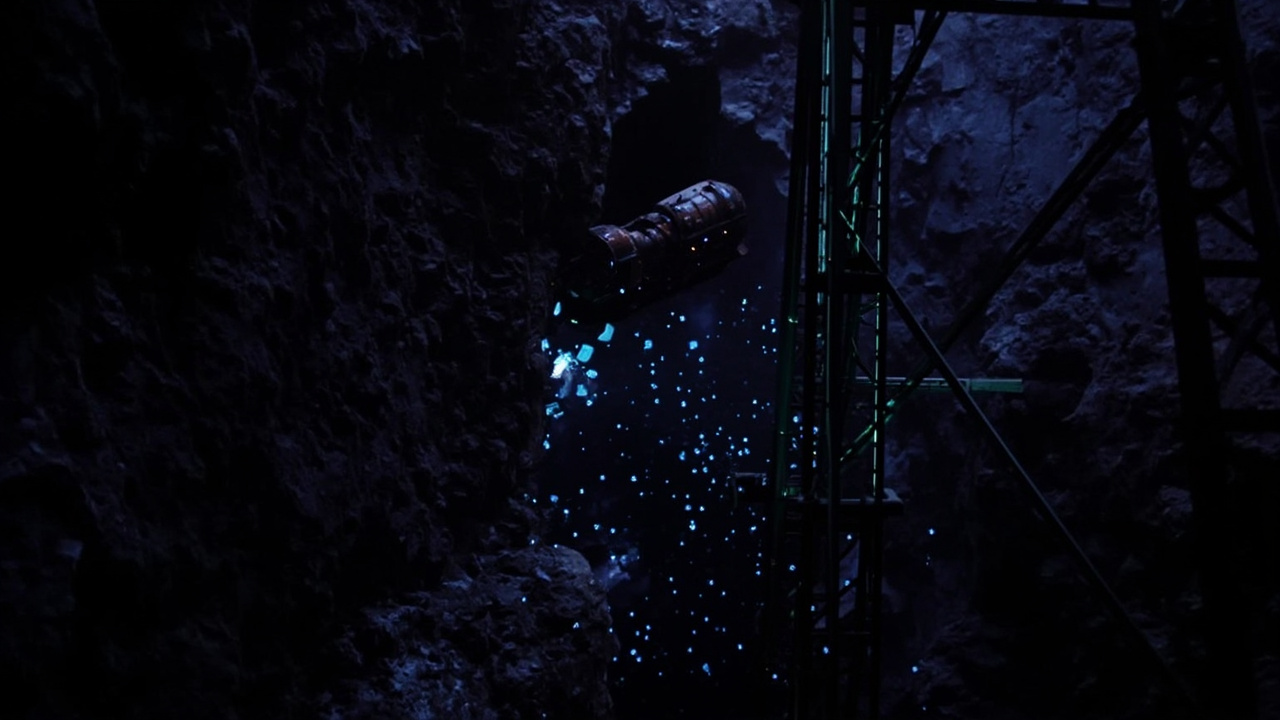
Somewhere above, in a restricted area, a battery-powered locomotive sat parked. Its driver was nearby. And then—without any warning—that massive machine just... lurched forward.
No one was at the controls. No one was driving it. The locomotive rolled forward on its own, unmanned, after its driver had jumped off. It broke through a barrier—here's the really disturbing part—and that barrier was never substantial enough to stop a runaway vehicle in the first place.
Then it dropped straight down the elevator shaft.
Right onto the cage full of men.
The Cascade of Failures
Now, I know what you're thinking. How does a parked locomotive just start rolling? How does a barrier fail? How does something like this happen?
The answer, investigators found, was a cascade of failures. It wasn't one thing—it was multiple things going wrong at exactly the wrong moment.
First, there was a faulty electrical circuit in the locomotive that failed to engage its brakes. Second, the driver made the decision to jump off instead of staying to control it. Third, that barrier? It was basically decorative. It couldn't stop a runaway vehicle, but somehow everyone assumed it could.
And then came the final horror.
The collision alone killed some men instantly. But for others, the nightmare wasn't over. When the locomotive hit the cage, a detaching hook in the elevator system opened on impact. This hook was supposed to keep the cage secured to its rope. Instead, it released.
The cage plummeted. All the way down. Roughly 7,000 feet to the bottom of the shaft.
Pil Botha, who was South Africa's Mineral and Energy Affairs Minister, surveyed the scene afterward. His words still give me chills: "It is the most gruesome sight I have ever seen."
The Question That Keeps Me Up at Night
Here's what gets me about this whole story: a later risk assessment showed that if that detaching hook hadn't opened, the miners would have had some hope of survival. They might have been injured, but they likely would have lived.
One hundred and four people died because of a chain of failures. Bad brakes. Human error. A worthless barrier. A hook that couldn't handle the impact.
Every single one of those failures was preventable.
What Changed (And What Should Have)
This catastrophe did spur some change. South Africa updated its legislation just one year later with the new Mine Health and Safety Act. New regulations required mining shaft elevators to withstand much stronger impacts—20 megajoules and masses of 5.5 tons without the detaching hook opening. Mining companies were required to compensate the families of lost workers.
The Vaal Reefs company created a trust to support the 431 dependents left behind by those 104 miners.
But let's be honest here: is that enough? Is a trust fund enough to make up for 104 lives lost because someone didn't maintain their brakes? Because someone didn't build a proper barrier? Because someone assumed safety measures were just paperwork?
Why This Story Matters to All of Us
I share this story not to be morbid, but because it reminds us of something important. Safety isn't a checklist. It's not a formality you go through to satisfy regulations. Safety is the difference between people going home to their families and something no one should ever have to see.
These were 104 people. Fathers, sons, brothers, husbands. They went to work one morning and never came home because of equipment that wasn't maintained, barriers that weren't strong enough, and systems that failed when they were needed most.
The next time you step into an elevator—yes, even the one in your apartment building—take a moment to appreciate the safety systems working behind the scenes. And maybe take a moment to think about the people who fight every day to make sure those systems actually work.
We owe them more than we often realize.
Source: Popular Mechanics