
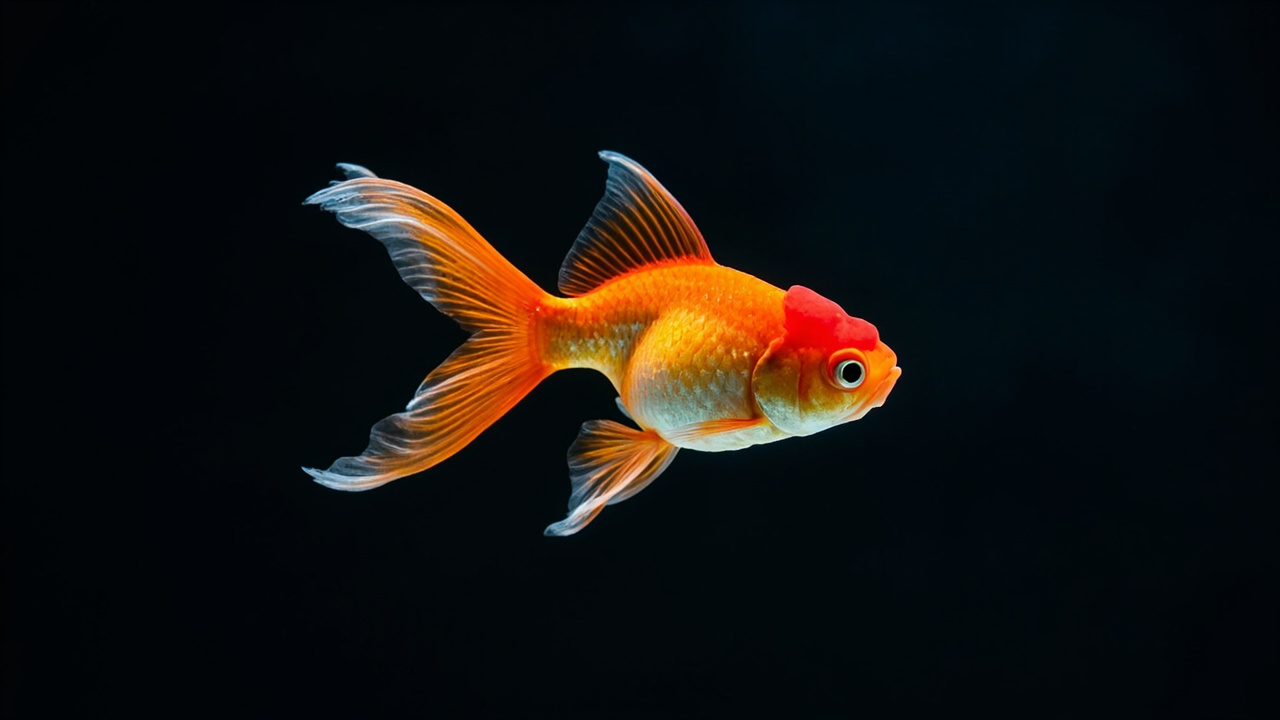
Who Knew Your Aquarium Buddy Could Be a Supervillain?
Okay, I need to confess something. I used to think goldfish were basically the most boring pets on the planet. They just... float there. They don't do tricks. They don't cuddle. They're basically swimming decorations with a two-second memory.
But guys? I was SO wrong. And honestly? I think we all owe goldfish a little more respect — and a lot more fear.
Scientists from the University of Toledo and the University of Missouri just published a study that made me completely rethink these little orange swimmers. Turns out, when goldfish escape from aquariums (or get "released" by well-meaning pet owners who think they're doing something nice), they can absolutely wreck entire freshwater ecosystems.
Yeah. Your little Bubbles might be a biological weapon. Let that sink in for a minute.
The Experiment That Revealed the Truth
Here's what's wild (pun absolutely intended): researchers set up these massive outdoor water tanks that basically mimicked real lake conditions. Then they introduced goldfish and watched what happened over time.
They tested two types of lakes — nutrient-poor ones (like those clear, rocky mountain lakes that look Instagram-worthy) and nutrient-rich ones (think algae-heavy ponds that smell a little funky). The results? Goldfish caused problems in BOTH.
In the nutrient-rich environments, water quality went downhill FAST. Water clarity tanked. Particles floating around increased dramatically. The lakes basically became murky, unhealthy messes.
But here's the really heartbreaking part: native species suffered enormously. Snails, tiny crustaceans called amphipods, and zooplankton all took major hits. Goldfish weren't just competing with native fish for food — they were actively eating and disturbing the whole delicate balance of these aquatic neighborhoods.
When Ecosystems Hit the Point of No Return
Scientists have a term for what happened next: "regime shift." Sounds dramatic, right? That's because it IS.
A regime shift is basically when an ecosystem crosses some invisible threshold and suddenly transforms into something fundamentally different — and usually much worse. Once this happens, trying to restore the original ecosystem becomes incredibly difficult, time-consuming, and expensive.
Think of it like your bedroom. A little mess? Easy to clean up. But if you let it spiral into a full-blown disaster zone for months? Now you're talking about needing industrial equipment and possibly a gas mask.
The goldfish don't just visit and leave. They fundamentally reshape their new homes in ways that are hard to undo.
So Why Are Goldfish Such Big Trouble?
Let me break it down in simple terms:
First, goldfish are gluttons. In the wild, they'll eat basically anything — insects, eggs, plants, you name it. This puts enormous pressure on native species that have evolved to fill specific ecological niches.
Second, they're messy eaters. Goldfish love stirring up sediment at the bottom of lakes and ponds. This releases nutrients that were locked away, triggering algae blooms and reducing water clarity. It's like they're accidentally vacuuming up the lake floor and spreading the dust everywhere.
Third, they grow HUGE in the wild. Your tiny aquarium goldfish? In a natural setting with unlimited food, they can balloon into basketball-sized monsters. And bigger fish means bigger problems.
A Global Problem That's Getting Worse
Goldfish are one of the most traded aquarium fish in the world. Millions upon millions are bought, kept, and eventually... what happens when someone gets bored or moves to a new apartment?
Too often, the answer is: into the nearest pond, lake, or river. Sometimes it's intentional ("I can't keep it anymore, so release it into nature!"). Sometimes it's accidental — tanks overflow during floods, or goldfish escape during storms.
Either way, these releases are adding up. Goldfish are establishing invasive populations across multiple continents, and they're spreading fast.
What Can We Actually Do About This?
Here's the thing — this isn't a lost cause. The researchers are clear: prevention is key. The best invasive species is one that never establishes in the first place.
So if you currently have a goldfish (or know someone who does), please consider alternatives to release:
- Return it to a pet store — many will accept healthy fish
- Find a new home — someone else might love a free goldfish
- Ask local wildlife authorities — they can provide guidance
- Humanely euthanize — this sounds harsh, but it's genuinely better than ecological destruction
I know, I know. That last option sounds terrible. But here's the honest truth: one goldfish's life is nothing compared to the potential collapse of an entire ecosystem. We're talking about protecting thousands of native species, clean water for communities, and healthy fisheries that people depend on for food.
The Bigger Picture
This research really got me thinking about how disconnected we've become from understanding the consequences of our actions. We buy a cheap pet, enjoy it for a while, and then... release it into the "wild" without any real understanding of what wild actually means anymore.
Nature isn't a dumping ground. It's an incredibly complex, finely-tuned system where every piece matters. And sometimes, the smallest actors can have the biggest impacts — for better or worse.
Maybe next time we see a goldfish in a pet store, we'll look at it a little differently. Not as a disposable decoration, but as a tiny creature with the power to either bring joy in a tank... or chaos in a lake.
Your move, goldfish owners.