
The Scrolls That Time (Almost) Forgot
Okay, I have to admit—when I first heard about this study, I had to read it twice to make sure I understood what was happening.
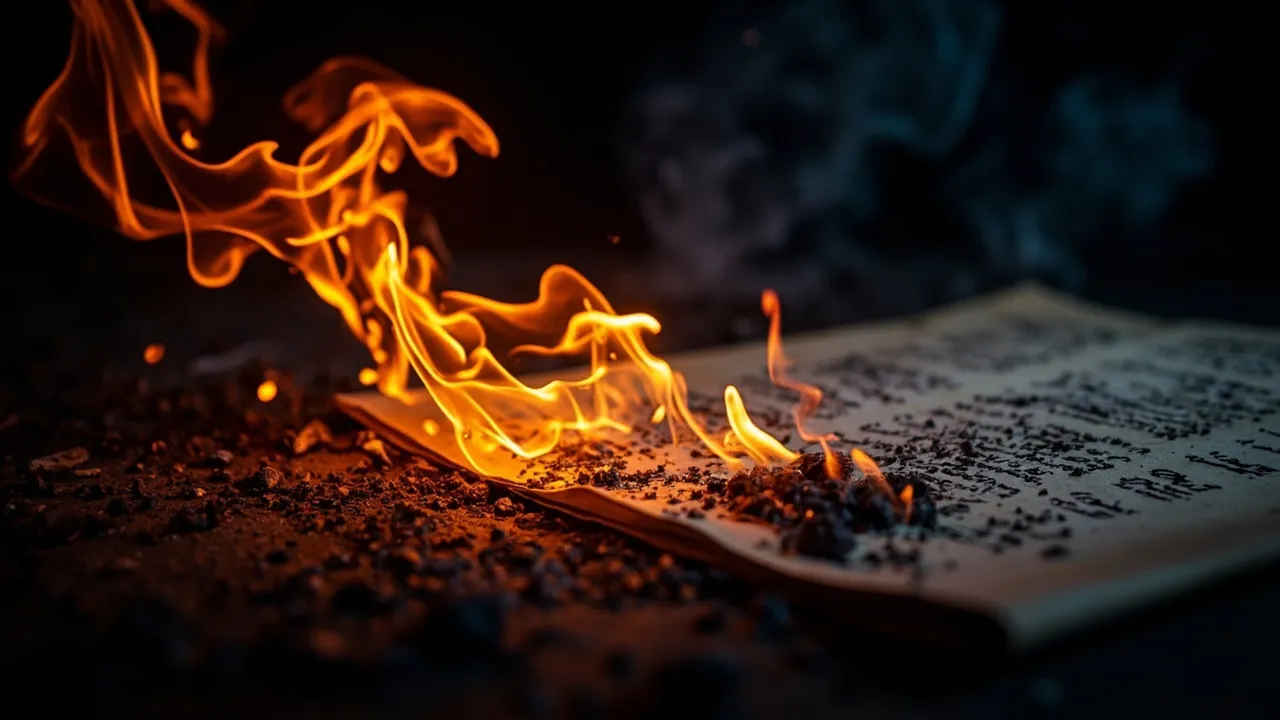
Scientists deliberately burned papyrus scrolls. They used traditional Egyptian materials, had high school students write on them with reed pens, rolled them up, and then torched them in a high-temperature furnace until they were thoroughly charred.
And here's the thing: this was genius.
Why Would Anyone Do This?
Let me paint you a picture. You're standing in Herculaneum, Italy, nearly 2,000 years ago. Mount Vesuvius is about to erupt in one of history's most catastrophic volcanic explosions. Within hours, an entire city is buried under volcanic ash. But here's what most people don't realize—the ash didn't just preserve buildings and bodies. It also preserved something far more precious: an entire library.
We're talking about around 1,800 papyrus scrolls that survived the catastrophe. These aren't copies of copies like so much of ancient literature. These are original works, books that came directly from ancient intellectual circles and were frozen in time by volcanic destruction.
The catch? They're completely unreadable. The scrolls are so fragile that trying to unroll them typically turns them into piles of black ash and dust. For centuries, researchers have struggled to read even a fraction of these ancient treasures.
The Lightbulb Moment
Enter Douglas Seiler and his team at Berkeley SETI. Their brilliant insight? The problem might not be about the scroll itself—it might be about the ink.
You see, ancient inks weren't all the same. Some were made from carbon (essentially burnt wood mixed with water), while others contained metallic elements like lead. Here's where it gets interesting for the researchers: lead absorbs X-rays way more strongly than carbonized papyrus does.
So their idea was simple in concept but revolutionary in practice: if they could scan carbonized scrolls using X-ray technology, the lead in certain inks would "light up" against the charred background. A computer could then virtually unwrap and read the hidden text without ever touching the fragile scroll.
Testing Their Theory
To prove their concept worked, Seiler did something that sounds absolutely wild. He got his hands on actual Egyptian papyrus and traditional lampblack ink from Japan. He paid high school students to write passages from Star Wars, the Bible, and even quotes from The Outer Limits television show.
Then came the burning part.
He rolled up the papyrus, sealed it in a container, and placed it in a high-temperature furnace until it was thoroughly carbonized—mimicking exactly what happened to those scrolls during the Vesuvius eruption nearly two millennia ago.
The results were stunning. Even tiny amounts of lead in the ink created a signal 25 times stronger than the surrounding burned papyrus. The writing practically jumped out of the scans.
Why This Matters So Much
Let me put this into perspective for you.
Almost everything from ancient times has been lost. Wars, fires, decay, simple neglect—these have destroyed the vast majority of ancient literature. What we have from ancient Greece and Rome is just a tiny fraction of what was originally written. Many philosophical treatises, scientific works, poetry, and histories simply vanished before anyone could copy them.
But the Herculaneum scrolls might contain texts we thought were gone forever.
According to Leah Packard-Grams, a Berkeley archaeology graduate student who consulted on the project, "The stakes are the largest in the history of Greek literature."
No pressure, right?
A Practical Path Forward
Here's what makes this approach particularly exciting: it's not just theoretically possible, it's practically achievable.
The researchers discovered that a relatively inexpensive handheld X-ray scanner could detect lead-based ink in burned scrolls. This means curators could potentially screen entire collections, identifying which scrolls are most likely to contain readable content before committing to lengthy and expensive full scans.
In other words, it's a triage system for ancient literature.
The team is now essentially calling on researchers working with the Herculaneum collection to start systematically testing for lead-based inks. If even a small percentage of those 1,800 scrolls contain lead, we could be looking at the potential recovery of works that humanity hasn't read in two thousand years.
What Might We Find?
The scrolls we've already managed to read—through painstaking and often destructive physical unrolling—mostly contain works by Philodemus, an Epicurean philosopher who lived in Herculaneum about a century before the eruption. These have already proven valuable to scholars.
But there are still hundreds of unread scrolls sitting in collections in Italy, France, and England. Some might contain completely unknown works. Lost dialogues from ancient philosophers. Scientific treatises. Poetry. History. The lost voices of the ancient world.
And now, thanks to researchers willing to literally play with fire, we might finally have a way to hear them again.
Sometimes the best way to preserve the past is to understand how it was destroyed. In this case, by mimicking that destruction under controlled conditions, scientists just might give us back words we never thought we'd read.
I don't know about you, but I find that absolutely incredible.
Source: ScienceDaily