
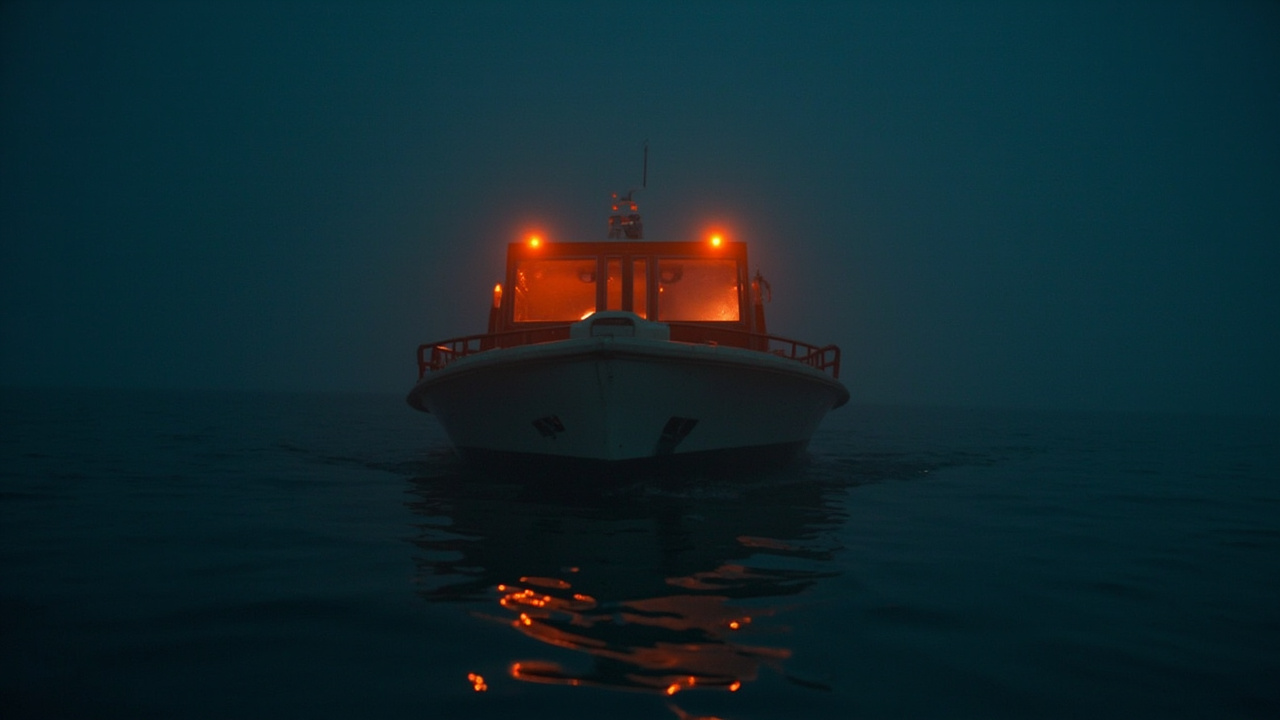
The Night Alcatraz's "Escape-Proof" Prison Lost Three Men
Picture this: you're locked in a maximum-security prison on an island surrounded by freezing water and strong currents. The FBI literally told Congress that escape was "near impossible" because the bay itself was basically an uncrossable moat. So what do you do? If you're Frank Morris and brothers John and Clarence Anglin, you spend months secretly building a lifeboat out of raincoats.
I know, right? It sounds like something from a heist movie, but this actually happened on June 11, 1962, and it remains one of the most fascinating prison escapes in American history.
The Setup: Dummy Heads and DIY Drills
First, these guys had to get creative with their prison-issued tools—or rather, lack thereof. They fashioned a drill from a broken vacuum cleaner motor to slowly chip away at the metal air vents covering the back of their cells. We're talking months of careful, quiet drilling while guards were doing rounds.
But here's the brilliant part: they made dummy heads out of plaster, flesh-tone paint, and human hair to place in their beds. When guards did night checks, they saw what looked like sleeping prisoners. It's almost comically low-tech, yet it worked perfectly.
Once they breached their cells, they slipped through to a hidden corridor, climbed up to a secret workshop area, and eventually made their way to the prison roof. Getting out of the building was one thing, but actually escaping the island? That required some serious innovation.
The Raincoat Revolution
Here's where things get really clever. Alcatraz inmates wore prison-issued raincoats in the yard—practical workwear that no one thought twice about. But Morris and the Anglins realized these coats were made of rubberized material, which meant they could be cut, sealed, and patched together.
They organized a silent supply chain. Prisoners would wear their coats into the yard, "accidentally" drop them, and the escapees would collect them. Over time, they accumulated about 50 coats—enough raw material to build something substantial.
The men then painstakingly cut the fabric, glued the pieces together, hand-stitched the seams, and sealed everything using heat from the steam pipes running through the prison. The result? A 6-by-14-foot raft that was waterproof and could actually float.
Pop Mechanics to the Rescue
Here's the part that absolutely fascinates me: they figured out how to do this partly by reading Popular Mechanics magazines from the prison library.
Two specific issues became crucial to their plan. One was from March 1962 and covered flotation devices. The other, from November 1960, had an article about making rubber duck decoys—which, it turns out, included instructions on vulcanizing rubber pieces together.
The prison censors were supposed to remove anything that could help inmates escape, but these magazines somehow made it through. The articles contained exactly what the men needed: a method for joining separate pieces of rubber into an airtight shape using rubber cement (which they secretly collected from the prison's cobbling and glovemaking shops).
The Missing Piece of History
Did their homemade raft actually work? That's the million-dollar question nobody can definitively answer.
The Bureau of Prisons officially lists Morris and the Anglins as missing and presumed drowned. The waters around Alcatraz in June are brutally cold, and even if their raft held together, the currents and conditions are treacherous. It's entirely plausible they didn't make it.
But the FBI has its doubts about that conclusion. Some evidence suggests they might have reached Angel Island or even made it to the mainland. Over the decades, there have been alleged sightings and circumstantial evidence that keeps the mystery alive—but nothing conclusive.
Why This Story Still Matters
What I find most compelling about this escape isn't whether they survived (though I'm genuinely curious). It's the ingenuity, patience, and resourcefulness these men displayed. They took everyday materials—raincoats, rubber cement, an old vacuum motor—and transformed them into tools of freedom.
They also benefited from reading material and from help within their prison community. In a place designed to be inescapable, they found loopholes through knowledge and creativity.
A fourth inmate, Allen West, helped with the entire plan but didn't make it out of his cell in time—a heartbreaking detail that reminds us how close things were.
Whether Morris and the Anglins lived or died in San Francisco Bay remains one of America's great unsolved mysteries. But their homemade raft? That's no mystery. It's proof that determination, cleverness, and a pile of old magazines can accomplish what the government said was impossible.
Sometimes the greatest escapes aren't the ones where everyone agrees on the ending—they're the ones that keep us guessing, wondering, and respecting human ingenuity decades later.