
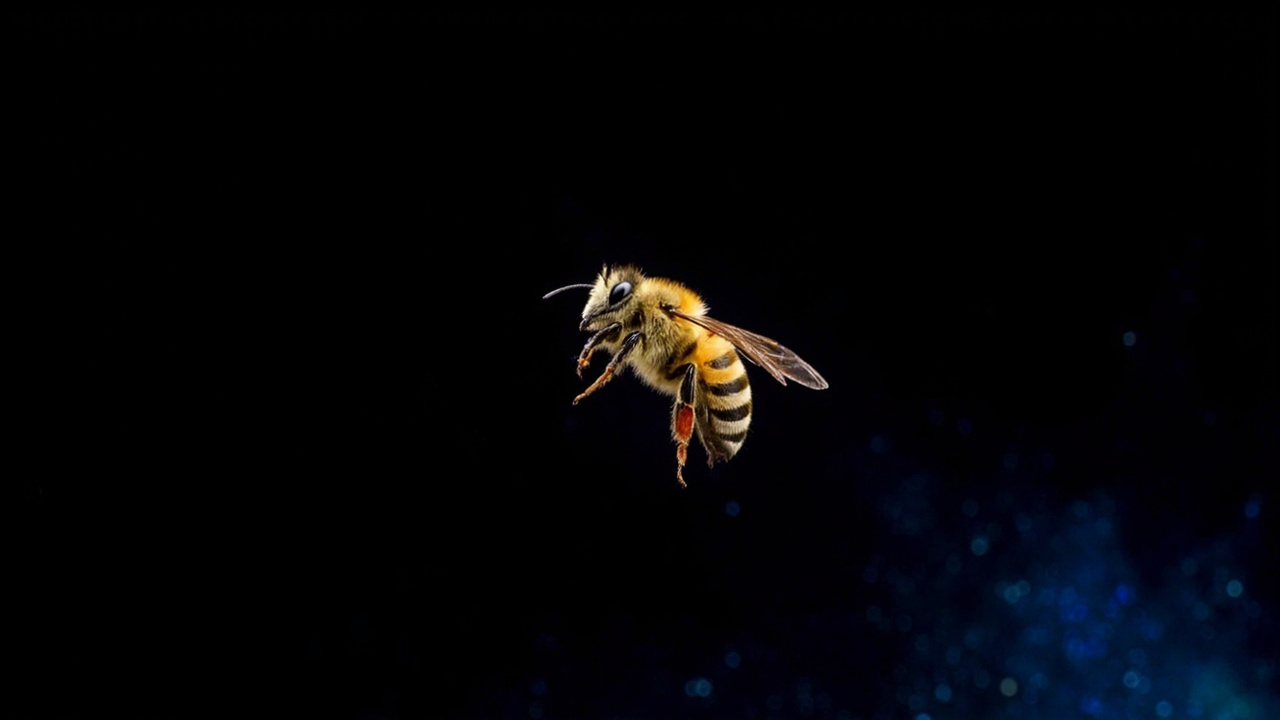
Okay, can we talk about how nature is absolutely wild? Because I just learned something about honey bees that made me genuinely reconsider everything I thought I knew about these little guys.
Here's the deal: honey bees have their own personal flight paths. Like, each bee has a specific route it takes from the hive to its favorite food source, and it flies that exact same path over and over again. And when I say "exact same," I mean we're talking centimeters of deviation. Centimeters. From a tiny insect with a brain the size of a sesame seed.
The Study That Changed Everything
A team of researchers at the University of Freiburg decided to actually watch bees fly instead of just assuming how they navigate. They attached tiny reflective markers to individual bees and used drones to track their movements in 3D space. No big deal, just literally following bees around like nature's most dedicated stalkers.
What they found was fascinating. Each bee had its own signature route — kind of like how you probably have a specific way of driving to your favorite coffee shop or grocery store. The bees would travel about 120 meters to their food source, and they'd follow the same path so precisely that researchers could overlay multiple flights and watch nearly identical lines trace through the air.
The Landmark Thing Makes Total Sense
Here's where it gets really interesting. The bees were most consistent near obvious landmarks — like a big tree standing between the hive and the food supply. They'd hug that visual cue like we might use a distinctive building or intersection to know we're on the right track.
But over open areas like cornfields? That's where things got a little messier. The bees still knew where they were going, but their precision dropped because there weren't as many visual guides to keep them on track.
This honestly makes so much sense when you think about it. Even humans navigate better when there are landmarks around. That's literally why GPS apps show you landmarks. Bees aren't that different — they just have a much cuter method of orientation.
The Waggle Dance Plot Twist
Now here's the part that really got me. You probably know that honey bees do this thing called the "waggle dance" to tell other bees where food is located. It's like their little colony group chat about where to find the good stuff.
Scientists already knew the waggle dance wasn't super precise — it could be off by about 30 degrees for food sources around 100 meters away. And for a while, people assumed that meant bees just weren't great navigators in general.
But this new research says nope! The dance is imprecise, but individual bees flying to places they already know? Those little creatures are incredibly accurate. The bees can figure out the general direction from the dance, and then once they personally know a route, they nail it every single time.
It's kind of like getting directions from a friend who's a little vague — "oh, it's on the street with the red building, you know, near the old bank." You're like okay, I can work with that. And then once you've been there once, you remember exactly how to get there. Bees are basically doing the same thing.
What This Means for Understanding Animal Behavior
I love that this study flips some assumptions on their head. We often think of animal behavior in broad strokes — "bees do the waggle dance" or "bees navigate somehow." But individual bees apparently have their own personal habits and preferred routes, just like people do.
One researcher even said you could think of it as each bee having its own personality. Which, honestly? I'm here for that. My morning commute has a specific route even though there are other options, and apparently so does every single bee in a hive.
The next time you see a bee buzzing around your garden, remember — that little creature probably has a whole commute system figured out, complete with its own personal flight path and favorite landmarks. We're not so different after all.