
A Survivor in Space
Here's a fun fact: NASA has a space telescope that's older than the iPhone. The Neil Gehrels Swift Observatory has been circling Earth since 2004, quietly watching the universe for gamma-ray bursts, black holes, and all sorts of cosmic fireworks. And honestly? It's kind of a champ.
After a brief hiatus, Swift is back in business. On August 26, engineers switched two of its three science instruments back on — the Ultraviolet/Optical Telescope and the X-ray Telescope. The Burst Alert Telescope should join the party soon too. That means Swift is once again scanning the heavens, ready to pounce on sudden cosmic events and alert scientists on Earth.
But here's the thing — and this is where the story gets a little bittersweet — Swift's triumphant return comes with an expiration date.
The Atmospheric Drag Problem
To understand what's happening, let me paint you a picture. Imagine you're throwing a ball straight up. It goes high, but eventually gravity pulls it back down, right? Now imagine that ball is hundreds of miles up, but Earth's atmosphere — even though it's super thin way up there — is still pushing against it like a gentle but persistent hand. That hand is slowly, slowly slowing the ball down.
That's atmospheric drag, and it's Swift's nemesis.
Swift orbits Earth in what's called low Earth orbit. Even at 300+ miles up, traces of our atmosphere still exist. Those wispy layers create drag, gradually causing the telescope to lose altitude over time. The problem? Swift doesn't have its own engine to push itself back up. It's essentially coasting, and the coast keeps getting slower.
Recently, the situation got worse. Our Sun has been particularly active lately (hello, solar maximum!), and all that extra energy has been heating up Earth's upper atmosphere. When the atmosphere warms up, it expands — kind of like how bread rises in the oven. That means the drag extends farther out into space, and spacecraft like Swift feel the push more strongly.
The Rescue Mission That Didn't Go as Planned
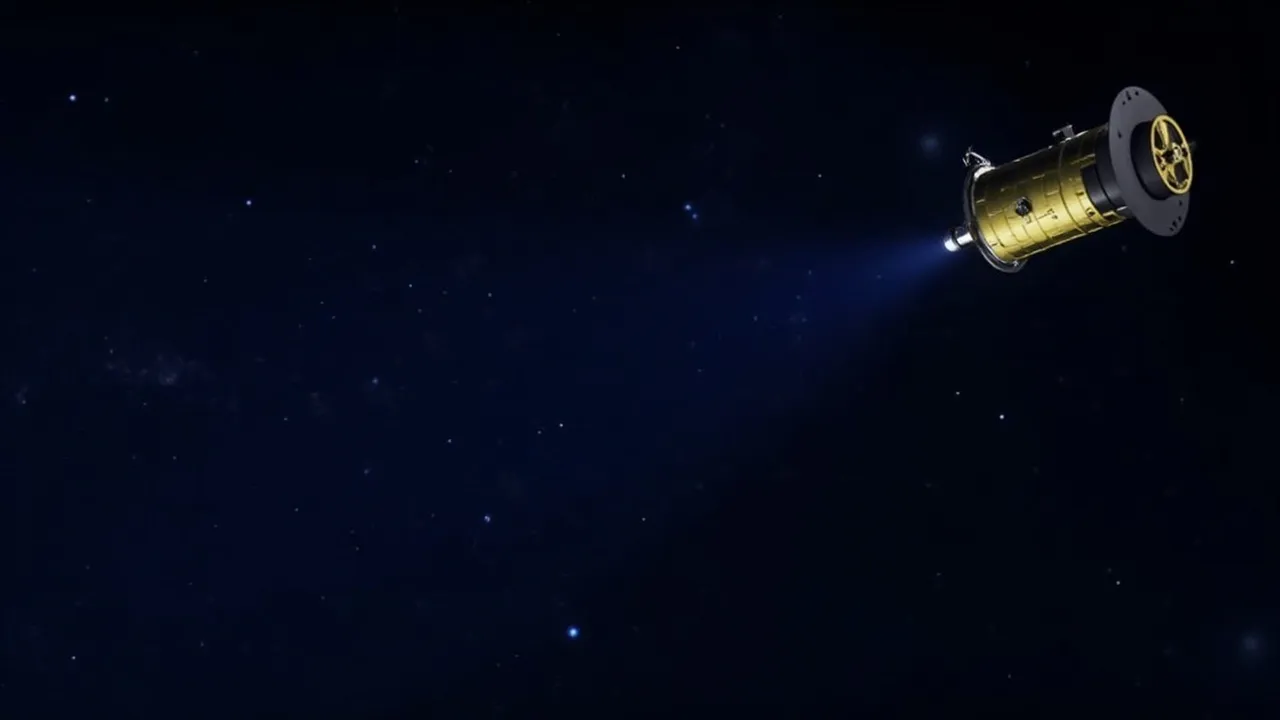
Here's where things get interesting. NASA actually tried to save Swift. In September 2025, they hired a company called Katalyst Space to design a bold rescue mission. The plan? Send another spacecraft called LINK to Swift, grab onto it, and boost it into a higher orbit. Think of it like a cosmic tow truck.
The timeline was ambitious — one year to design, build, test, and launch. LINK hitched a ride on a rocket in July, ready to be the hero of this story.
But space is hard, folks. Something went wrong. LINK developed orientation control problems — basically, it couldn't properly point itself or maneuver the way it needed to. On August 19, NASA and Katalyst announced that LINK would not attempt the actual capture and boost. The rescue mission was off.
Now, this isn't a total loss. LINK will still approach Swift and practice its rendezvous moves. Those maneuvers could prove valuable for future satellite servicing technology — eventually, we might send spacecraft to refuel or repair satellites without needing to launch replacements. So there's still some good science coming out of this. It's just not the happy ending Swift needed.
So What's Next?
Here's the sobering part: Swift has maybe one to two months before it drops below a critical altitude threshold of about 185 miles (300 kilometers). Below that point, operating the telescope becomes significantly harder. The drag increases, altitude loss accelerates, and eventually... well, let's just say the telescope's days are numbered.
But here's what gets me about this story: Swift is a fighter. For 21 years, it has been one of NASA's most versatile tools — tracking gamma-ray bursts, watching galaxies evolve, and coordinating with observatories around the world. It's the kind of spacecraft that just keeps on going.
Now, it's back to work for what might be a short window. The team is gathering as much science as possible while they can. Each observation Swift makes right now is precious, because no one knows exactly how many more it will get.
There's Something Touching About This
I don't know about you, but I find myself genuinely rooting for this little telescope. It's not the flashiest mission — no gorgeous nebula images, no Mars rover drama. It's just a reliable, hard-working spacecraft that has been doing its job for over two decades.
And now, as it faces its final chapter, it keeps working anyway. The instruments came back on, and Swift is watching the universe again, probably not knowing that its time is running short.
Maybe that's the most beautiful thing about space exploration. These machines we send out there — they're not just tools. They're like our eyes and ears, our ambassadors to the cosmos. And when one of them is winding down, it doesn't stop doing its job until it literally can't anymore.
Here's hoping Swift gets a few more good months. And if not? It'll have earned one seriously impressive legacy.
Source: NASA's Swift telescope is back, but time is running out