
The blog post in markdown format with my own voice and commentary
The Hill That Actually Had Gold
Okay, I have to be honest with you—when I first heard about the Bactrian Hoard, I thought it sounded like something out of an adventure movie. But here's the thing: real life sometimes outdoes fiction, and this story is proof.
Picture this: It's 1978 in northern Afghanistan. A team of archaeologists led by a Soviet researcher named Viktor Sarianidi is digging around a sunbaked hill called Tillya Tepe, which—fun fact—literally means "Hill of Gold" in the local language. Locals have whispered for generations that something precious was buried there. Most archaeologists would have dismissed these stories as folklore. But Sarianidi? He kept digging.
And boy, was he rewarded.
What They Found Was Absolutely Stunning
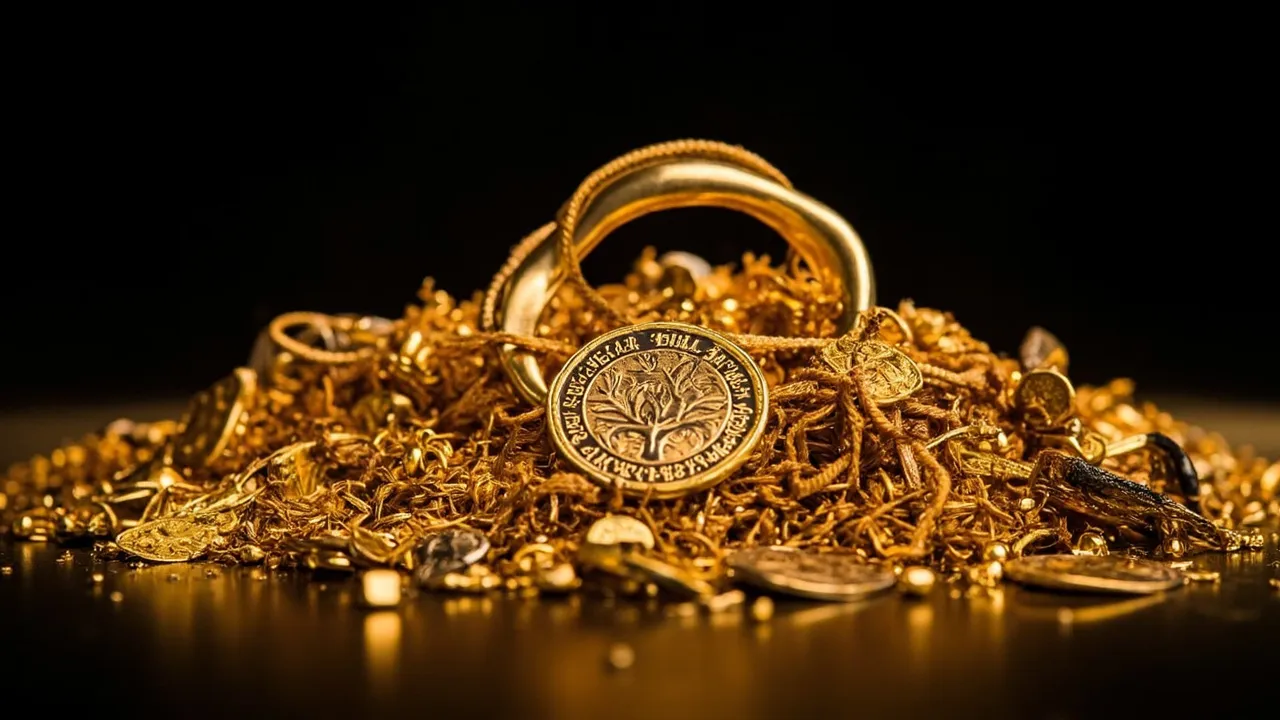
As the excavation progressed, golden objects started emerging from the dusty earth—literally thousands of them. Gold medallions depicting Greek gods (Dionysus, we're looking at you). Intricate jewelry with gems from who-knows-where. A crown so cleverly designed it could be taken apart for easy transport. We're talking about artifacts that would make modern jewelers weep with envy.
But here's what really got me: this wasn't just one culture's treasure. The artifacts blended influences from Rome, Greece, India, China, and Central Asia all in one place. That's because Tillya Tepe was once a bustling hub along the Silk Road—the ancient superhighway of trade. Merchants, monks, and warriors from wildly different civilizations passed through, leaving their mark on the art and culture. These nomadic peoples didn't just trade goods; they traded ideas, religions, and artistic styles.
One of the skeletons they found wore a belt with Buddha on one medallion and Dionysus on another. How cool is that? Two completely different belief systems, side by side, in ancient Afghanistan.
Then Things Got Complicated
Now, you'd think discovering something this incredible would mean the artifacts would go straight to a nice, safe museum where everyone could admire them. That would be the reasonable outcome, right?
Wrong.
Barely had the excavation wrapped up when war came knocking. Afghanistan was about to become one of the most unstable places on Earth, and Sarianidi had to make a heart-wrenching decision: abandon the dig (and that last, unexplored grave) or risk his team. He fled, taking everything they'd already found.
For years, the treasure's fate was unknown. Civil war ravaged the country. The National Museum in Kabul was shelled. Looters descended on archaeological sites across the nation. Many assumed the Bactrian gold was gone forever—melted down, smuggled out, or destroyed.
But it wasn't.
The Secret Vault
Here's where things get almost spy-novel worthy: the gold had been locked away in a vault at Afghanistan's Central Bank, known only to a handful of people. They called them the "tawadars"—the keyholders. And they kept the secret even as rumors swirled that the treasure was lost.
Can you imagine being one of those people? Knowing you have one of humanity's greatest treasures sitting in a basement, unable to tell anyone, watching the country fall apart around you?
It wasn't until 2004—more than a decade after the initial discovery—that the vault was finally opened. Sarianidi was there. Historians and archaeologists gathered in a cramped back office of the bank, hands probably shaking as they unlocked the door to a treasure the world had given up for lost.
And there it was: 22,000 artifacts, preserved and waiting.
The Tour de Force
What happened next was pretty magical. The Afghan government, recognizing they couldn't properly protect the collection in their war-torn country, struck a deal with international museums. The Bactrian Hoard went on tour, appearing in prestigious institutions like the Metropolitan Museum of Art and the National Gallery of Art. For the first time, regular people could see these incredible pieces with their own eyes.
Some of these artifacts had been buried for over 2,000 years. Now they were glittering under spotlights in Washington D.C. and Paris.
Eventually, pieces began returning to Kabul, where they went on display at the National Museum. It felt like a happy ending to a very long story.
But Then... It Disappeared. Again.
Just when you thought it was safe to believe in happy endings, history decided to have other plans. In late 2020—right as political turmoil was once again sweeping Afghanistan—the treasure vanished from public view once more.
The last documented public viewing happened at the Presidential Palace, where a select group of officials and activists gathered to discuss how to protect the collection. And then... nothing. The gold went back into hiding, this time at a location no one is talking about.
Given the events that unfolded in Afghanistan after that, you can hardly blame them. The safety of these irreplaceable artifacts has to come first. They're not just Afghan treasures—they're humanity's treasures.
What Does the Future Hold?
Honestly? I don't know. And I think that's the honest answer.
These artifacts have survived wars, invasions, civil conflicts, and countless near-misses. They've been hidden, rediscovered, toured the world, and hidden again. If these gold pieces could talk, they'd have some absolutely wild stories to tell.
One thing I keep thinking about is that last grave Sarianidi never got to excavate. The looters who came after he fled probably found whatever was in there, and we'll never know what secrets it held. That's a loss that hurts my historian's heart.
But maybe—just maybe—the rest of the Bactrian Hoard will see daylight again someday. When Afghanistan finds its footing, when peace becomes more than a fragile hope, when people can once again safely marvel at what their ancestors created. These artifacts are survivors. They've defied the odds before.
And honestly? After reading this story, I wouldn't bet against them.
Have you ever heard of the Bactrian Hoard before? Drop a comment below—I genuinely want to know if this story surprised you as much as it surprised me!