
A Cliff, A Fish, and a Mystery
Imagine climbing a sheer cliff face on a remote island, minding your own business, when you look over and spot something frozen in stone that hasn't seen daylight in 55 million years.
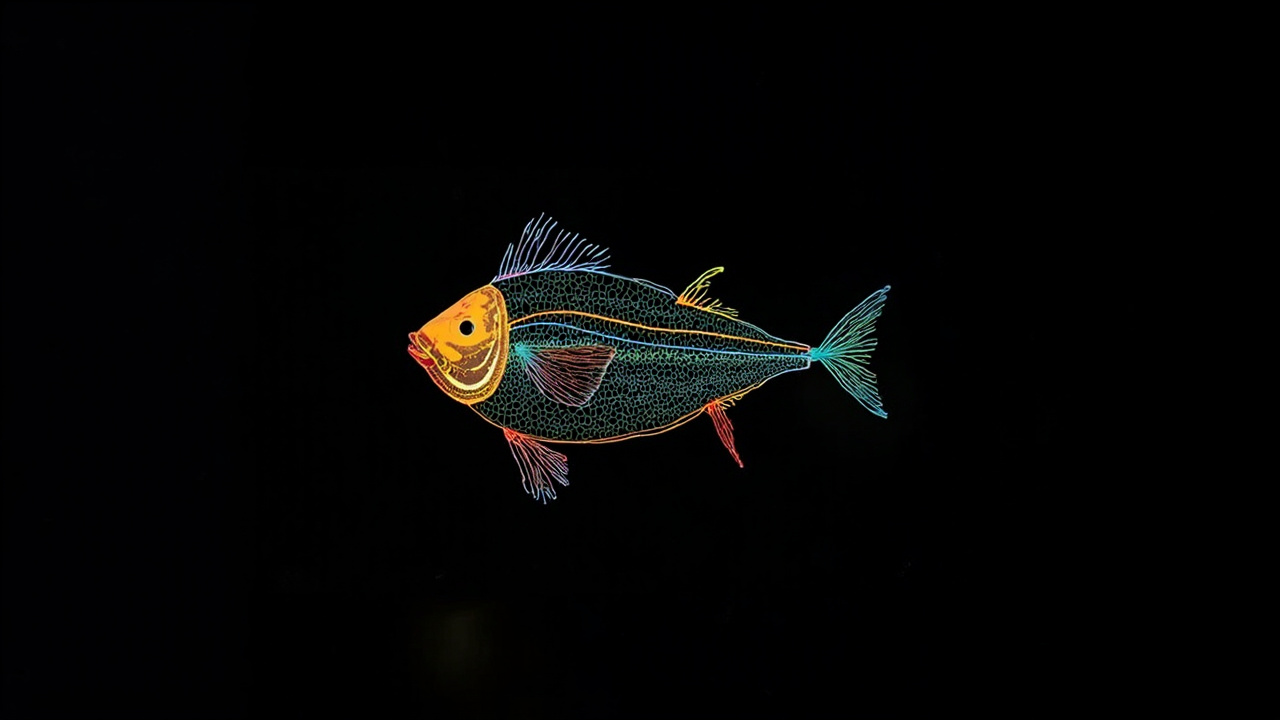
That's exactly what happened to Richard Köhler back in 1999 on Pitt Island, off the coast of New Zealand. Nestled in the cliffside overlooking Waihere Bay was what looked like an entire fish—but not a typical flat, crushed fossil you'd see in a museum display. This one had depth. Three dimensions. Individual scales. The rays of its fins still visible. It was like someone had cast a real fish in concrete and left it there for geological ages.
Honestly? That image alone is pretty mind-blowing when you really think about it.
The Almost-Forgotten Wonder
Köhler hauled this incredible specimen back to the University of Otago, where it was carefully prepared by his colleague Andrew Grebneff. Then... it basically got tucked away in storage. Life happened. Papers weren't immediately published. The world moved on.
But here's what makes this story special: two professors, Daphne Lee and Ewan Fordyce, never forgot about it. They knew what they'd seen—this wasn't just another fish fossil. It was mummified, meaning the soft tissues had somehow been preserved. That's incredibly rare. Most fossils are just bones pressed flat into rock. This one still had the muscular body, the thick scaled armor, the upturned mouth that could gulp down prey in one big snap.
It reminded them of modern tarpons—those massive, powerful fish that can grow over 8 feet long and weigh more than 300 pounds. But here's the thing: tarpons don't live anywhere near New Zealand anymore. They vanished from those waters long ago. So what was this ancient cousin doing there?
Enter the Son
Here's where the story takes a turn that feels almost scripted.
In 2023, Lee and her team started drafting their paper about the mysterious fish. But they were missing crucial information—the geological context, the exact details of where and how Köhler had found it. Problem: Köhler had passed away years earlier. His notebooks, filled with meticulous field notes from his discoveries, had apparently vanished.
Then one day, Richard Köhler's son enrolled as a student at the University of Otago.
While sorting through his father's belongings, he found the notebooks. Just... sitting there. Waiting.
When he learned about the research team's work, he donated them to the university. And suddenly, all those missing puzzle pieces fell into place.
A Name and a Legacy
The fish was finally given its proper scientific name: Ikawaihere koehleri—named in honor of Richard Köhler himself, the man who risked that treacherous cliff climb to retrieve it.
And what a find it turned out to be. According to researchers, this is "the most complete and informative fossil megalopid reported to date from the Southern Hemisphere." That's a fancy way of saying it's the best specimen of its kind we've ever found in that part of the world.
But what does that actually mean?
Well, megalopids are the family that includes modern tarpons. These fish belong to an even broader group called elopomorphs, which includes various eels and deep-sea species. Scientists believe elopomorphs first appeared when dinosaurs still roamed the Earth, probably in the Northern Hemisphere. Finding this well-preserved specimen in what used to be part of the ancient continent of Gondwana tells us these fish spread much further than we previously thought—and they did it pretty early in the game.
Why This Fossil Is Extra Special
The preservation is what really gets me. How does a fish from 55 million years ago stay so... intact?
Researchers found traces of bacterial decomposition, which suggests the fish might have been briefly exposed before being buried again—either by sediment or carried by waves to colder waters where decay slows down. There were no signs of scavenging. It's like the ocean gently tucked it away and said, "I'll keep this safe for you."
And here's a quirky detail: the tail fin has some resemblance to ancient tetrapodomorph fish—creatures from nearly 400 million years ago that used their fins to basically walk along the seafloor. It's probably just a coincidence, but it's fun to think about. Life is weird, and evolution keeps surprising us.
The Bigger Picture
This discovery isn't just about one cool fossil. It rewrites our understanding of prehistoric marine ecosystems in New Zealand and how ocean life evolved across the Southern Hemisphere. It shows that these big, predatory tarpon-like fish were swimming in Gondwanan waters much earlier than anyone guessed.
And honestly? The human story might be the best part. A father's field notes, sitting unnoticed for years, then rediscovered by his son at exactly the right moment. Science at its best isn't just about fossils in cliffs—it's about connections. Between past and present. Between researchers and their subjects. Between a son and his father's legacy.
Sometimes the most important discoveries aren't made on cliff faces or in dusty storage rooms. They're made when someone decides to look through the boxes in the attic.