
When "That Sounds Like a Bad Idea" Becomes Good Science
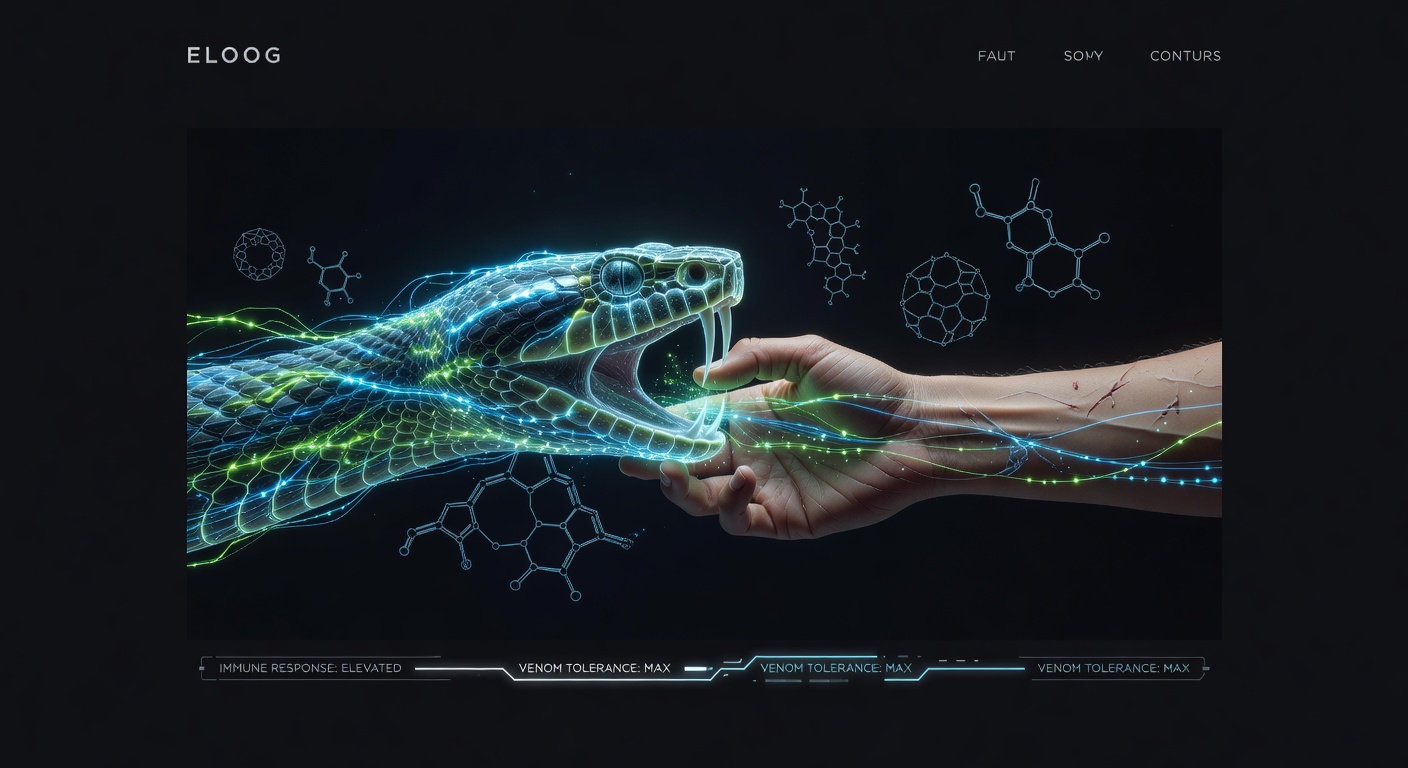
Let me start by saying this: Tim Friede is either the bravest person alive or he has completely lost his mind. Possibly both. But here's the wild part—his years of playing Russian roulette with some of the world's deadliest snakes might actually save your life someday.
Picture this: you're afraid of snakes (and honestly, who isn't?). Now imagine deciding to let cobras, mambas, and vipers sink their fangs into you. Not once. Not twice. But hundreds of times over two decades. That's Friede's reality.
How Do You Even Train Your Body to Do This?
Friede's approach is surprisingly methodical, which honestly makes this story even wilder. He didn't just wake up one day and think, "Yeah, I'll get bitten by a king cobra." Instead, he followed a process that's almost boring in its scientific precision:
Step one: Milk the venom from snakes (yes, that's actually something people do).
Step two: Inject tiny amounts of venom into his own body, gradually increasing the dose over time.
Step three: Let his immune system learn to fight back, slowly building up antitoxin antibodies.
Step four: Once he's built up enough immunity, let the actual snake bite him to test if it works.
I say "step four" so casually, but let's be real—there were definitely some moments where this went hilariously wrong. Like the time he got bit by two different cobras in quick succession and ended up in a coma for four days. When asked about it, Friede gave the most understated response possible: "Was it a mistake? Yes. Was it stupid? Yes."
That's the vibe of a guy who's made peace with his terrible life choices.
The Body That Could Teach Science School
Here's where it gets genuinely amazing: Friede's immune system didn't just develop antibodies. It developed special antibodies. The kind of antibodies that scientists had basically been dreaming about.
Researchers at a biotech company called Centivax looked at Friede's blood work and basically said, "Okay, this is a once-in-a-lifetime discovery." His body had created broadly neutralizing antibodies—the kind that work against multiple snake species, not just one.
They took two of his most powerful antibodies (with the fun names LNX-D09 and SNX-B03) and combined them with another toxin-blocking drug to create an antivenom cocktail. When they tested it on mice, the results were seriously impressive:
- Complete protection against 13 different snake species
- Partial protection against another six species
That's not a one-trick pony antivenom. That's the closest thing to a universal antivenom we've ever seen.
Why This Actually Matters More Than You'd Think
You might be thinking, "Okay, cool story, but who cares?" Well, here's the thing: snakes kill between 80,000 to 100,000 people worldwide every year. Another 300,000 people survive bites but end up with permanent disabilities. That's a lot of suffering that could potentially be prevented.
The current problem with antivenom is that it's usually species-specific. You need one type for cobras, a different one for vipers, another for mambas. It's expensive, it's complicated, and in remote areas where people actually get bitten, you often don't have the right one available.
A broad-spectrum antivenom? That's a game-changer.
What's Next?
Centivax and researchers from Columbia University are planning to test this new antivenom on dogs in Australia who've suffered actual snake bites. If that works, they'll expand to protecting against viper bites too.
It's still early, but this could genuinely become a treatment that saves countless lives.
The Weird Lesson Here
There's something kind of beautiful about this story, even though it's absolutely bonkers. Most of us play it safe. We follow the rules. We don't let venomous snakes bite us repeatedly.
But Friede decided to be different. He accepted the pain, the scars, the hospital visits, and even the coma. And now, his suffering might prevent suffering for millions of people in the future.
As we wrap up, let's give a weird, uncomfortable round of applause to snakes too. They're dangerous, sure. But they're also incredibly complex creatures that have given us everything from anti-cancer drugs to—apparently—keys to universal antivenoms.
So the next time someone tells you they're afraid of snakes, remind them: we need these creatures. And maybe, just maybe, one day they'll help save your life.