
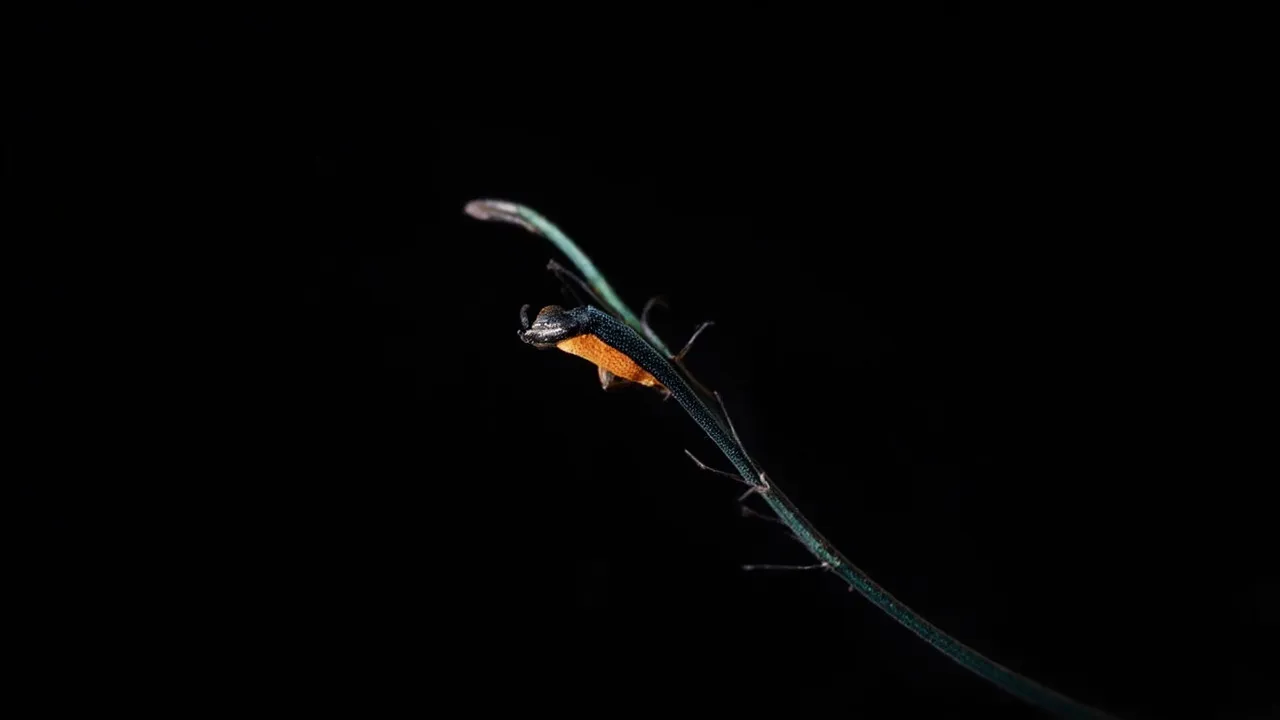
So... We Messed Up. Big Time.
Okay, confession time. Scientists recently discovered something that honestly makes me feel better about my own mistakes. For the last several decades, researchers around the world had been looking at certain Australian stick insects and going, "Yep, that's definitely that species we already know about." Easy. Done. Moving on.
Except... they were completely wrong.
A team from the University of Sydney just published research revealing that what we thought were two species of stick insects from the genus Anchiale were actually five distinct species. Five! All hiding in plain sight, all over Australia, all getting photographed by thousands of citizen scientists and studied by professionals for years.
Dr. Braxton Jones, the study's lead author, put it perfectly: "Even among some of Australia's most photographed and frequently reported insects, we're still finding species that have escaped scientific recognition."
Basically, the stick insects won. And honestly? I'm here for it.
The Case of the Mistaken Identity
Here's what's wild about this story. One of these "new" species—now officially named Anchiale robusta—had been hanging around Australian forests forever. Scientists knew it. Naturalists photographed it. Citizen scientists uploaded thousands of observations of it. Nobody questioned what they were looking at.
Until someone actually looked closer.
The researchers combined DNA analysis, museum specimens, field observations, and even insects raised in captivity. When they pieced it all together, the evidence was clear: this wasn't the species everyone thought it was. It had been misidentified for decades.
It's like finding out your neighbor you've waved to every morning for twenty years is actually a secret twin you've never met. Except the neighbor is an insect. And the twin is a completely different species.
Hold Up—Eggs With Lids?
One of the newly discovered species, found in Queensland's critically endangered Mabi rainforest, has a feature that genuinely delighted me: its eggs have a lid.
Not a lid-like structure. An actual, honest-to-goodness lid. Like someone designed these eggs with a twist-off cap.
Researchers say this lid structure has never been documented in any stick insect or its closest relatives. It might help with incubation, or maybe it just looks cool. Either way, I'm obsessed with the idea that after all this time studying insects, we found something entirely new in the egg department.
The species is called Anchiale mabiensis, named after the Mabi rainforest where it lives. Given how endangered this habitat is, finding a new species there feels especially significant—and slightly urgent.
These Bugs Are Absolutely Unhinged (In the Best Way)
Before we move on, let me tell you some things about stick insects that made me genuinely laugh out loud:
Baby stick insects pretend to be ants. Baby Extatosoma tiaratum (that's the species name, not a dinosaur) actually mimic ants after hatching. They hang out in ant nests, look like ants, act like ants. The eggs get carried into ant nests by mistake, stay dormant for months, and the babies just... blend in. They wander up eucalyptus trees looking and behaving like ants while being perfectly safe from predators. This is the most chaotic baby behavior I have ever heard of, and I am here for it.
Some can spray chemicals at predators. Like, actively shoot defensive goop at anything that tries to eat them. This makes them sound like tiny bug superheroes, honestly.
They can disconnect their own legs. If a bird grabs a stick insect's leg, the insect can just... detach it and run. The leg eventually grows back during future molts. I don't know about you, but I find this both horrifying and impressive.
They clone themselves. Many stick insect species reproduce through parthenogenesis—females produce offspring that are essentially genetic clones of themselves, no males required. The entire next generation is female. Scientists call this "parthenogenesis." I call it "the ultimate girl power."
They startle predators with bright wings. Most of the time, stick insects look like boring sticks. But when threatened, some species suddenly flash bright colors and create rustling sounds with their wings. It's basically the bug equivalent of jumping out from behind a door to yell "BOO!"
What Does This Mean For the Rest of Us?
Here's the thing that really stuck with me after reading about this discovery: if we can miss three entire species of large, well-photographed, frequently-observed insects... what else is out there?
Australia has about 130 known stick insect species and roughly 3,600 are known worldwide. But this research suggests that even in well-studied areas, we're probably undercounting.
And it turns out these misidentifications aren't just academic curiosities. One stick insect species that's known for occasionally reaching plague-like numbers and stripping trees bare? Yeah, that was actually two different species hiding under one name. Now that we can tell them apart, researchers and land managers might be able to better predict and handle future outbreaks that affect forestry and agriculture.
So yeah, taxonomy matters. Knowing exactly what species you're dealing with can have real-world impacts on how we manage our forests and food supplies.
The Takeaway
I don't know about you, but I find this whole story oddly comforting. It means that even with all our technology, all our citizen science networks, all our decades of research... nature still has the ability to surprise us. Hidden in branches. Hiding in plain sight. Just waiting for someone to look closer.
Maybe there's a lesson there about staying curious and questioning what we think we already know.
Or maybe stick insects are just nature's little tricksters, having a grand old time confusing scientists for sixty-plus years.
Either way, I'm rooting for them.
Source: ScienceDaily