
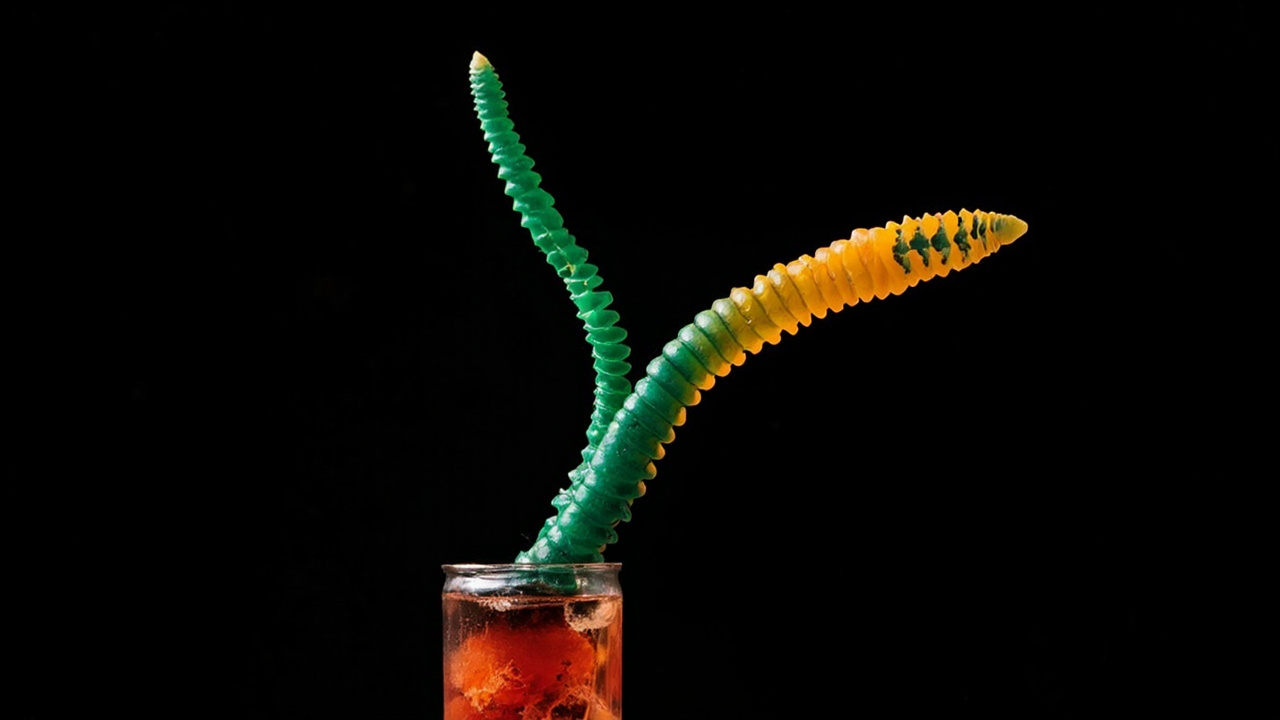
That "Worm" in Your Mezcal Bottle? Scientists Just Cracked the Case
If you've ever ordered a bottle of mezcal at a bar and spotted that pale, curled creature suspended in the alcohol, you've witnessed one of spirit-world's strangest traditions. For generations, people have debated what that thing actually is. A worm? A moth larva? A butterfly caterpillar? Even experts couldn't agree.
Well, the mystery is officially solved. And the truth is both cooler and more complicated than you'd expect.
The Worm Isn't Even That Old (Plot Twist #1)
Here's something wild: mezcal itself has been made in Mexico for centuries. We're talking centuries. But that famous "worm" at the bottom of the bottle? That's a relatively recent invention that only started showing up around the 1940s.
So all those romantic stories about ancient Aztec traditions and mysterious rituals involving the bottle worm? Yeah, they're basically made-up marketing genius. Someone figured out that adding a preserved larva to mezcal made it seem exotic and mysterious, and it totally worked. We've been fooled for nearly a century.
The DNA Test Revealed Something Unexpected
For decades, nobody really knew what species the mezcal "worm" actually was. Different people had different theories — some thought they were moth larvae, others said butterfly caterpillars, and a few even guessed weevil larvae. The problem was simple: most biologists weren't exactly diving into mezcal bottles looking for answers.
Then Akito Kawahara, a scientist at the Florida Museum, decided to actually investigate. In 2022, he and his team traveled to Oaxaca, Mexico (the heart of mezcal country) and collected samples from as many different bottles as they could find. They extracted DNA from 18 specimens and ran tests.
The results were surprisingly consistent: every single larva turned out to be the caterpillar of the agave redworm moth (Comadia redtenbacheri). Not a butterfly, not a weevil, not some mysterious mix of different insects. One species, every time.
Why the Color Throws Everyone Off
You know those mezcal bottles with pale, whitish "worms"? The team had a pretty clever explanation for that. When caterpillars spend months or years sitting in alcohol, they actually lose some of their reddish coloring. It's basically bleaching. So those ghostly-looking specimens people photograph and share on Instagram? They're just faded versions of the same moth caterpillar.
The Real Problem Nobody Wants to Talk About
Here's where this gets serious. The mezcal industry is booming right now. What used to be a niche, artisanal spirit made in small batches is now a global phenomenon. People everywhere are getting obsessed with craft mezcal, small-batch production, and the whole "authentic Mexican tradition" angle.
But there's a sustainability problem that nobody's really addressing.
These caterpillars — called chinicuiles in Spanish — aren't farmed like cattle or chickens. They're harvested from wild agave plants. And here's the brutal part: to get the caterpillars, harvesters have to tunnel into the heart of the agave plant. This process often kills the plant.
So while mezcal producers are thrilled about growing international demand, the actual agave plants and the insects that depend on them are under serious pressure.
The Numbers Are Getting Scary
Recent research published in 2025 looked at what happens to agave populations when people start harvesting these caterpillars. The findings aren't great.
When caterpillars are extracted from agave populations, those plants grow more slowly and reproduce less successfully. The study found that caterpillar extraction could reduce agave populations by up to 57 percent. And here's the real kicker: the youngest, most vulnerable plants are often harvested for caterpillars, which makes it even harder for populations to bounce back.
So What Does This Mean?
Solving the mezcal worm mystery was genuinely cool from a scientific perspective. It's satisfying to finally know the real answer after so many decades of speculation.
But it also shines a light on a bigger problem: as mezcal becomes more popular and profitable, the wild ecosystems that support it are getting stressed. The agave redworm moth caterpillars have been part of Mexican cuisine and culture for centuries. People have been eating them sustainably for generations.
The question now is whether the mezcal industry's explosive growth can be managed in a way that doesn't destroy the very things that make it special in the first place.
The worm in your mezcal bottle might finally have a name, but its future is still very much uncertain.