
The Moon Isn't as Boring as You Think
Here's something that blew my mind: I spent years thinking I understood the Moon. You know, that big white disk everyone's been staring at since before written history? Turns out I was completely oblivious to one of its most famous features—the "Man in the Moon" pattern. Seriously, it took me five years of actual stargazing to notice what billions of people have been casually spotting for millennia.
But this story isn't really about my embarrassing observation skills. It's about how the Moon is constantly getting beat up, and we're only now developing the technology to catch it in the act.
A 4.5 Billion Year Cosmic Punching Bag
The Moon has been getting walloped by space rocks since basically forever. Those big dark patches you see on it? The ones that create that whole "face" thing? Those are ancient impact basins—absolutely massive craters formed billions of years ago when the solar system was basically a celestial demolition derby.
Things have calmed down since then, but they haven't stopped. Smaller asteroids and comets still crash into the Moon regularly. The difference is, these days we have satellites watching to catch the aftermath.
How Do You Find a Crater Nobody Saw Coming?
Here's where it gets clever. Scientists can't exactly set up a Moon base with security cameras, so instead they do something way more elegant: they play cosmic "Where's Waldo" with satellite images.
The Lunar Reconnaissance Orbiter—basically a really expensive camera flying around the Moon—snaps photos of the same spots over and over again. When researchers compared images from before December 2009 with photos taken after December 2012, they found something new: a bright crater that definitely wasn't there before.
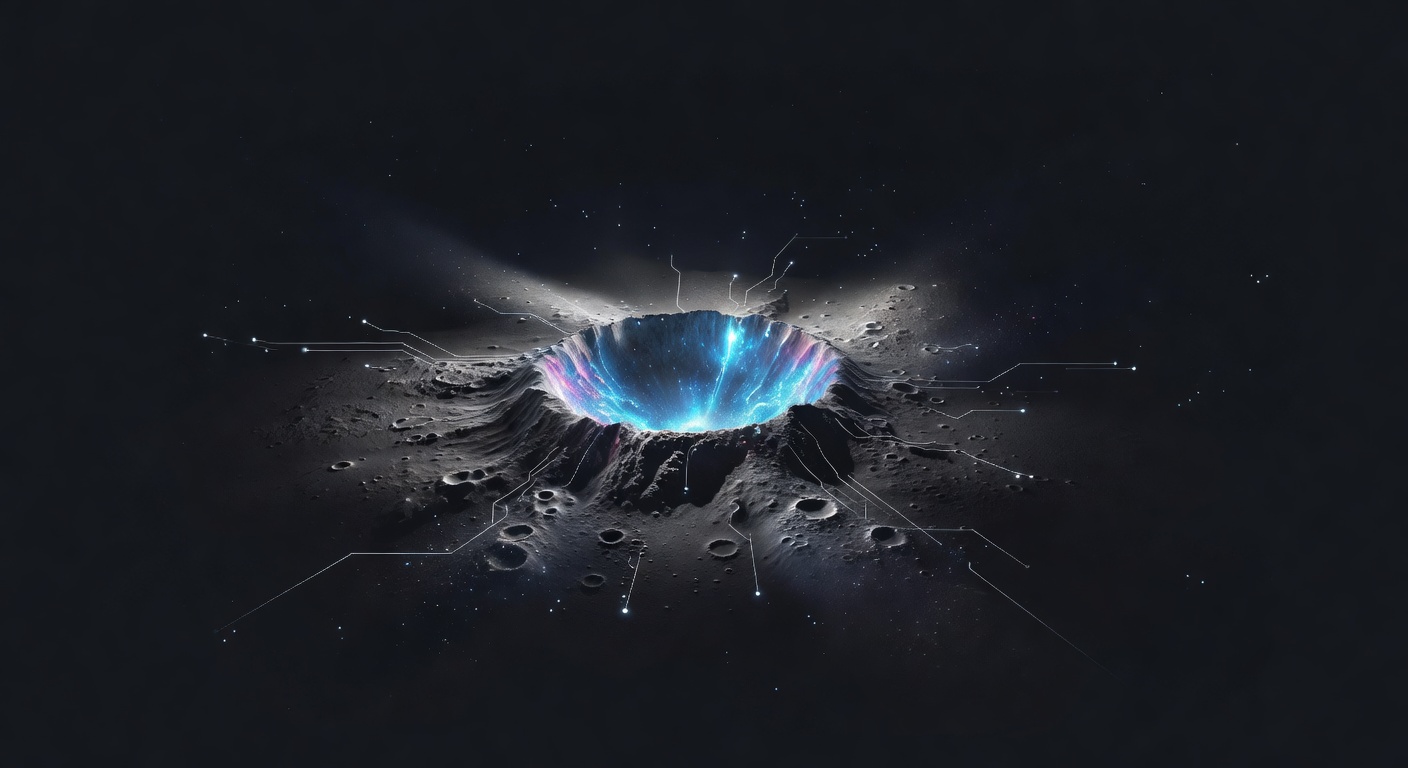
The crater's about 22 meters across. Nothing earth-shattering by cosmic standards (ironically), but the real story is how shiny it is. When that space rock hit, it blasted material outward in every direction, creating these gorgeous streaking rays that spread out like a sunburst. All that freshly exposed rock is bright and new-looking compared to the dark, ancient dust surrounding it.
The Beauty That Doesn't Last
Here's where things get poignant. That brightness won't stick around.
The Moon doesn't have weather, but it does have "space weather"—constant bombardment from solar wind, tiny meteorites, and cosmic radiation. Over thousands to millions of years, these forces will gradually darken that bright crater until it blends into the background. Eventually, it'll look just like every other old scar on the lunar surface.
This actually explains why some craters look bright and relatively fresh while others are faded and ancient. A crater like Tycho, which formed about 108 million years ago, still has visible rays you can spot with a decent telescope. But older craters? Their rays are long gone, swallowed by the slow process of cosmic weathering.
Why This Actually Matters
You might be thinking, "Cool space fact, but so what?" Here's the real importance: finding new craters helps scientists figure out how often the Moon gets hit. And that's not just trivia—it helps us understand the risks to spacecraft and eventual human settlements.
Plus, each new crater is basically a timestamp. By studying how quickly craters change and fade, researchers can develop better ways to figure out how old different parts of the Moon's surface actually are. It's like having a cosmic clock written in impact craters.
The Moon Is Alive (Well, Geologically Speaking)
What I love most about this discovery is what it represents: the Moon isn't some dead, unchanging object hanging in the sky. It's still being actively shaped by cosmic events happening right now.
Every time a meteor hits the Moon—which happens regularly—it's adding a new story to a surface that's been accumulating tales for 4.5 billion years. That's genuinely spectacular when you think about it.
Next time you look at the Moon, remember that what you're seeing isn't static. There are fresh craters up there that are younger than your smartphone. The solar system is still doing its thing, still throwing rocks around, still reshaping worlds.
And we finally have the tools to watch it happen.