
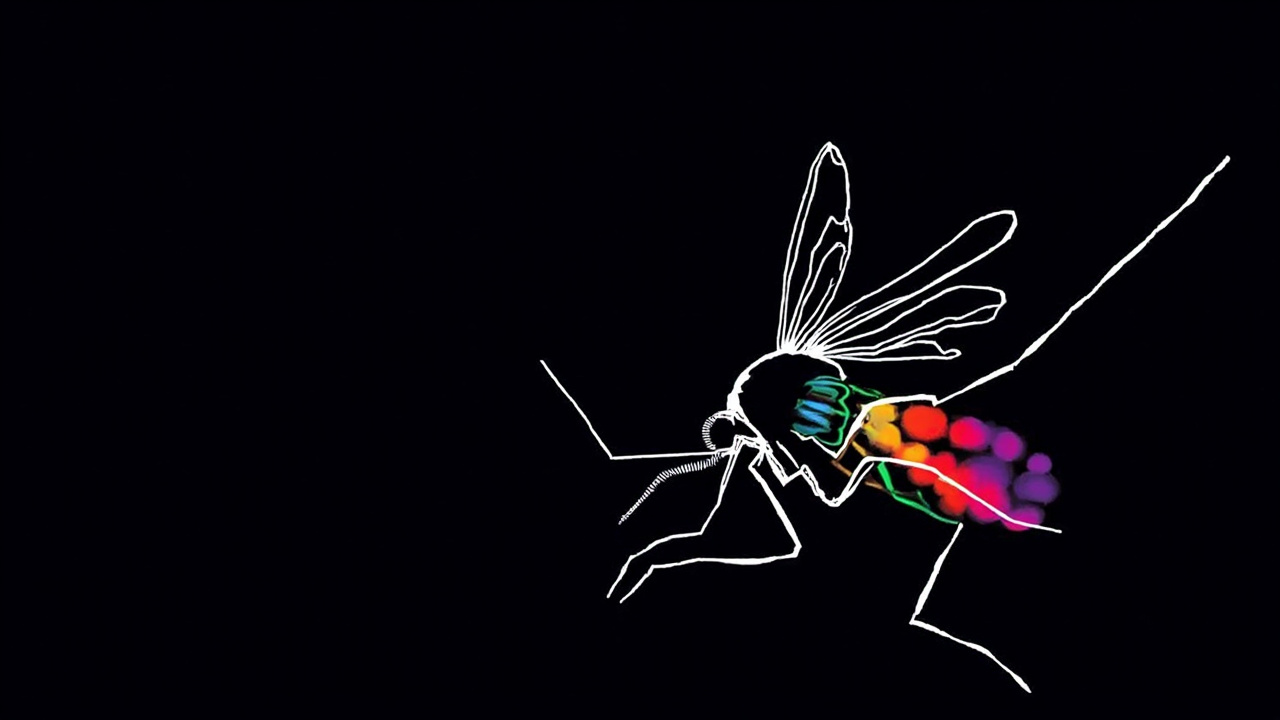
The Mosquito That Made Us: How a Tiny Pest Rewrote Human Evolution
When we think about what shaped human evolution, we usually picture dramatic scenes: Ice ages forcing populations to migrate, mountain ranges creating barriers, deserts acting as natural walls. We imagine climate and geography as the main directors of the human story. But what if I told you that one of the most important forces shaping where our ancestors could actually live was something invisible—something you can't see on a map?
Disease as an Evolutionary Director
A fascinating new study from the Max Planck Institute is challenging everything we thought we knew about human settlement patterns in Africa. Turns out, malaria—the same disease that kills people today—may have been quietly steering human populations around like an invisible hand on a chessboard for at least 74,000 years.
Think about it this way: imagine you're trying to build a civilization in ancient Africa, and you stumble into a region where a disease-carrying mosquito thrives. Your people start getting sick. Maybe some die. Naturally, you'd move to somewhere safer, right? That's basically what our ancestors did, over and over again, across millennia.
The Research Behind the Discovery
The team behind this study didn't just speculate—they did some genuinely clever detective work. They used computer models to reconstruct where malaria-carrying mosquitoes likely thrived across sub-Saharan Africa during different time periods. They combined this with climate data from the ancient past and overlaid it with what we know about where early humans actually lived.
The pattern was unmistakable: wherever malaria risk was highest, human populations either avoided the area entirely or couldn't sustain settlements there. It's like malaria drew invisible "keep out" lines across the African landscape that our ancestors respected without even knowing why.
How a Disease Shaped Diversity
Here's the really cool part: this wasn't just about survival. The way malaria forced our ancestors to settle in certain areas rather than others actually changed how human populations mixed and interbred over time.
When populations are separated geographically, even if only partially, they accumulate different genetic changes. Different mutations, different adaptations, different everything. Over tens of thousands of years, these small separations snowball into the genetic diversity we see among humans today.
So in a weird way, malaria is partially responsible for the beautiful genetic diversity of humanity. Without this ancient disease pushing populations apart and keeping them separated, we might look and be genetically different than we are now.
Why This Matters
What I find genuinely exciting about this research is that it opens up a completely new way of thinking about human history. We've always focused on climate and geography, and rightfully so—those are huge factors. But disease? Disease has been largely invisible in these discussions about deep human prehistory.
Dr. Eleanor Scerri, one of the senior researchers, put it perfectly: scientists rarely considered disease a major shaping force in our earliest history, partly because it was so hard to test without ancient DNA. But by combining multiple types of data in clever ways, this team found a way to see the fingerprints of an ancient epidemic written across the landscape of human settlement.
The Bigger Picture
This research also makes you think differently about disease in general. We tend to see infectious diseases as purely negative—obstacles to overcome, enemies to defeat. And sure, they are that. But they're also forces that have sculpted us, moved us around, changed who we are on a genetic level.
It reminds me that evolution isn't some distant thing that happened in the past. It's the story of how organisms respond to their environment—and sometimes, the environment includes other organisms trying to survive too (like mosquitoes carrying parasites).
The next time you hear about malaria in the news, you might think about it differently. Yeah, it's a serious health problem today. But 74,000 years ago, it was also a sculptor, quietly reshaping the human map of Africa, one avoided settlement at a time.