
Okay, storytime. And this one might just make your jaw drop.
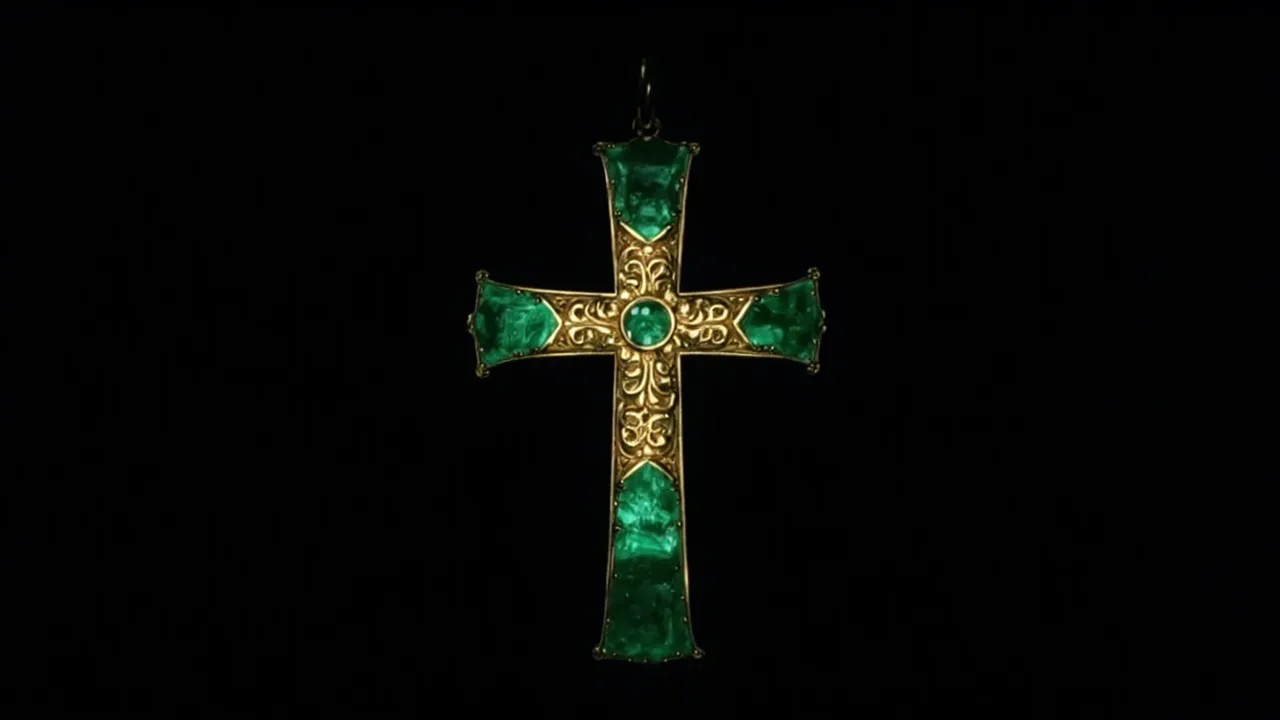
Picture it: Bermuda, the 1950s. A former British Navy diver named Teddy Tucker is poking around the ocean floor when he finds something extraordinary—a three-inch gold cross sparkling with seven genuine emeralds, the kind of treasure you'd see in a museum (or, you know, a pirate movie).
What happened next is equal parts fascinating and infuriating.
A Treasure Hunter Is Born
Teddy Tucker wasn't your average beach bum. During World War II, he trained in underwater demolition for the British Navy. After the war, he settled back in Bermuda—where he was born—and decided to pursue what he called his "mild interest in treasure hunting."
That mild interest turned into something much bigger. Tucker discovered over 100 shipwrecks in Bermuda's waters. But one discovery in particular would change his life forever.
Local fishermen had told him about marble columns underwater near a place called Freemans Bay. Being the curious type, Tucker dove down to check it out. What he found was the wreck of a Spanish galleon called the San Pedro, dating back to 1592.
Over several dives, he recovered gold ingots, coins, and other artifacts. But on his seventh trip, he hit the jackpot. Literally.
Finding the Cross
Here's how Tucker himself described that moment, according to his daughter Wendy, who now runs a website honoring her father's legacy:
"There was a big plank of some part of the ship, probably a hull plank or something. Just lifted it up and slid it away and there was a cross face down under it. And it was bright gold... Picked it up, turned it up, emeralds!"
Can you even imagine? You're just casually lifting a plank of wood from a 400-year-old shipwreck, and there it is—a gleaming gold cross studded with seven emeralds, each one shining with that "green fire" that genuine emeralds are known for.
Tucker knew right away these weren't fake. He'd heard that glass would have oxidized and frosted over the centuries, but these gems still sparkled like the day they were carved.
He took the cross home and... stuffed it in his closet.
Yes, you read that right. A priceless historical artifact that would eventually be valued at over $3 million (in today's money) was just sitting in his closet like some forgotten pair of socks.
From Secret to Spotlight
Tucker tried to keep the find under wraps. He even went back to the site to make it look less like a shipwreck, hoping to throw off other treasure hunters.
It didn't work.
Word got out. Life magazine ran a feature calling it "one of the most valuable pieces of sunken treasure ever found." Suddenly, Tucker couldn't go to sea without being tailed by other treasure hunters hoping he'd lead them to the jackpot.
The Smithsonian got involved, and an expert named Mendel Peterson valued the entire treasure haul—including our famous cross—at $250,000. That's over $3 million in today's dollars, adjusting for inflation.
Eventually, Tucker sold the entire collection to Bermuda's government. The cross was displayed at the Bermuda Aquarium, then moved to the Bermuda Maritime Museum.
And here's where things get weird.
The Swap
In 1975, the cross was moved again—this time to prepare for a very special visitor: Queen Elizabeth II herself was scheduled to tour the museum. Officials even invited Tucker to come and act as a guide for the queen.
When Tucker saw the cross again, something felt... off.
It was too dull. When he picked it up, paint came off in his hand.
He wasn't holding the $3 million gold cross. He was holding a cheap plastic replica, so new that the paint wasn't even fully dry.
Someone had swapped the real deal for a fake, right under everyone's noses.
The Mystery Remains
The queen never found out about the theft. The FBI and Interpol got involved, but nobody was ever caught. The cross was never recovered.
Teddy Tucker died in 2014 at age 89, still haunted by the theft of his most famous find.
I've been thinking about this story a lot, and honestly? The heist itself is almost more impressive than the treasure. This wasn't some smash-and-grab job. Someone had to:
- Get access to a supposedly secure museum
- Swap an authentic artifact with a convincing fake (that they had to commission or obtain somehow)
- Do it quietly enough that nobody noticed
- Time it so perfectly that the switch wasn't discovered until after the queen had come and gone
That's not amateur hour. That's professional-level planning.
Who did it? A treasure hunter who wanted to get their hands on the real piece? A museum insider with access? Someone who simply wanted to own a piece of history?
We'll probably never know.
And there's something deeply sad about that. That gold cross represents centuries of history—the story of a Spanish galleon, the hands of craftsmen from the Americas, the mysteries of the deep ocean. It's not just valuable; it's irreplaceable.
Somewhere out there, either in someone's private collection or lost forever to the sea (perhaps even dropped carelessly after the thief realized they couldn't safely sell it), that cross is waiting to tell its story.
Until then, we'll just have to settle for the plastic replica—and wonder what could have been.