
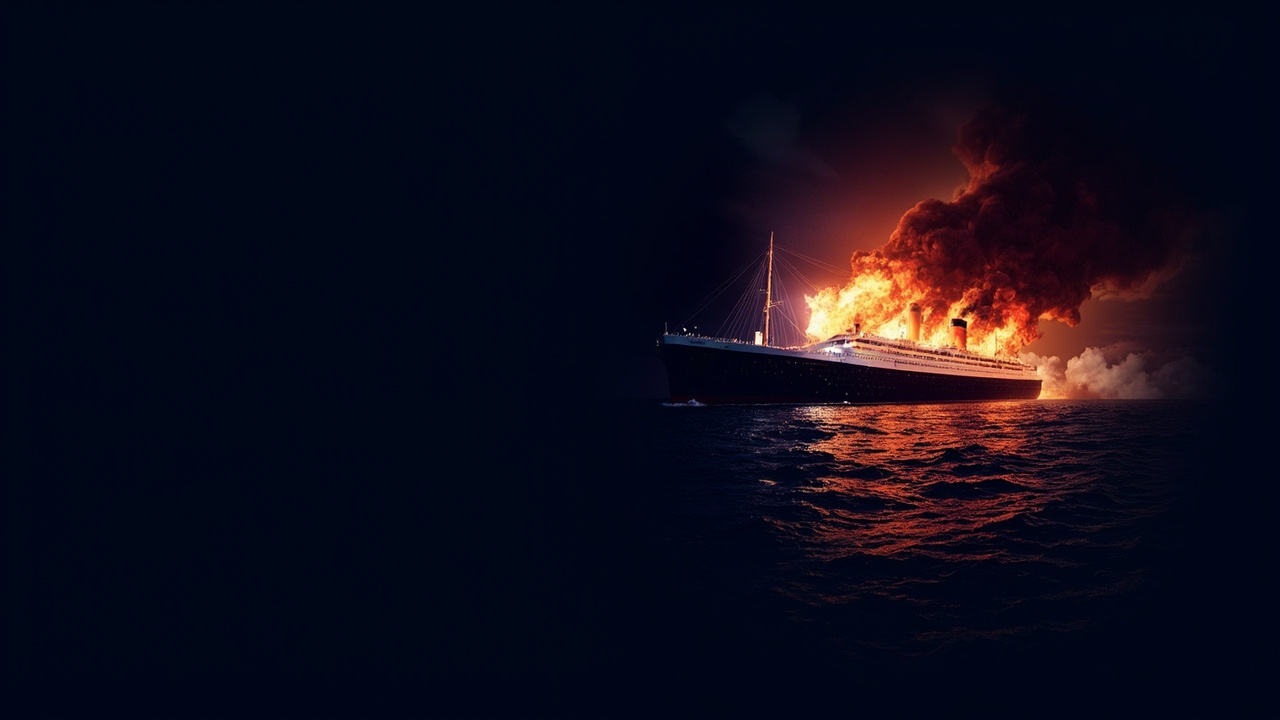
Picture this: It's September 1934, and you're on a glamorous cruise ship returning from Havana. The jazz is playing, the champagne is flowing, and everyone thinks the biggest drama of the voyage will be the fancy ball scheduled for the last night.
Then the captain drops dead.
And by morning, more than a hundred people are gone.
This isn't the plot of a murder mystery novel—it's what actually happened aboard the S.S. Morro Castle, and honestly? The real story is stranger than anything fiction could invent.
The Voyage That Doomed the Morro Castle
The Morro Castle was quite the vessel. Built in 1930 by Virginia's Newport News Shipbuilding company, this 508-foot beauty cost $5 million to construct and belonged to the Ward Line, which handled mail and freight routes between the United States and Cuba. Think of it as the semi-luxury option—not quite Titanic-level opulence, but definitely a step up from a basic cargo ship.
On September 7, 1934, the Morro Castle was making its 174th voyage from Havana back to New York. By all accounts, it had been an uneventful trip. That is, until passengers noticed something was very, very wrong.
The Captain Is Dead. Now What?
Here's where things get juicy. Captain Robert Willmott was found dead in his stateroom. No warning, no signs of struggle—just a man who'd apparently dropped dead at the worst possible time.
The ship's doctor examined him and determined the cause was "acute indigestion." I'm no medical professional, but something about that diagnosis just doesn't sit right with me. A perfectly healthy captain dies suddenly, and we're going with indigestion? Even in the 1930s, that seems like a stretch.
The fancy ball everyone was looking forward to? Canceled, of course. But here's the thing: the investigation into Willmott's death never really got off the ground. And I can't help but wonder if someone didn't want it to.
The Night Everything Went Wrong
Just hours after the captain's body was discovered, around 3 a.m. on September 8th, fires broke out on the ship. Not one fire—multiple fires, starting in different locations. One began in a closet in the Writing Room, while another erupted elsewhere on the vessel simultaneously.
Now, I don't know about you, but when multiple fires start in different spots within hours of each other, my conspiracy-sense starts tingling.
The timing gets even more interesting when you consider that a hurricane was approaching. The acting captain, William Warms, apparently made the questionable decision to keep sailing toward Sandy Hook rather than immediately seek harbor. With 30-mile-per-hour winds whipping through the ship, the flames had perfect conditions to spread like, well, wildfire.
A Ship Designed for Disaster
Here's where the Morro Castle's design failures come into play. The interior was gorgeous, sure—all that lacquered wood made it look elegant and luxurious. But that same beautiful wood became incredible fuel for the growing inferno.
And the safety systems? Let's just say they weren't exactly cutting-edge. The ship had 42 fire hydrants, but they only worked effectively if fewer than 10 were running at once. Beyond that, water pressure dropped to basically nothing. Imagine watching your ship burn while the fire hoses literally can't put out the flames because too many people are trying to help.
The crew's response has also puzzled researchers for decades. They didn't sound the alarm immediately—reportedly because they didn't want to wake passengers. By the time everyone realized the severity of the situation, it was far too late. Acting Captain Warms never even went to inspect the damage, which seems almost incomprehensible.
The Lifeboat Disaster
Of the 12 lifeboats aboard, only six were launched. And here's the heartbreaking detail: not even all of those were properly filled. Some lifeboats were literally stuck in place because they'd been painted and the paint had dried before anyone thought about lowering them into the water.
Can you imagine the terror? Watching your escape route rendered useless by something as mundane as wet paint.
Passengers had no choice but to leap overboard into dark, churning waters. Some died upon impact. Others drowned because they didn't know how to properly hold their life preservers. In a hurricane. In the dark.
A Call for Help That Came Too Late
The first SOS signal reportedly reached a New Jersey radio station, but there were delays in spreading the word. By the time help arrived, the Morro Castle had become an island of flames just miles offshore.
Local residents rushed into the waters to help with rescues. Their bravery undoubtedly saved lives, but by then, the damage was done.
When the smoke cleared, 134 people were dead—either from the fire, drowning, or injuries sustained during the disaster. Three more would die later from their injuries. Out of 549 passengers, 137 souls lost in a single night.
The Morbid Tourist Attraction
Here's something that still weirds me out when I think about it: after the disaster, thousands of sightseers descended on the New Jersey coast to see the devastation for themselves. The burnt hull of the Morro Castle languished just offshore for months, and people booked hotels, bought souvenirs, and collected postcards depicting the destroyed vessel.
Postcards. Of a disaster where over a hundred people died.
I'm all for learning from history, but there's something about commodifying tragedy like that which makes me uncomfortable. These were people—mothers, fathers, children—who never made it home. And yet, here were tourists treating it like a roadside attraction.
The Investigation That Solved Nothing
Only three men were ever indicted: Acting Captain Warms, a chief engineer, and a Ward Line vice president. They were convicted in January 1936 for misconduct, negligence, and inattention to duty.
But here's the kicker: all three convictions were overturned in April 1937. Warms, who had been the last person aboard the disabled ship, went on to sail again and even served in the U.S. Navy during World War II. No one ever faced meaningful consequences for the deaths of 137 passengers.
Who (or What) Killed the Morro Castle?
Nearly 90 years later, we still don't have definitive answers. Captain Willmott's death was never satisfactorily explained. The cause of the fire was never officially established.
But theories abound, naturally.
The most intriguing theory points the finger at George Rogers, a radio operator aboard the ship. Researchers have noted Rogers' troubled history and his behavior in the aftermath of the disaster. Multiple fires starting simultaneously? That's not usually how accidental fires work.
Could murder have claimed the captain? Was arson responsible for the blaze? Did someone want this ship to sink?
I wish I could give you answers, but honestly? The mystery is part of what makes this story so captivating. We've got a dead captain, a conveniently stalled investigation, mysterious fires, a questionable response from the crew, and a society that seemed more interested in gawking at the wreckage than understanding why it happened.
The Ghost Ship That Still Haunts Us
The S.S. Morro Castle was scrapped in March 1935, ending its brief, tragic existence. But the questions it left behind persist.
Every time I read about this disaster, I'm struck by how many "what ifs" there are. What if the captain hadn't died? What if the fires had been detected sooner? What if the crew had sounded the alarm immediately? What if the lifeboats had been properly maintained?
We might never know what really happened aboard the Morro Castle that night. But perhaps that's the real tragedy—not just the 137 lives lost, but the questions that may never be answered.
Sometimes history's biggest mysteries aren't about what happened, but why.