
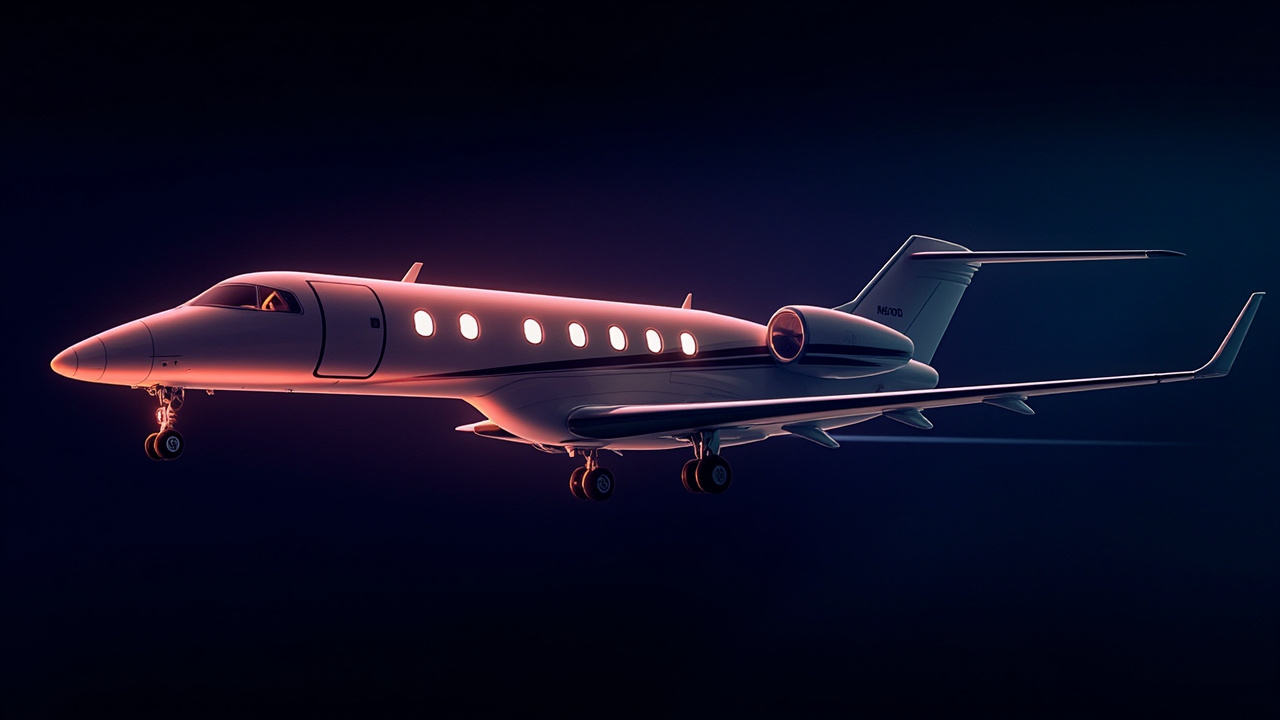
The Ghost Plane Over Virginia
Imagine you're an air traffic controller in Washington, D.C., on an ordinary June afternoon. Suddenly, a radar blip that should be landing on Long Island turns around. The jet is now heading straight toward the nation's capital at full speed. You try the radio. Nothing. You try again. Still nothing. That's when things get really serious.
This isn't the setup for a thriller movie—it actually happened on June 4, 2023. A Cessna Citation 560 business jet, a sleek twin-engine aircraft about 41 feet long, departed Tennessee that morning with what seemed like a straightforward flight plan. But somewhere over Long Island, something went catastrophically wrong.
When a Plane Becomes a Weapon
Here's what made this situation genuinely scary for authorities: a silent, unmanned commercial aircraft flying toward America's capital city is a worst-case scenario. Officials had to consider the unthinkable possibilities. Was this terrorism? Could someone be using the plane as a weapon? These aren't paranoid questions—they're the exact scenarios that aviation authorities are trained to worry about.
The problem was timing and location. That stretch of airspace near D.C. is heavily restricted. The FAA maintains a no-fly zone around the capital, but here's the catch: it only extends up to 18,000 feet. This Citation was cruising at 34,000 feet, technically above the restricted airspace but definitely in the wrong place at the wrong time.
The Scramble
Within minutes, two F-16 fighter jets launched from Joint Base Andrews in southern Maryland. These aren't your typical rescue helicopters—they're combat aircraft. Armed and fast, they streaked into the sky with a single mission: locate the Citation and figure out what was happening.
The F-16 pilots would be looking for any visual signs of life in the cockpit. Are the lights on? Is there smoke? Can they see movement? In situations like this, when radio communication fails, visual contact becomes the only way to gather intelligence.
The Unsettling Questions
What makes this story so gripping is that it raises uncomfortable questions about what happens when planes go silent. We trust that pilots will always respond to radio calls. We assume someone is always in control. But what if they're not? What if something incapacitates the entire crew?
The longer the Citation flew without responding, the more alarming the situation became. Was the pilot unconscious? Had there been a catastrophic failure? Was there hostile intent? For the people on the ground—and in those F-16s—every minute was a nail-biter.
A Mystery Wrapped in Questions
I find this story fascinating because it reveals just how vulnerable we are to the unexpected, even in an age of sophisticated technology and monitoring systems. We have radar, we have satellites, we have fighter jets on standby. Yet a single silent aircraft can still create a genuine national security crisis.
The real kicker? This incident happened, and the outcome tells us something important about what actually occurred in that cockpit. The sudden turnaround, the silence, the eventual fate of the aircraft—it all points to a scenario that's oddly both more mundane and more tragic than terrorism.
Why This Matters
Stories like this remind us that aviation safety isn't just about mechanical failures or bad weather. Sometimes the biggest threat to safety is something that happens to a pilot that we can't predict or prevent. It's uncomfortable to think about, but it's the reality of modern flight.
What makes me really respect the system is how seriously everyone took this threat. From air traffic control to the military to emergency responders, the entire apparatus swung into action because of a single unresponsive aircraft. That's the kind of vigilance that keeps us safe, even when the outcome of this particular flight turned out to be something nobody wanted to face.
The investigation into Flight N611VG became a sobering case study in what happens when everything goes wrong at once—and why we need people paying attention, even when we'd rather not think about the darker possibilities of flight.