
Okay, I need you to picture this with me.
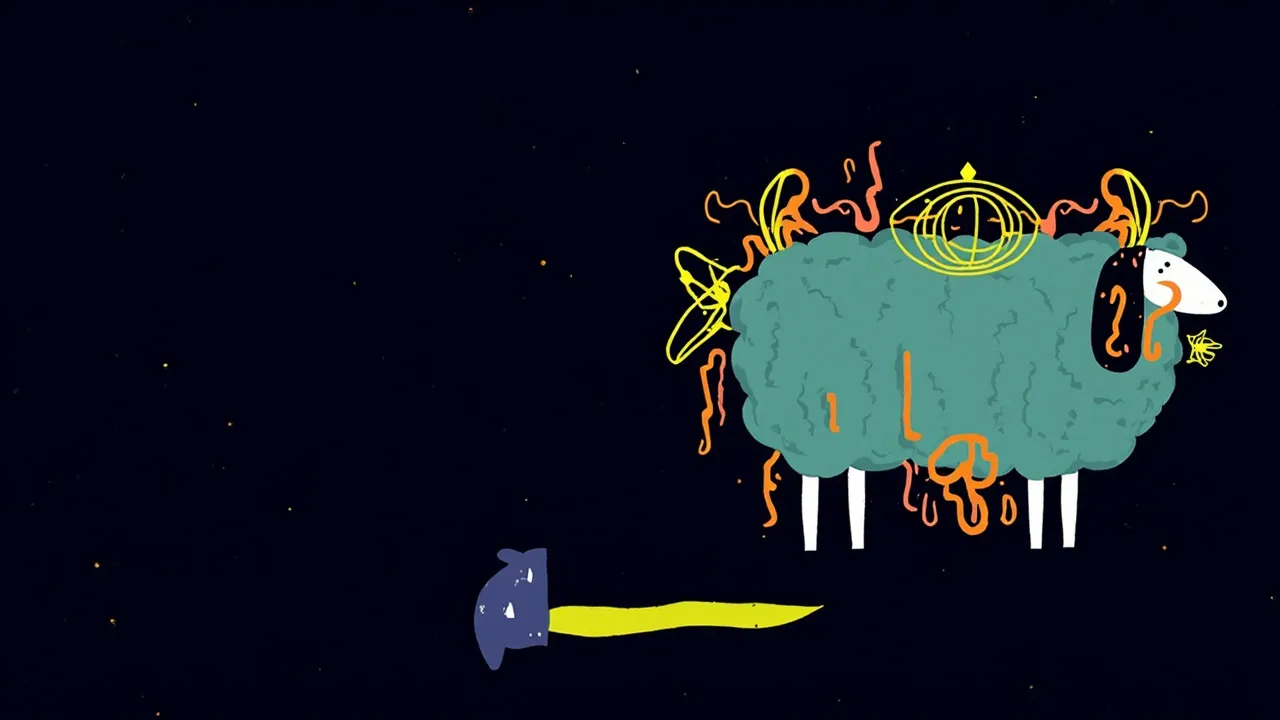
It's November 1888. You're a sheep farmer in Oxfordshire, settling in for the evening after what seems like a perfectly normal day. Then, at 8 p.m. sharp, something goes terribly wrong. Your sheep — along with every other sheep for miles around — absolutely lose it. They're jumping fences, trampling through fields, running in every direction like the wool itself is on fire.
And here's the truly wild part: this isn't just happening on your farm. It's happening simultaneously across 200 square miles of countryside.
Sheep: History's Most Dramatic Livestock
Look, I love sheep. I've met a few in my day, and they generally strike me as gentle, slightly dim creatures content to eat grass and stare at nothing in particular. But apparently, when they panic? Whoa boy.
These fluffy cloud-creatures have been in the U.K. for about 6,000 years. The Romans brought new breeds, the Normans made them the dominant farm animal, and at this point in history, wool was basically the economy. So we're not talking about some exotic, misunderstood creature here. British farmers knew sheep inside and out.
And yet.
The Panic of 1888
On the evening of November 3rd, 1888, the sheep of Oxfordshire collectively decided that existence was no longer acceptable. According to reports from The Times of London, tens of thousands of sheep "were taken with a sudden fright, jumping their hurdles, escaping from the fields, and running hither and thither."
The paper was genuinely stumped. "We have not heard, nor can any of the farmers give, any reasonable explanation," they admitted just weeks later. The night was dark, sure. There was some lightning. But surely that couldn't explain all of this across such a massive area?
Fair point, old-timey journalist. That's a very reasonable question.
The Scientist Who Tried to Explain It
Five years later, when another sheep panic hit the same region, ornithologist Oliver Vernon Aplin decided to investigate. His theory? The darkness itself terrified the poor things.
Aplin's research suggested sheep could see fine on regular dark nights, but when an unusually thick, unexplained darkness descended, they basically had a collective existential crisis. One witness described conditions as "being shut up in a dark room." Another said a dark cloud just rolled through the landscape.
If you've ever been suddenly plunged into complete darkness, you know that moment of pure panic when you can't tell where anything is. Now imagine being a prey animal with zero defenses, and that feeling lasts just a few seconds too long. A few panicking sheep bump into each other, startle others, and suddenly you've got a full-scale stampede.
It's actually a pretty compelling theory. Sheep are skittish. The RSPCA confirms they're essentially giant anxiety nuggets with no defensive strategies whatsoever. A sudden, disorienting darkness could absolutely startle a flock.
But Here's Where It Falls Apart
And this is the part that keeps me up at night: darkness doesn't explain how thousands of sheep across 200 square miles all panicked at the exact same moment.
Think about it. Lightning strikes. A predator. A loud noise. These things happen in one place. But this was simultaneous across an area the size of a small city. Whatever spooked these sheep wasn't localized — it was everywhere.
Was there some atmospheric phenomenon nobody recorded? A sound frequency we don't know about? Did every single sheep in Oxfordshire simply wake up that morning thinking, "You know what? Today I choose violence"?
We genuinely don't know.
The Mystery Lives On
Here's what gets me about this story: we can land a rover on Mars, edit genes, and clone sheep (yes, that's a Dolly reference, I'm old), but we can't explain why our woolly friends had one collective breakdown on a November night in 1888.
Some people online like to joke about aliens or government experiments gone wrong. But honestly? The real explanation is probably just as fascinating — some weird atmospheric or meteorological event we'll never fully understand because nobody was measuring the right things in 1888.
And honestly? I kind of love that.
In a world where we think we have everything figured out, it's oddly comforting to know that the humblest farm animal can still baffle us. Somewhere out there, in the annals of agricultural history, tens of thousands of sheep had one heck of a night — and the rest of us are still scratching our heads.
Next time you're stuck in traffic or dealing with a boring meeting, just remember: somewhere, some sheep once ran in blind terror for no reason any human could ever understand.
We should probably be grateful we're not them.
What do YOU think caused the Great Sheep Panic? Drop your theories in the comments — I read every single one.