
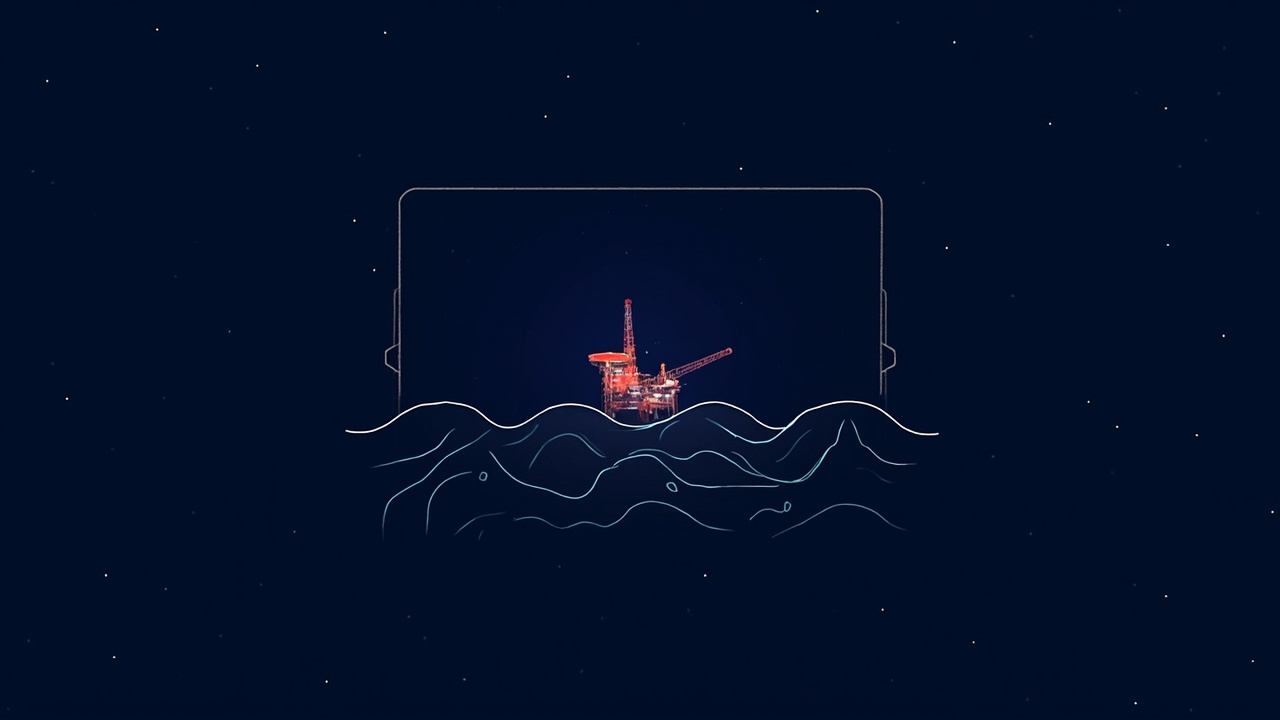
A Black Gold Giant
Let me tell you about a place that once pumped out more oil than almost anywhere else on Earth—and then vanished in a single night.
The Piper Alpha platform was a beast. Sitting in the cold, gray waters of the North Sea roughly between Scotland and Norway, it was the undisputed champion of oil production for years. Every single day, this thing was churning out 15.1 million gallons of oil. That's enough to fill roughly 23 Olympic-sized swimming pools. Daily. The platform provided a whopping 10 percent of the entire United Kingdom's oil and gas supply.
When it started production in 1976, Piper Alpha was operated by Occidental Petroleum and represented the cutting edge of offshore drilling technology. A massive structure, connected to the Orkney Islands by a 128-mile pipeline, it was the kind of engineering achievement that made you believe humans could conquer just about anything.
But here's what haunts me about this story: this titan of industry didn't sink slowly over decades. It didn't succumb to old age or gradual wear and tear. It was gone—literally swallowed by the sea—in just over an hour on a summer night in 1988.
The Warning Nobody Saw
So what happened? The truth is both heartbreaking and infuriating.
Three days before the disaster, the platform underwent major maintenance work. One of the projects involved replacing natural gas equipment. Here's where things went tragically wrong.
In the gas compression module, workers were servicing pump A. As part of this work, they removed a pressure safety valve and replaced it with what's called a "blind flange"—essentially a metal plate to seal the opening. But—and this is the part that still gives me chills—they never leak-tested it.
Now, here's where the system's failures compound catastrophically. The way work permits were organized on Piper Alpha was... let's just say, not ideal. When the evening shift arrived, nobody told them about the missing valve. Nobody wrote it down clearly enough. The incoming crew simply didn't know they were working on a platform with a compromised seal on its gas system.
At 9:45 PM, pump B had a mechanical issue and shut down. The crew, under pressure to maintain production schedules, restarted pump A. And through that untested blind flange, gas condensate began spewing into the air.
The Chain Reaction
Within seconds, the escaped gas found an ignition source. The explosion that followed was just the beginning. It triggered what experts call a "cascade failure"—one explosion leading to another, then another, each one weakening the structure further.
By the time the fires were done, the platform was so severely damaged that it began sliding into the ocean. The four-story accommodation module—where workers slept, ate, and rested between shifts—tumbled into the frigid North Sea water. All 81 people inside died instantly.
When morning came, three-quarters of the structure above the water line had disappeared. It took weeks to finally extinguish the fires. Weeks.
The Human Cost
Let me sit with this for a moment.
167 people lost their lives that night. 61 others escaped with theirs, though I imagine they carry their own invisible wounds to this day. This wasn't just the deadliest offshore oil rig accident in history—it was a catastrophe that could have been prevented.
After the inquiry, led by Lord Cullen, we finally understood what killed those 167 men: a missing pressure valve caused by a work permit mix-up. A moment of miscommunication. A failure in the system to communicate critical safety information to the people who needed it most.
That's what haunts me about industrial disasters. They're rarely the result of one catastrophic failure. They're usually the result of multiple small failures stacking on top of each other until the whole thing comes crashing down.
What Remains
Today, if you visit Aberdeen, Scotland, you'll find a memorial at Hazlehead Park. Queen Elizabeth II unveiled it on the third anniversary of the disaster. There's a casket of unknown ashes interred there—men whose remains were never recovered from the sea.
Piper Alpha has been replaced by Piper Bravo, which began operating in 1992. It's still out there in the North Sea, doing the hard work of keeping our world running on fossil fuels. And honestly? That feels like part of the tragedy. We've built systems so essential to modern life that we sometimes forget the humans working inside them—and the terrible price they can pay.
The next time you fill up your car or turn on your heater, take a moment to think about Piper Alpha. Think about 167 workers who went to work one evening and never came home—not because of some unforeseeable natural disaster, but because of a chain of preventable failures.
That's a story worth remembering. Not just for the engineering lesson, but for the human one.
Source: https://www.popularmechanics.com/science/a71537851/oil-rig-vanished