
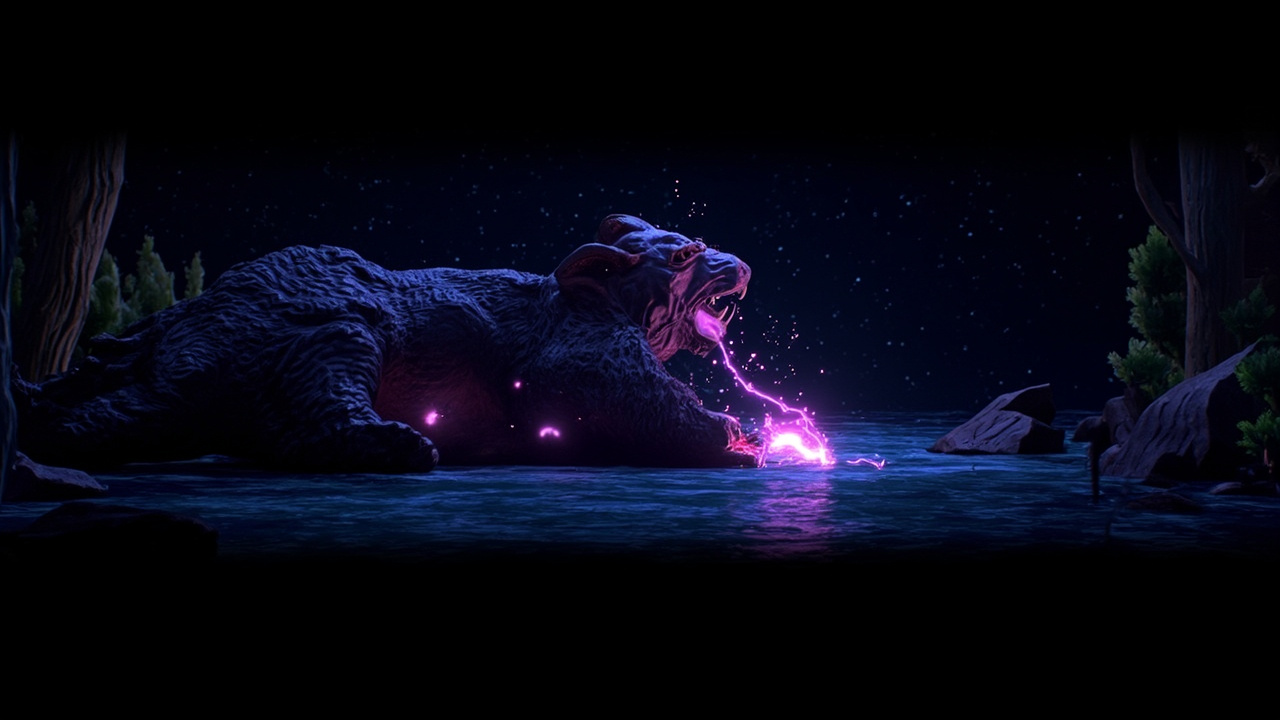
Picture this: It's 3 million years ago in East Africa. You're Lucy (no, not that Lucy from the 70s — the actual Lucy, the famous early human ancestor), and you're feeling thirsty. You crouch down by the river to take a drink.
But wait.
Something's moving beneath the murky water. Something big.
Good luck, because that river was absolutely loaded with nightmares.
Meet Lucy's Hunter
Scientists have just given a name to one of the most terrifying predators our ancestors ever faced. It's called Crocodylus lucivenator — which translates to "Lucy's hunter" because, well, that's exactly what it was.
This wasn't just any old crocodile. This was a 12-to-15-foot-long beast weighing somewhere between 600 and 1,300 pounds. Christopher Brochu, the University of Iowa researcher who led the study, put it bluntly: "It was the largest predator in that ecosystem, more so than lions and hyenas, and the biggest threat to our ancestors who lived there during that time."
He also said the crocodile would have absolutely seen Lucy's kind as dinner. So that's... reassuring.
A Bumpy Surprise
Here's what made researchers do a double-take when they first examined these fossils: this crocodile had a weird hump right in the middle of its snout. Not on the tip — in the middle. That's not something you see in today's Nile crocodiles.
Brochu recalls being "blown away" by the unusual combination of features. The hump is actually something you see in some modern crocodiles too, and researchers think it might have been used during courtship displays. You know, because nothing says "be mine" like showing off your facial bump.
The crocodile also had a snout that extended farther out than other crocodiles from that era, giving it a more elongated look that we associate with modern crocs. So it wasn't just big — it was built differently than what came before and after.
Reading the Bones
To identify this new species, researchers went through 121 fossil specimens — skulls, teeth, jaw fragments — all recovered from the Hadar Formation in Ethiopia. If that name sounds familiar, it's because Hadar is basically a gold mine for human evolution research. That's where Lucy herself was found back in 1974.
Most of the crocodile fossils were pretty beat up, which made the research challenging. But one specimen actually preserved evidence of a pretty rough day: injuries on the jaw that had partially healed, suggesting a fight with another crocodile. You know, the kind of face-biting that apparently runs in the crocodile family tree throughout history.
Dr. Stephanie Drumheller, who worked on the study, noted that we can't know who won that fight — but the fact that the animal survived long enough to heal suggests it pulled through. Good for the crocodile, I guess?
Living Alongside Lucy
The really wild part? This crocodile had the Hadar region almost entirely to itself. Other crocodile species lived farther south in the Eastern Rift Valley, but Crocodylus lucivenator dominated this particular spot for hundreds of thousands of years.
The environment back then was a mix of shrublands, wetlands, rivers lined with trees, and grassy areas. Basically, ideal ambush predator territory. Crocs would have hidden just below the surface, waiting for thirsty animals to come for a drink.
Including, apparently, our direct ancestors.
What This Tells Us
Here's what gets me about this kind of discovery: we're so used to thinking about human evolution as this story of us becoming smarter, walking upright, developing bigger brains. And that's all true. But we often forget that evolution wasn't happening in a vacuum. Our ancestors were navigating a world full of dangers we can barely imagine today.
A 15-foot crocodile waiting to grab you while you drink water? That's the kind of threat that would definitely motivate you to develop better survival strategies. Or at least to be very, very careful near water.
So the next time you see a crocodile documentary and feel grateful you don't have to worry about those anymore, remember: our ancestors did. And they still managed to survive, thrive, and eventually become us.
The study is published in the Journal of Systematic Palaeontology, and honestly, the name they chose is perfect. Crocodylus lucivenator. Lucy's hunter. It's dramatic, it's accurate, and it makes you think twice about every sip of water Lucy ever took.