
The Nuclear Race Nobody Talks About
Here's something wild: before Three Mile Island, before Chernobyl, before Fukushima made nuclear disasters feel like a modern invention—Britain nearly blew itself off the map. And nobody talks about it.
I stumbled onto this story while doom-scrolling at 2 AM (as one does), and I genuinely couldn't believe I'd never heard it before. So grab a cup of tea, because this one's worth your time.
It Started With a Betrayal (Sort Of)
Picture this: It's 1945. World War II just ended. British scientists were crucial in building the first atomic bomb through the Manhattan Project. We helped crack the code of the universe, people! But then, just a few years later, America passed the Atomic Energy Act of 1946, which basically said, "Sorry, Britain, you're on your own now."
Can you imagine the sting? Your best friends build something incredible together, then lock you out of the treehouse?
So Britain, desperate to join the nuclear club (because everyone wanted atomic weapons during the Cold War), rushed to build its own plutonium factory. No pressure, just trying to create enough radioactive material to build a bomb before anyone else.
Enter Windscale.
Building a Nuclear Frankenstein
In the remote hills of Cumberland (now Cumbria), the British government constructed two massive nuclear reactors called Windscale Piles No. 1 and No. 2. These weren't your typical reactors—they were basically enormous blocks of graphite with uranium rods jammed through them, cooled by air blowing through two 410-foot-tall chimneys.
Think of it like building a car engine without reading the owner's manual. Everything seemed fine on the surface. But here's where things get interesting.
The Problem Nobody Saw Coming
Remember that graphite I mentioned? It turns out graphite does something absolutely wild when bombarded with neutrons. Over time, it builds up what's called "Wigner energy"—basically, the carbon atoms get shoved into uncomfortable positions and store up energy like a compressed spring.
The problem? Britain had no idea this was even a thing. America wasn't exactly sharing nuclear secrets anymore (thanks a lot, Truman), so British engineers had to figure this out themselves.
Their solution? "Annealing." They'd heat up the reactor core to let the atoms relax back into their natural positions, releasing that stored-up energy in a controlled way. Seemed reasonable at the time.
Spoiler: It wasn't.
The Day the Core Turned Red
On October 7th, 1957, technicians started annealing Pile No. 1 for the ninth time since the reactor opened. Everything seemed normal at first. But then... things got weird.
The temperature in most of the reactor dropped normally. Except for one tiny channel—labeled 20/53—where the temperature did something completely unexpected. Nobody thought much of it at first. Maybe a faulty reading? A fluke?
Cut to October 10th. Technicians noticed something concerning: one thermometer was reading 400 degrees Celsius. That's double the reactor's normal operating temperature.
They sent workers in radiation suits to take a look. And here's the moment that made my jaw drop as I read it:
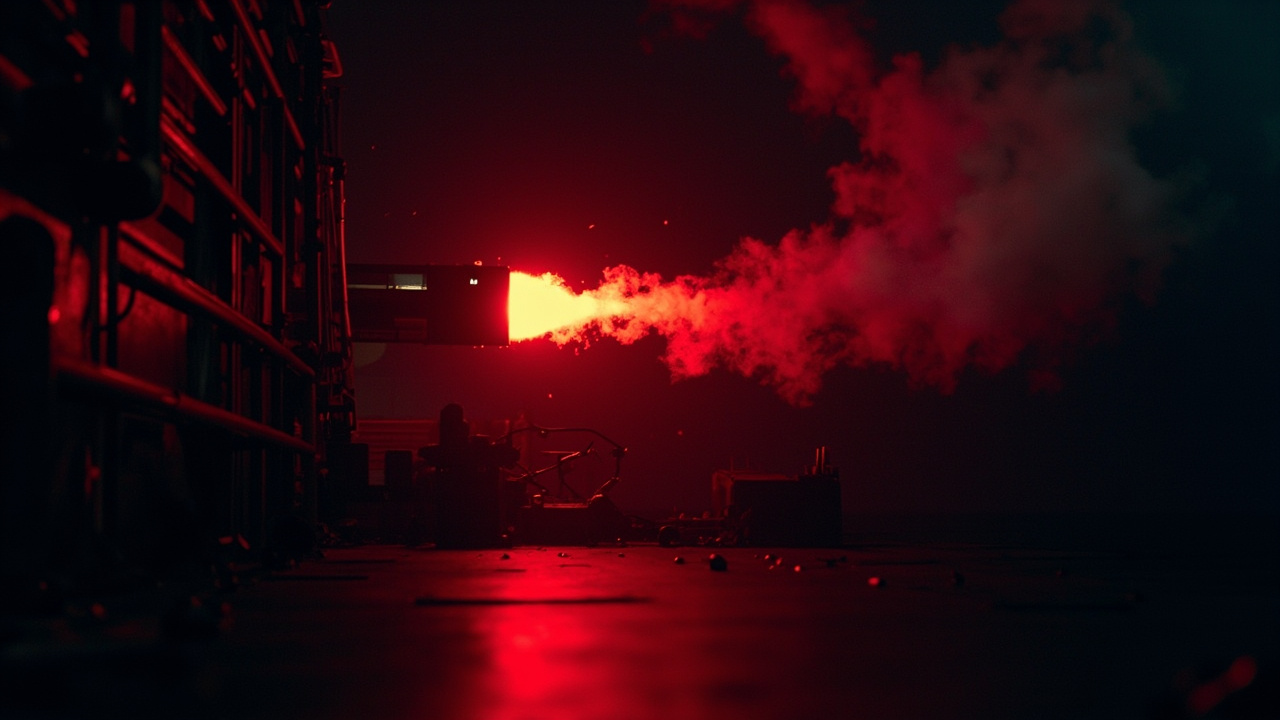
The fuel elements were glowing red.
Let me say that again because it's absolutely terrifying: the atomic heart of the reactor was literally on fire.
Red-hot uranium. Radioactive material burning inside a massive graphite structure. Iodine-131 and polonium-210 were already pouring out of those chimneys and drifting across the English countryside.
This should have been an extinction-level event for that region.
The Unlikely Hero: A Filter Called "Folly"
Now here's where the story gets almost comically lucky.
A scientist named Sir John Cockcroft—yes, the Nobel Prize winner who first split the atomic nucleus—had insisted on installing special filters in those chimneys "just in case" of a fire. At the time, engineers actually mocked the idea. They called it "Cockcroft's Follies," as in, "What a ridiculous waste of money."
Those filters captured 95 percent of the radioactive material that would have otherwise escaped.
This man saved potentially thousands of lives, and his colleagues literally laughed at him. I can't decide if that's tragic or hilarious. Maybe both.
The Guy Who Said "I'll Just Pour Water on It"
But wait, there's more.
On October 11th, the fire was still burning. Someone had to do something. That someone was Tom Tuohy, deputy to the general manager at Windscale.
His solution? Throw water directly onto the burning reactor.
In his own words during the investigation: "We were quite honestly frightened of the water because we didn't know whether there would be an explosion or not."
Here's why that was terrifying: when you pour water on molten metal, the water can split into hydrogen and oxygen—and explode. They were essentially gambling that they wouldn't turn a reactor fire into a massive bomb.
But they had no other choice.
And somehow—somehow—it worked. No explosion. Fire contained. Crisis averted.
The Cover-Up (Because Of Course There Was One)
The British government did what governments often do: they covered it up.
They banned milk sales within 200 miles of Windscale (worrying about radioactive iodine getting into cows), but publicly? Radioactive silence. The official story stayed classified for nearly 30 years.
Can you imagine living near there, not knowing you'd dodged a nuclear bullet?
What This Story Actually Means
Here's what gets me about the Windscale fire: it was a perfect storm of ignorance, urgency, and barely-contained chaos. Scientists didn't understand their own technology. Governments prioritized speed over safety. And almost nobody knew the true danger until decades later.
But—and this is a big but—it also shows how individual people can matter enormously. One scientist's paranoia about filters. One manager's willingness to risk an explosion. These weren't grand gestures or well-funded programs. They were individuals making choices.
The Windscale fire is a reminder that nuclear power isn't something to fear blindly, nor to embrace blindly. It's a technology built by imperfect humans dealing with forces we don't fully understand. The story should make us thoughtful, not certain in either direction.
And next time someone calls your safety precautions "follies," maybe just... listen to them?
The Bottom Line
The Windscale fire of 1957 was Britain's worst nuclear disaster—and it's barely a footnote in most history books. The reactor core literally caught fire, radioactive material spread across the countryside, and the only reason we don't talk about it alongside Chernobyl is a combination of luck and one very paranoid Nobel laureate.
Sometimes the heroes aren't the scientists who build things. They're the ones who prepare for the things that might go wrong.
Even if nobody believes them.
Source: Popular Mechanics