
So Here's the Thing About Heat...
Picture this: you're checking the weather and it says "sunny with a high of 75°F." Sounds nice, right? But what if I told you that number doesn't tell you the whole story? Maybe it was 40°F at 6 AM and didn't warm up until noon, or maybe there was a cold front that kept things chilly until late afternoon. The single number doesn't capture the experience of that day.
Well, researchers at William & Mary's VIMS & Batten School just discovered we've been making the same mistake with our oceans.
The "Aha!" Moment
The research team was studying marine heatwaves—those periods when ocean temperatures spike dramatically and cause chaos for marine ecosystems. You might remember hearing about them in the news, especially when they cause massive fish die-offs or coral bleaching events.
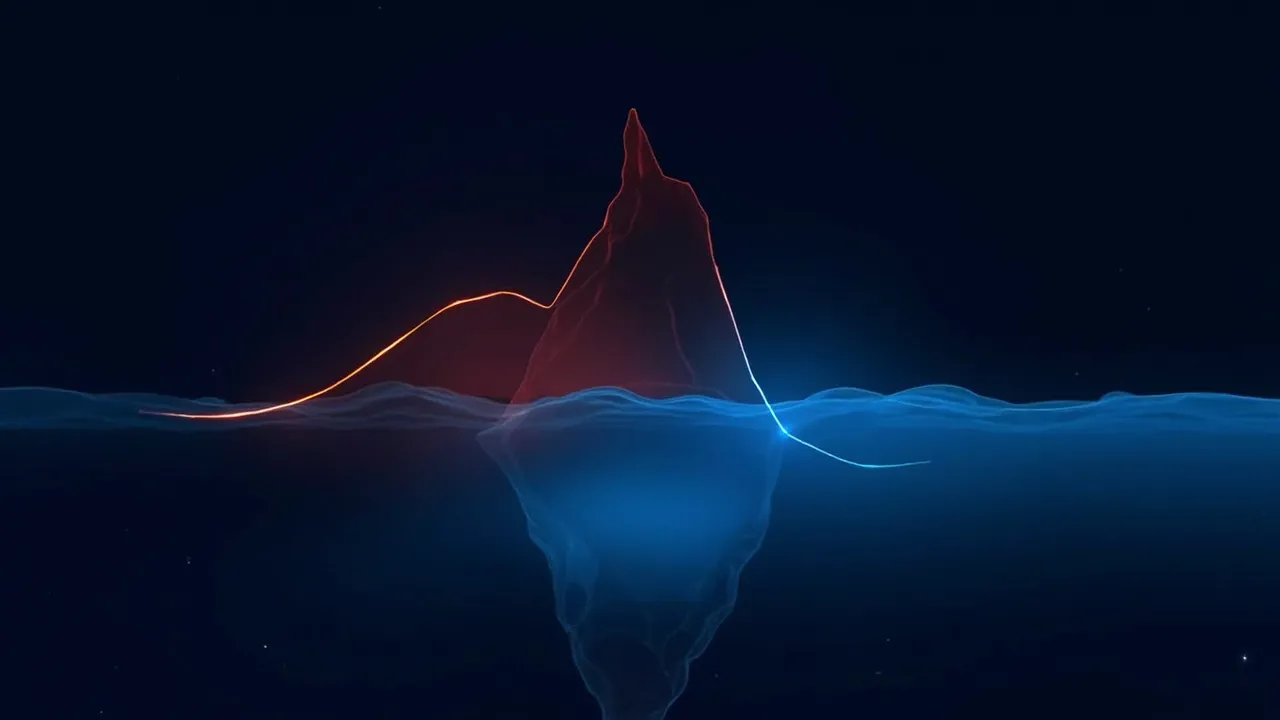
But here's what caught their attention: there was warm water before the heatwave officially started, and warm water after it ended. Like, lots of it. Weeks and weeks of it, sometimes.
"We started to notice these warm-water anomalies on either side of marine heatwaves," explained Ricardo Utzig Nardi, the study's lead author. "And we realized they're actually embedded within larger periods of warm water."
Mind. Blown.
Why Does This Matter? (A Lot, Actually)
Okay, let me break this down in a way that hits home.
Think about getting a sunburn. If you sit outside for 5 minutes, no big deal. Sit out there for 5 hours? You're gonna regret it. The damage isn't just about how intense the sun is—it's about how long you're exposed to it.
Same thing with marine creatures and warm water. Fish, shellfish, sea grass, all of it—they're not just reacting to how warm the water gets. They're dealing with how long that warm water stays warm.
The problem? Scientists have been measuring heat stress only during the official "marine heatwave window." Everything before and after? That was being ignored.
Until now.
The Numbers Are... Concerning
After analyzing over 2,580 marine heatwaves across 20 U.S. estuaries over two full decades, the researchers found something alarming: conventional assessments have been underestimating total heat exposure by more than 150%.
That's not a small oops. That's more than doubling what we thought we knew.
Let that sink in for a minute. Marine ecosystems have been dealing with two and a half times more heat stress than we've been accounting for.
Two Types of Heatwaves (Who Knew?)
The team even discovered that marine heatwaves come in two flavors:
Individual events make up about two-thirds of what they observed. These are marine heatwaves that occur within roughly 60 days of elevated temperatures around them.
Compound events are the other third—but these are the sneaky ones. They're associated with warming periods stretching about 90 days on either side of the actual heatwave. And get this: in these compound events, the warming before and after the heatwave itself generated more than three times the cumulative heat exposure than the actual heatwave.
Three times. The heatwave was basically the sideshow.
What This Means for Marine Life (and Us)
Here's where it gets really interesting—and a little concerning.
Many laboratory experiments that study how marine organisms respond to heatwaves only simulate a few days or weeks of elevated temperatures. Based on this new research, that's not even close to what happens in the real ocean.
"This is remarkably long periods of thermal exposure," said Piero Mazzini, one of the study's authors. "Our findings demonstrate that while these experiments hold value, they often fail to capture the prolonged thermal exposure organisms experience in nature."
So all those studies trying to understand how marine species will adapt to warming oceans? They might be missing the bigger picture entirely.
A New Way Forward
The good news? Now that scientists know what to look for, they can do better. The research team has developed a framework for measuring cumulative heat exposure that accounts for these broader warming periods.
This means we can finally start accurately assessing how much thermal stress marine ecosystems are actually experiencing—and that knowledge is crucial for protecting the creatures and habitats we share this planet with.
For me, what makes this research so fascinating is the reminder that nature rarely gives us neat, isolated events. Everything's connected, everything's part of something bigger. The ocean doesn't read scientific papers and respect our definitions of when a "heatwave" begins and ends.
Sometimes the most important discoveries aren't about finding something completely new—they're about realizing we were looking at something familiar in the wrong way.
Want to dig deeper into this research? Check out the original study in Nature's Communications Earth & Environment.
Source: https://www.sciencedaily.com/releases/2026/09/260928100603.htm