
Okay, I need to tell you about something that just blew my mind, and I honestly can't stop thinking about it.
Scientists recently discovered what they're calling the world's largest whale necropolis—an underwater graveyard stretching over 750 miles along the seafloor. Located in the southeastern Indian Ocean, this place is absolutely packed with whale fossils and carcasses. We're talking 476 whale fossils, five whole whale carcasses, and the deepest whale fall ever recorded, sitting nearly 22,000 feet down in the pitch black.
Now, I know what you might be thinking: "That's morbid. Why should I care about a bunch of dead whales on the ocean floor?"
Here's why this matters—and trust me, it's fascinating.
This graveyard is located in the Diamantina Fracture Zone, about 700 miles west of Australia. The researchers who found it spent about five weeks diving in something called the Dordrecht Deep, which bottoms out at over 23,000 feet. That's deeper than Mount Everest is tall, people. Let that sink in for a second.
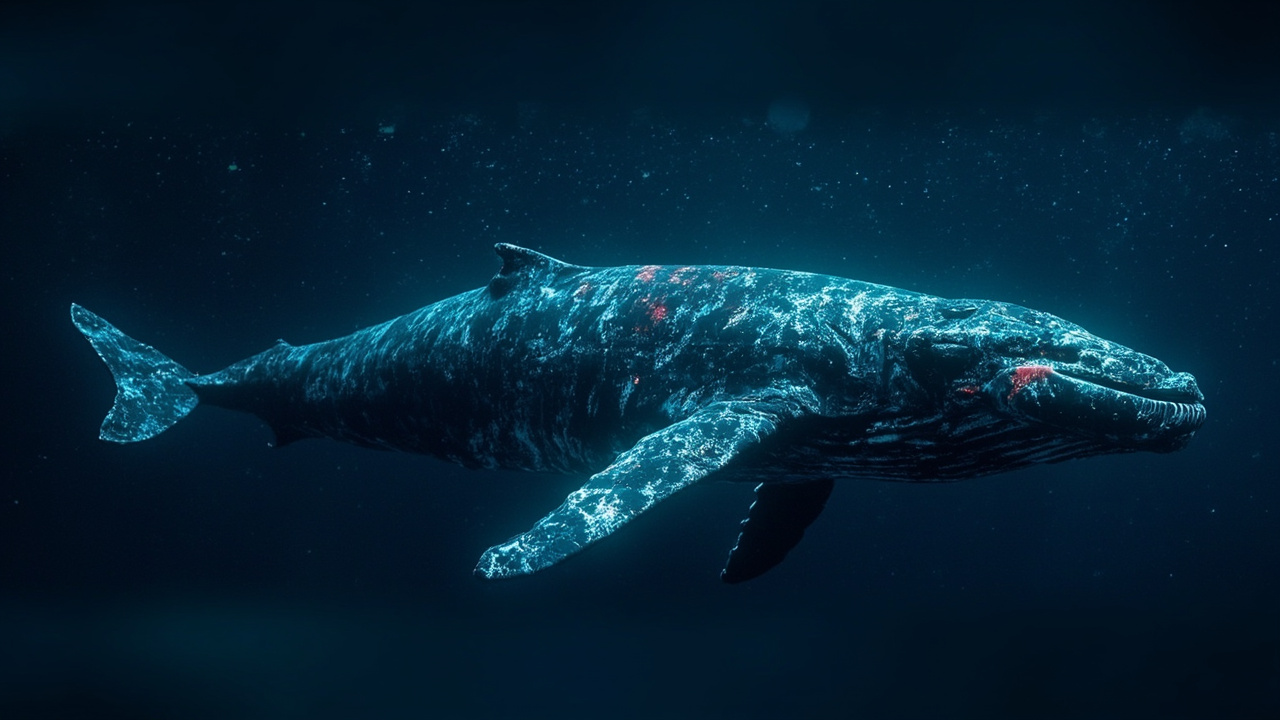
But here's the really cool part: most of these bones belong to beaked whales. You might not have heard much about them, and honestly? That's not surprising. Beaked whales are the mysterious rockstars of the ocean. There are 24 different species, yet they're arguably the least understood large mammals on the entire planet. Why? Because they live most of their lives in the deep ocean, far away from human eyes.
These whales are basically the introverts of the sea. They dive thousands of meters down to hunt squid and fish, they don't beach themselves often like some other whales do, and they just... keep to themselves. Scientists know so little about them that new species are still being discovered. In fact, this study found evidence of a brand new species in the genus Pterocetus—they named it Pterocetus diamantinae after the zone where it was discovered. How cool is that?
So why are so many of these whales dying in this one specific spot?
The researchers have a few theories, and honestly, they're all pretty plausible. First, the geography of the area—those V-shaped trenches and ridges—might act like a funnel, catching whale bodies that drift down from a much wider area. Second, and this is the part that really got me thinking, these whales might be diving deeper than their bodies can handle. Their normal maximum dive depth is around 9,800 feet, but the Dordrecht Deep goes way deeper than that. If a beaked whale gets exhausted or gets the bends (yes, whales can get decompression sickness too!), they might not make it back up.
Whatever the reason, this necropolis is basically a time capsule for understanding these enigmatic creatures. The oldest fossil they found is about 5.3 million years old—an ancestor of today's beaked whales. We're talking about a continuous record of whale deaths spanning millions of years, just sitting there on the ocean floor waiting to tell us its story.
The scientists described it as a "deep-sea fossil megasite" and honestly, that feels like an understatement. This is essentially a library of whale evolution, with each bone telling us something about how these animals lived, died, and evolved over time.
What I find most beautiful about this discovery is how it reminds us how much we still don't know about our own planet. We've mapped more of Mars than we have of our ocean floor. Places like the Diamantina Fracture Zone are hiding secrets that could take decades to fully understand.
And here's what gives me hope: every single discovery like this one helps us appreciate just how incredible and complex life on Earth really is. These beaked whales have been swimming in the dark for millions of years, completely under our radar. Now, thanks to this accidental graveyard, we're finally getting a glimpse into their world.
I don't know about you, but I find that strangely comforting. Even in our age of constant connectivity and information, nature still has mysteries worth uncovering. We just have to keep looking—and sometimes, those discoveries come in the most unexpected places. Like, apparently, a whale graveyard at the bottom of the ocean.