
When Geological Superpowers Start to Fade
Here's something wild that doesn't get talked about nearly enough: the forces that built our planet's landscapes and shaped entire continents don't just keep running forever. The massive tectonic machinery that's responsible for moving continents, triggering earthquakes, and even creating volcanic islands eventually winds down. And for the first time, scientists have caught one of Earth's most powerful geological systems in the act of shutting down.
Off the coast of British Columbia, beneath the cold Pacific waters, something extraordinary is happening. The Juan de Fuca and Explorer tectonic plates—which have been slowly diving down underneath the North American plate for millions of years—are starting to fall apart. And honestly, it's kind of fascinating to watch happen in real-time.
The Problem With Subduction Zones That Never Quit
Let me back up and explain why this matters. You know those subduction zones everyone talks about? They're basically nature's recycling system. Old oceanic crust gets pushed down into Earth's mantle, which helps keep the planet in balance. Without them, we'd have some seriously messed up geology—continents would just keep piling up on top of each other until the oceans literally disappeared. Not great.
But here's the thing: they can't last forever. If they did, Earth would look completely different than it does today.
So what actually stops them? That's been one of geology's biggest head-scratchers for decades.
Finally, We Can See It Happening
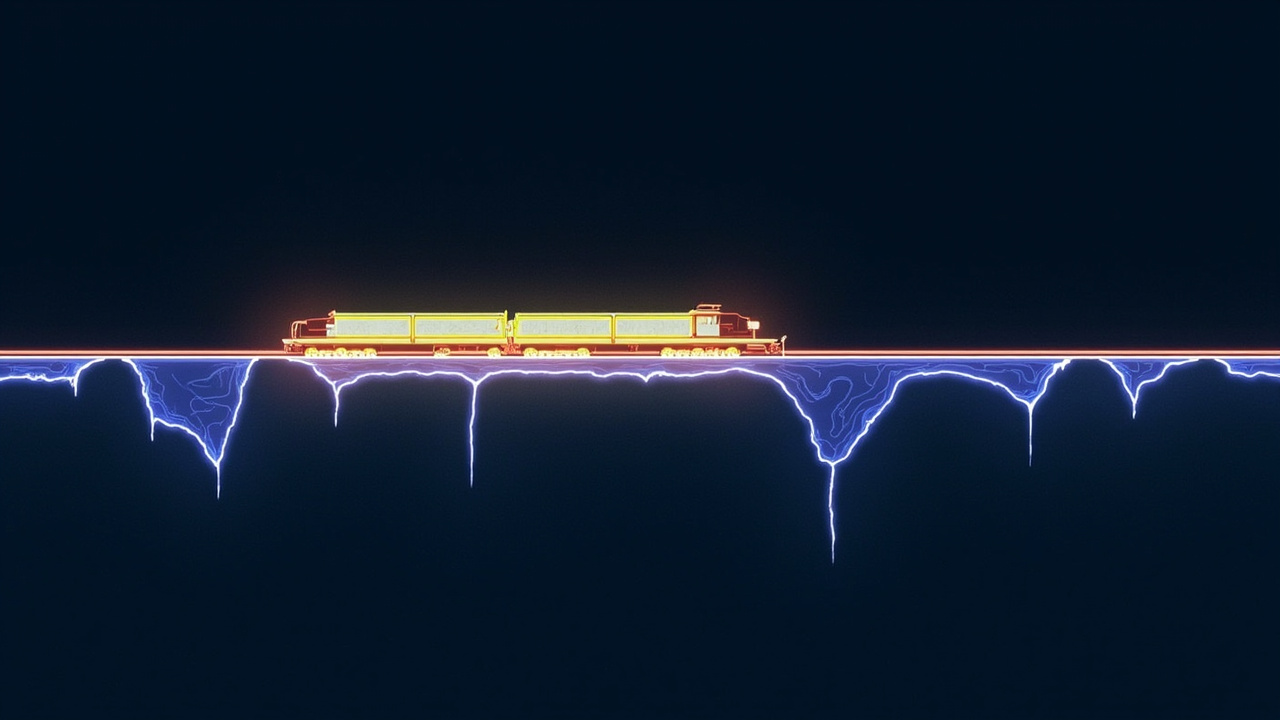
Brandon Shuck, a researcher at Louisiana State University (who did this work while at Columbia University's Lamont-Doherty Earth Observatory), has a great way of explaining it. He compares a subduction zone to a train: it takes an absolutely massive amount of effort to get one started—like pushing a train uphill with your bare hands. Once it's rolling downhill though? Nearly impossible to stop. Getting it to finally come to a complete halt requires something dramatic. A train wreck, basically.
Except it turns out the actual process isn't quite as violent as one catastrophic crash. Instead, it's more like watching a derailing happen in slow motion, car by car.
The Cascadia Experiment That Changed Everything
In 2021, scientists conducted an ambitious experiment called CASIE21 (Cascadia Seismic Imaging Experiment) aboard a research vessel. They basically performed an ultrasound on the Earth's crust using sound waves and a 15-kilometer-long array of sensors positioned on the seafloor. It sounds like something from a sci-fi movie, but it's real, and it gave us the clearest images we've ever seen of a subduction zone actively breaking apart.
What they found was astonishing: the Juan de Fuca plate isn't just slowly sinking into the Earth anymore. It's actively ripping—tearing itself into smaller and smaller pieces.
A Slow-Motion Train Wreck
The images revealed massive faults cutting through the plate, including one where the plate has dropped about five kilometers (roughly 16,000 feet). That's not a small shift—that's major structural failure happening right now, in geological real-time.
But here's the really cool part: different sections of that tear are behaving differently. Some areas are still producing earthquakes as rocks grind and fracture. Other sections? Total silence. Why? Because those pieces have already completely separated from the rest of the plate. Once rocks aren't stuck together anymore, they stop creating friction and stop generating earthquakes.
These silent zones are basically evidence of successful separations—chunks that have already torn off and are now independent fragments.
The Death of a Subduction Zone Happens in Chapters
This research shows that subduction zones don't flip a switch and suddenly stop working. Instead, they die through what scientists call "episodic" or "piecewise" termination. Imagine a row of dominoes, except instead of all falling at once, they tip over one or two at a time, over millions of years.
As each smaller piece detaches and floats away, the larger plate loses some of the downward pull that keeps the whole system moving. Eventually, after enough pieces have broken off, the entire machine loses momentum and grinds to a halt.
Why This Explains Earth's Geological Mysteries
This discovery does more than just explain what's happening in the Pacific Northwest. It actually helps solve long-standing puzzles about Earth's past.
For example, off the coast of Baja California, geologists have found fragments of the ancient Farallon plate—basically scattered pieces of an old tectonic plate that stopped working millions of years ago. Scientists suspected these were remnants of a dying subduction zone, but they could never quite figure out how those fragments ended up there or how the process actually unfolded.
Now, thanks to what we're seeing happen in Cascadia, the picture is becoming much clearer. Those ancient fragments were probably created through the exact same piecewise breakdown we're watching happen right now.
What This Means for Us
You might be wondering: if a plate is actively tearing apart off Vancouver Island, should we be worried? That's the million-dollar question, and it's probably going to keep scientists busy for years to come. Understanding exactly how these systems fail could help us better predict earthquake risks and volcanic activity in regions where these dramatic tectonic events happen.
The Pacific Northwest sits in one of the most seismically active zones on Earth. Having a clearer understanding of what's happening beneath our feet can only be a good thing—even if what's happening is essentially the slow-motion tearing apart of a tectonic plate.
The Bottom Line
What we're witnessing in the Pacific Northwest isn't apocalyptic—it's just geology on an epic timescale. Processes that unfold over millions of years are so slow that we usually can't see them. But with the right tools and the right questions, we can finally catch a glimpse of how Earth's most powerful systems eventually run out of steam.
And that? That's genuinely cool.