
Your Cat is Basically a Furry Physics Professor
If you've ever owned a cat, you've probably witnessed their legendary "always lands on feet" ability. Maybe they slipped off the back of your couch, or perhaps they misjudged a jump between furniture. Either way, somehow they twisted through the air like a furry little acrobat and stuck the landing like it was nothing.
I used to think this was just one of those random animal quirks, like how dogs tilt their heads when confused. But it turns out there's some genuinely mind-blowing science behind why cats are nature's ultimate stunt performers.
The Secret is in the Spine (And a Little Angular Momentum Magic)
Here's where things get cool. When a cat starts falling, they don't just flail around hoping for the best. They've got a whole system worked out that would make NASA engineers weep with envy.
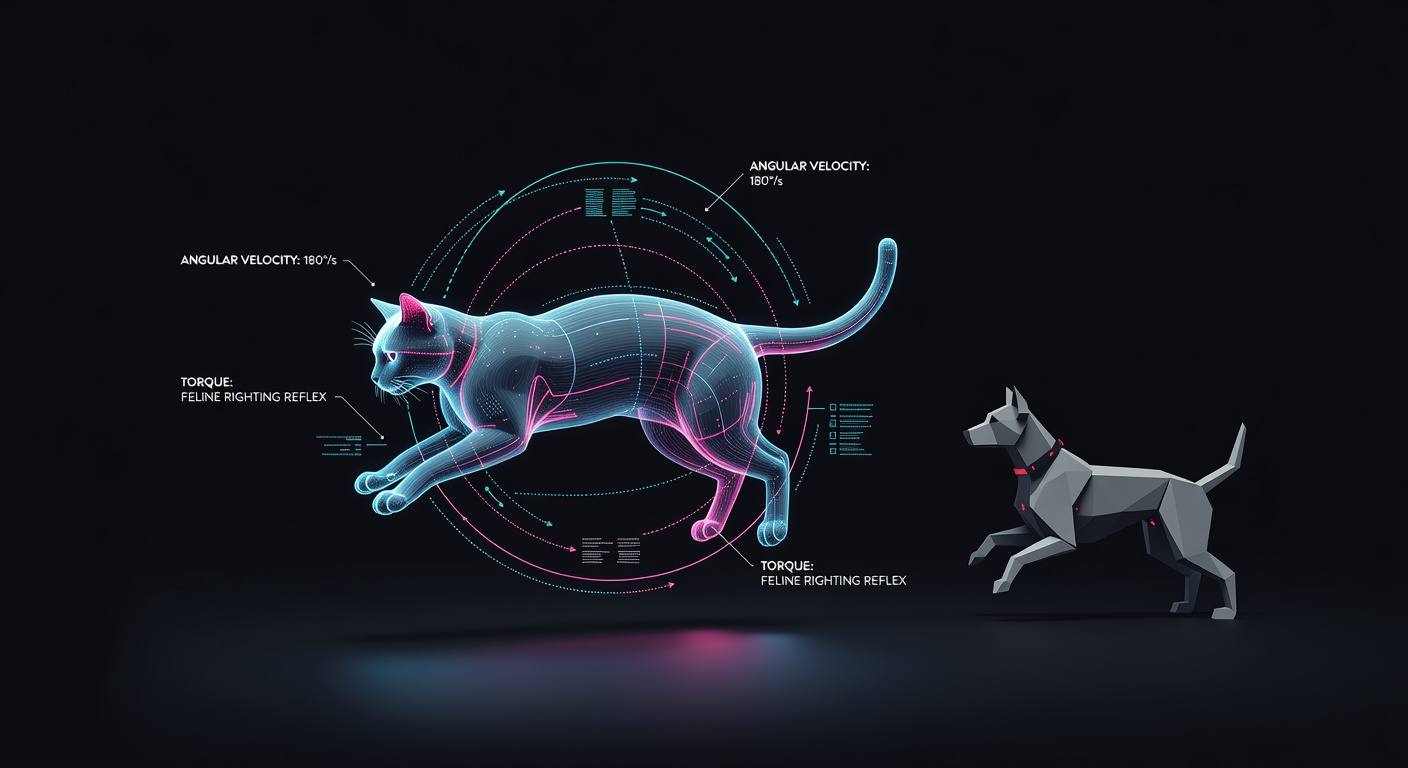
The two-part twist technique is the key. Cats essentially split their body into two sections - the front half and the back half - and rotate them in opposite directions. Think of it like wringing out a towel, but in mid-air and with perfect precision.
Their incredibly flexible spine is the star of the show here. While us humans have a relatively stiff backbone, cats can twist their spine up to 180 degrees. That's like being able to look directly behind you without moving your feet. Try it right now - I'll wait. See? Impossible.
Why Your Dog Will Never Master This Trick
Sorry dog lovers, but physics isn't on your side here. Dogs have much stiffer spines and different body proportions. They're built for running, digging, and being generally adorable - not for aerial acrobatics.
The cat's lightweight build and that magical spine flexibility create the perfect storm for mid-air corrections. It's like they're carrying around their own personal gyroscope system.
The Not-So-Perfect Landing Reality
Now, before you start thinking cats are invincible, let me throw in some important context. While cats are impressively good at orienting themselves during falls, they're not actually immune to injury.
The "high-rise syndrome" is a real thing that veterinarians deal with. Cats can and do get hurt from falls, especially from extreme heights. The whole "cats always land on their feet" thing works best for shorter distances where they have time to execute their aerial ballet routine.
What This Means for Robotics (Yes, Really!)
This isn't just cool trivia for cat lovers. Roboticists are studying feline falling techniques to design better drones and robots that can self-correct during unexpected tumbles. Imagine delivery drones that could recover from mid-air collisions using cat-inspired physics!
Engineers are also looking at how this could help design better safety equipment for humans. The principles behind a cat's righting reflex might influence everything from astronaut training to extreme sports gear.
The Bottom Line
Your cat's ability to land on their feet isn't magic - it's just really, really impressive physics wrapped up in a furry package. Every time your kitty executes one of these perfect landings, they're demonstrating principles of angular momentum, rotational dynamics, and biomechanics that scientists are still working to fully understand.
So the next time your cat casually defies gravity, give them a little extra respect. They're not just being dramatic - they're showing off millions of years of evolutionary engineering that puts our best technology to shame.
Just maybe don't test their abilities on purpose. Even physics has its limits.
Source: https://www.wired.com/story/a-new-study-details-how-cats-almost-always-land-on-their-feet