
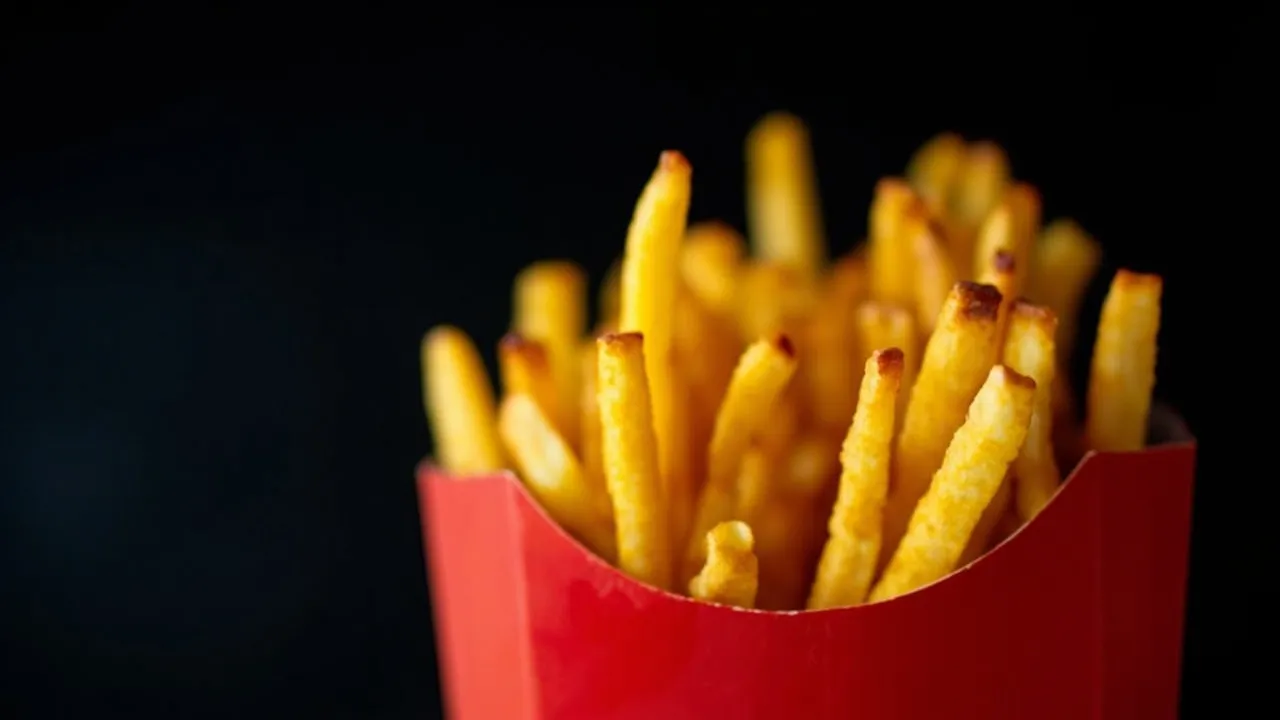
The Great French Fry Dilemma
Let's be honest: french fries are delicious. There's something deeply satisfying about that crispy exterior giving way to a soft, fluffy inside. But here's the thing — every time we indulge, we're also soaking up a lot of oil, which means a lot of extra calories and fat.
I've always wondered why something so good for our taste buds has to be so bad for our waistlines. Well, turns out some smart researchers at the University of Illinois Urbana-Champaign have been asking the same question — and they might have found an answer.
The Pressure Problem
Here's the fascinating part I never knew: when you fry a potato, the whole process is essentially a battle against physics. Inside every potato are tiny pores filled with water. As you heat it up, that water turns into steam and escapes, leaving behind empty spaces.
Professor Pawan Singh Takhar, who's leading this research, explains it with a clever analogy. Think about sucking on a straw — you create suction, and liquid moves up. Now imagine those tiny pores are like millions of mini-straws. Once the water is gone, that suction effect pulls oil right into the potato. Wild, right?
And here's the kicker: about 90% of the frying process happens while the food is under what's called negative pressure. That's a fancy way of saying the suction is working against you for most of the cooking time.
Enter Microwaves: The Unlikely Hero
This is where things get interesting. The research team discovered that adding microwave energy to the frying process completely changes the game. Here's why: when you use a regular pan or deep fryer, heat only enters from the outside in. But microwaves heat from the inside out — the waves penetrate through the whole potato.
What happens next is pretty cool. Those water molecules inside the potato start bouncing around faster, creating more steam and raising the pressure from within. When the pressure inside is higher (positive pressure), it's like pushing down on the straw — the oil gets pushed out instead of being sucked in.
The result? Less oil absorption while still getting that crispy texture we all crave.
Why This Matters Beyond Just Fries
Okay, I'll admit it — when I first read about this research, I mostly thought about fries. But the implications are actually much bigger. This technique could potentially make any deep-fried food healthier, from chicken tenders to onion rings to those tempting fritters at the fair.
The researchers even tested different microwave frequencies to see which worked best. They found that the technology could significantly shorten cooking time while reducing oil uptake. That's a win-win if you ask me.
The Road to Better Fast Food
Now, I'm not holding my breath to see this in every restaurant tomorrow. This is still research, and there are probably years of development ahead. But imagine a future where you can enjoy your favorite fried foods with a fraction of the oil content.
Professor Takhar put it perfectly: people want healthy food, but at the moment of purchase, cravings take over. If we can make the healthier option taste just as good, that's a game-changer for public health.
So next time you're debating whether to order fries or a salad, maybe — just maybe — the answer won't have to be so black and white. Science might soon make that decision a whole lot easier.
Source: ScienceDaily (https://www.sciencedaily.com/releases/2026/07/260729044048.htm)