
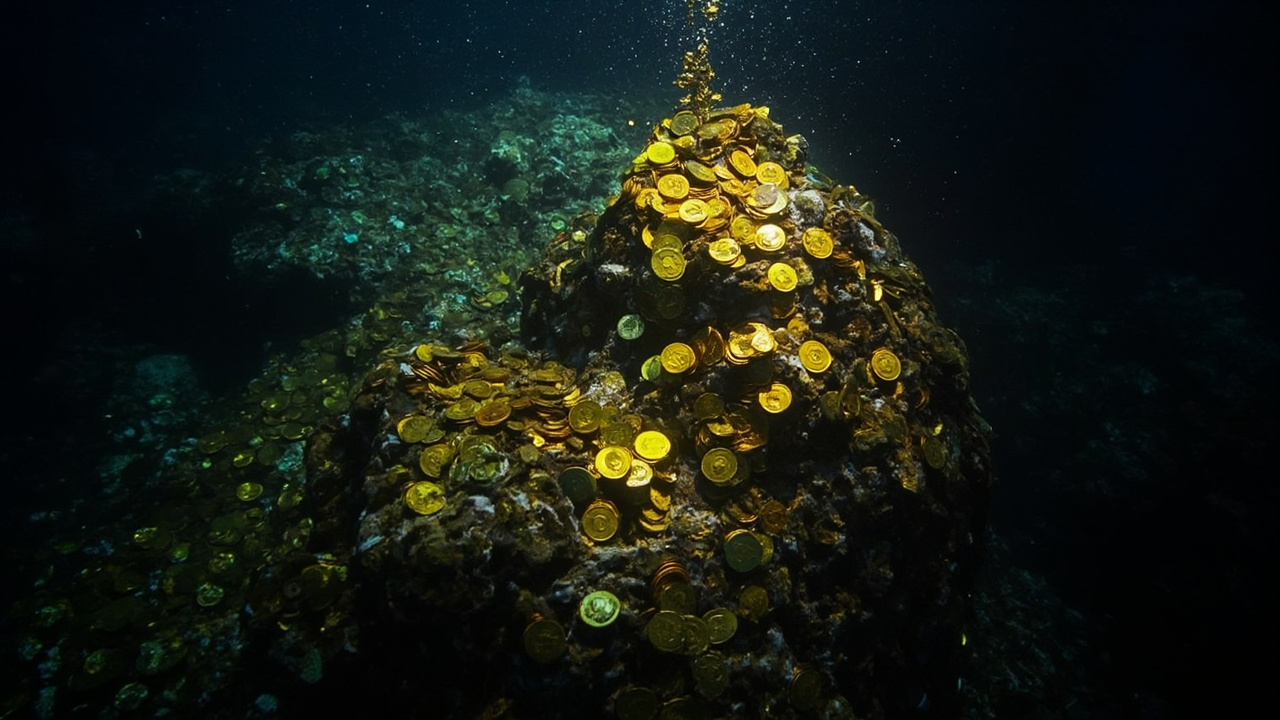
Okay, I need you to picture this with me.
You're a diver, right? Swimming along the seafloor near the English coast at about 60 feet down. It's dark, cold, your fins are kicking up sand... and then you see something glinting. Not a fish scale. Not a pretty shell.
Gold. Glorious, ancient gold.
That's literally what happened to members of the South West Maritime Archaeology Group in 1995. They stumbled upon more than 400 gold coins scattered across the seabed, along with gold jewelry, a gold nugget, and some kind of weird fish-shaped weight that nobody could explain at the time.
My first thought? This sounds like the opening scene of a pirate movie. But here's the thing—this was real, it happened, and the mystery of where it all came from took thirty years to solve. Thirty years! That's basically an entire career in archaeology right there.
The Plot Thickens (Because of a Pewter Spoon)
So, here's what researchers knew from the start: the coins were unmistakably Moroccan. We're talking pure West African gold, minted into what were called Barbary ducats—those were serious currency back in the day. The dive site was also littered with cannons, anchors, bits of rope, wood, and lead. Basically, the skeleton of an old ship was scattered across about 100 feet of seafloor.
But which ship? Where was it headed? And why was it carrying what looked like a small fortune in gold?
Researchers analyzed everything they could get their hands on. Faba beans. Resin-coated pills (probably medicine for the crew). Pottery shards. A stamp seal. They examined every single artifact, looking for clues.
And then came the breakthrough.
A simple pewter bowl and spoon turned out to be Dutch. Not English. Not Moroccan. Dutch.
That one little detail completely changed the direction of the search. Now they knew they were looking for a Dutch trading vessel, probably from the 1600s.
Meet the Dom van Keulen
After 30 years of digging through old records and analyzing artifacts, a team led by historian Ian Friel and archaeologist Dave Parham finally cracked the case.
The ship was the Dom van Keulen—a Dutch merchant vessel that set sail from Morocco in 1633, loaded with goods bound for the Netherlands. According to newly discovered documents, the ship ran into "much tempestuous weather" (their words, not mine, but honestly, perfect description) and started taking on water. The crew made the smart call and abandoned ship near the coastal town of Salcombe in Devon.
Here's the wild part: the crew actually saved most of the cargo. They got themselves and their goods safely to shore. But those pesky coins? They must have sunk into the sand before anyone could scoop them up. And there they stayed. For nearly 400 years.
What Was All This Gold Doing There?
This is where things get really interesting, folks.
The Dom van Keulen wasn't just randomly cruising around with a pile of cash. It was part of something much bigger—a massive 17th-century trading network connecting Morocco, the Netherlands, and Britain.
The Dutch were basically the Amazon.com of their era. They'd manufacture goods in the Netherlands (textiles, tools, weapons, you name it), ship them to West Africa, and trade for gold. Then they'd melt down that African gold and turn it into Dutch coins, which became one of the primary currencies of international trade.
The gold coins on that ship? They were part of this entire economic ecosystem. Researchers now say this find offers "tangible evidence of the flourishing 17th-century maritime trade linking Morocco, the Low Countries, and Britain."
But it gets better. The jewelry found alongside the coins? Researchers say it offers "unique examples" of the era's craftsmanship under the Sa'dian Sharifs, the rulers of Morocco at the time. So we're not just looking at gold here—we're looking at art, culture, and history, all tangled up together.
Why This Matters (A Lot, Actually)
Here's the thing that really gets me about this story. We've all heard about famous shipwrecks—the Titanic, Blackbeard's treasure ships, the Spanish galleons full of silver. But this find reminds us that there are so many stories still buried underwater, waiting to be found.
"The discovery of African gold from under the sea off the coast of Devon was an amazing discovery that raised so many questions about how it came to be there," said Jeremy Hill from the British Museum, where the coins are now on display.
He went on to say that answering those questions required "a team of experts, working collaboratively," and that this is "a discovery of international importance" that "reminds us how much there is still to be found under our seas."
Honestly? That part gives me chills. We've mapped so much of the ocean, but we really haven't scratched the surface of what's down there. Ships have been sinking for thousands of years. Every single one has a story.
The Bottom Line
So the next time you're at the beach, staring out at the water and wondering what's out there—well, there's your answer. History. Mystery. Gold.
And apparently, also pewter spoons that help solve 400-year-old riddles.
You can read the full details about the Dom van Keulen and this incredible discovery in the new book documenting the 30-year investigation into the ship's identity.
Sometimes the ocean keeps our secrets for a little while. But eventually, if you're patient enough? It gives them back.