
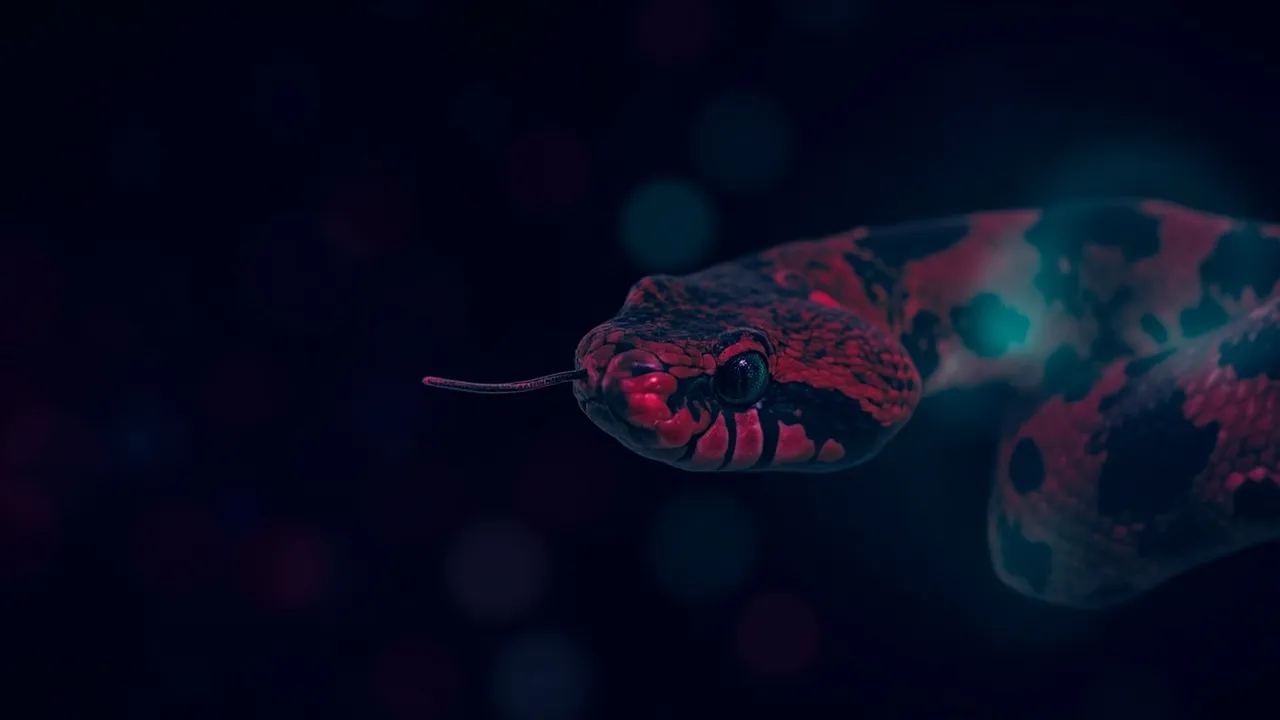
The Secret Weapon Was Inside Snakes All Along — And It's Pretty Mind-Blowing
Okay, I have to admit — when I first came across this research, I had to read it twice because my brain couldn't quite process how cool it is.
Picture this: You've got this incredibly venomous creature whose bite could kill you. And somehow, over millions of years, that same creature evolved a way to protect itself from its own poison. Like, what?!
That's exactly what researchers at the University of Maryland just uncovered, and honestly, it feels like something out of a science fiction novel.
Nature's Own Little Secret
Here's the deal. Scientists have known for about a century that vipers (that's the family that includes rattlesnakes) seem to be somehow resistant to their own venom. But nobody could figure out why or how. The answer was hiding in their blood the whole time — specifically, in proteins called FETUA.
The research team, led by the wonderfully enthusiastic Professor Sean B. Carroll, discovered that these FETUA proteins act like tiny bodyguards, blocking the harmful effects of venom toxins. Pretty nifty, right?
But here's where it gets really interesting.
One Protein Alone Isn't Enough — But Together? Game Changer
When researchers tested individual FETUA proteins, they found something frustrating: each one could block certain effects of the venom, but none could completely prevent death on its own. It's like having a team where everyone shows up but nobody can actually win the game alone.
So what happened when they started mixing these proteins together?
Magic.
Okay, maybe not actual magic, but the results were seriously impressive. The optimized combinations were about 10 times more potent than the antivenoms we currently use! These protein mixtures completely neutralized the lethal effects of rattlesnake venom AND provided protection against multiple viper species — including some that diverged from each other millions of years ago.
That's not a typo. Ten times more powerful. Let that sink in for a moment.
Why Does This Matter So Much?
Let me hit you with some numbers that really put this into perspective. According to the World Health Organization, venomous snakebites kill between 80,000 and 140,000 people every single year. Hundreds of thousands more are left with permanent disabilities. And most of these deaths happen in rural areas where access to good antivenom is limited.
The antivenoms we use now? They're not bad, but they have some serious problems:
- They're expensive to make (usually produced by injecting venom into horses or sheep and collecting the antibodies)
- Quality can vary between batches
- They might not work equally well against all venom types
- They can cause nasty immune reactions in patients
So yeah, we absolutely need something better. And nature, being the incredible problem-solver it is, might have handed us the answer.
The Plot Twist: Snakes Have Been Winning This Game for 50 Million Years
Here's something that absolutely delighted me in this research: Professor Carroll pointed out that these inhibitor proteins have been perfectly conserved over 50 million years of snake evolution.
Fifty. Million. Years.
Think about what that means. These proteins are so important for snake survival that they barely changed at all. That's like finding a tool that worked so well from the beginning that nobody ever needed to improve it.
As Carroll put it: "This is one of those great stories when nature has already solved a problem we've been grappling with for decades."
Honestly? I love that quote because it captures something beautiful about science. Sometimes the answer isn't something we need to invent from scratch — it's already out there, waiting for us to discover it.
What's Next?
The current research focused on one major family of venom toxins called metalloproteinases. But the team is already working on applying the same strategy to other toxin families.
According to Carroll, "We're getting remarkably close to having effective solutions for the three major toxin families in vipers."
That's incredibly promising news for millions of people around the world who live with the constant threat of snakebite. We're talking about potential treatments that could be more effective, possibly cheaper to produce, and maybe even safer.
My Take
As someone who writes about science, I get excited about a lot of discoveries. But every now and then, one comes along that makes me genuinely marvel at how weird and wonderful our natural world is.
The idea that rattlesnakes have been walking around for millions of years carrying their own built-in antidote — and we're only just figuring this out now — is the kind of thing that makes me love science communication.
The road from laboratory discovery to actual medical treatment is long, and there will be plenty of hurdles ahead. But for the first time in a long time, there's real hope that we might be on the brink of a breakthrough in snakebite treatment.
And the best part? The solution was inside the snakes all along.
Sometimes the universe is just plain cool like that.
Source: ScienceDaily