
A Harbor, Two Ships, and a Catastrophic Misunderstanding
Here's something that'll make your jaw drop: the collision that destroyed Halifax happened at just 1 mile per hour.
That's slower than most people walk. Yet this gentle bump between two steamships unleashed an explosion so powerful it held the record for the largest non-nuclear blast in history—until we invented atomic weapons.
Let that sink in for a moment.
The Morning Everything Changed
Picture it: December 6th, 1917. Halifax, Nova Scotia. A bright, cold morning in a port city of about 80,000 people. Two ships are trying to pass through the Narrows—a tight, winding channel that leads into the harbor. It's a bottleneck, and even back then, it was a notorious pinch point for shipping.
The Norwegian steamship Imo was heading out. The French cargo ship SS Mont-Blanc was coming in.
Both captains saw each other. Both knew there wasn't room for both ships. So they did what sailors do—they blasted their horns, each expecting the other to yield.
Here's where things get tragically human.
Neither captain wanted to be the one to give way. Maybe it was pride. Maybe it was stubbornness. Maybe it was the pressure of wartime schedules. But both ships crept forward, horn blaring, neither backing down.
The Secret Mont-Blanc Was Carrying
Now, here's what makes this story absolutely gut-wrenching.
The Mont-Blanc had every reason to avoid any risk of collision—more than anyone on shore could possibly have known. Hidden in its cargo hold was a cocktail of explosives that would later seem almost sci-fi: 2,367 metric tons of picric acid, benzole, and gun cotton.
This wasn't just any cargo. This was ammunition bound for Europe, part of the World War I war effort. The French crew knew exactly what they were carrying. They were absolutely terrified of a collision.
So when the Imo started drifting toward them, the Mont-Blanc did the only thing that seemed logical: it turned away from the other ship—and toward the shore.
To anyone watching from the harbor, this looked bizarre. A ship refusing to give way when it clearly should? What were they thinking?
They were thinking, "We cannot let this ship hit us."
The Moment Everything Went Wrong
What happened next took just seconds.
The Mont-Blanc turned toward the shore to avoid the Imo. The Imo, suddenly finding itself pointed toward the rocky shoreline, panicked. Its captain threw the engines in reverse to try to swing the ship away from land.
But physics doesn't care about panic.
That reverse thrust pushed the Imo sideways—directly into the path of the now-turning Mont-Blanc. The Norwegian ship burrowed nine feet into the French vessel's hull.
Sparks flew.
Something ignited.
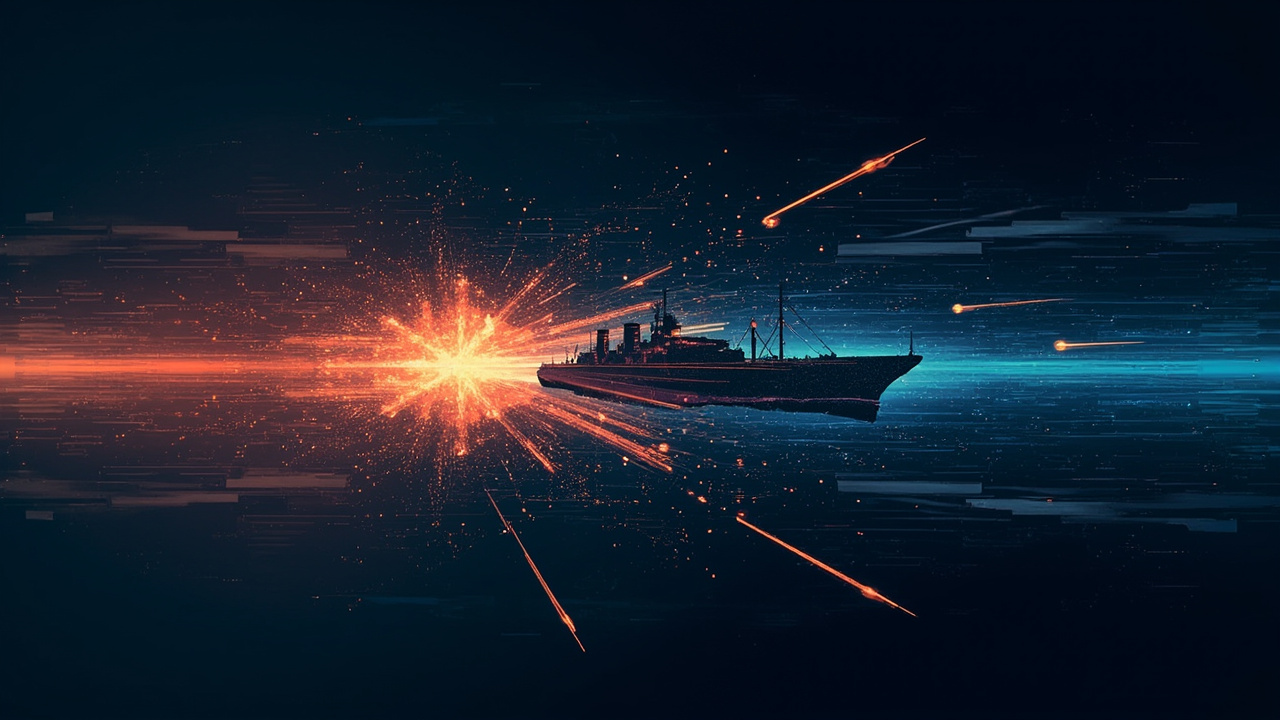
BOOM.
A City, Flattened
I don't have words to adequately describe what happened next, but let me try.
The explosion released energy equivalent to roughly 3 kilotons of TNT. (For reference, the bomb that destroyed Hiroshima was about 15 kilotons.) A massive fireball shot into the sky—witnesses said it looked like a second sun rising over Halifax. The blast wave flattened more than a square mile of the city. A 60-foot wave of water crashed three blocks inland, carrying the Imo onto solid ground like a toy boat.
Over 1,600 buildings were destroyed. Some simply vanished. Others burned for days.
When the dust settled—and the bodies were counted—1,963 people were dead. Another 9,000 were injured. In a city of 80,000, that's more than 2% of the entire population gone in an instant.
Many of the victims were children. It was 9 AM on a Thursday. Schools were in session. People were heading to work, doing their Christmas shopping, living their ordinary lives.
What Did We Learn?
Here's where the story gets complicated—and where I think it becomes genuinely important.
After the explosion, Halifax did what any city would do: they tried to figure out how to make sure it never happened again. The Narrows, that notorious bottleneck, now had a new rule: only one ship at a time could pass through.
Seems obvious, right?
But here's what really gets me. The conditions that made this disaster possible—narrow waterways, massive cargo ships, pressure to keep moving even when conditions are risky—those conditions still exist today. They exist in ports around the world.
The scholar Adam Rostis wrote something about this that's stuck with me. He noted that in 1917, people tended to view disasters as "exceptional events"—things that happened to society, separate from normal life. But he argues we've now reached a point where "disaster is more and more enmeshed within political and economic systems."
In other words: disasters aren't just bad luck anymore. They're often the predictable outcome of systems that prioritize speed, profit, and efficiency over safety.
Why This Story Still Matters
Every time I read about the Halifax Explosion, I'm struck by how preventable it feels. Two ships at walking pace. A simple traffic jam at sea. A moment of stubbornness, a moment of fear, and then—everything changed.
The people of Halifax didn't do anything wrong. They didn't know about the explosives. They didn't know the rules were about to change forever.
But we know now. We know that squeezing too much through too little space, pushing ships through when conditions are questionable, prioritizing schedules over safety—these aren't abstract risks. They're the seeds of catastrophe.
The Halifax Explosion happened over a century ago. And yet, whenever I hear about another industrial disaster, another preventable tragedy, another moment where "we couldn't afford to wait"—I think about that French cargo ship, creeping through the Narrows at 1 mile per hour, carrying the future in its hull.
Sometimes the slowest collisions do the most damage.
And sometimes, the lessons we learn come far too late.
If you enjoyed this story and want to learn more about the Halifax Explosion, you can explore the Halifax Explosion Memorial at Fort Needham, or visit the Canadian War Museum's collections. The city still commemorates the tragedy every December 6th, with all the bells of Halifax churches ringing at 9 AM—the exact moment the explosion occurred.