
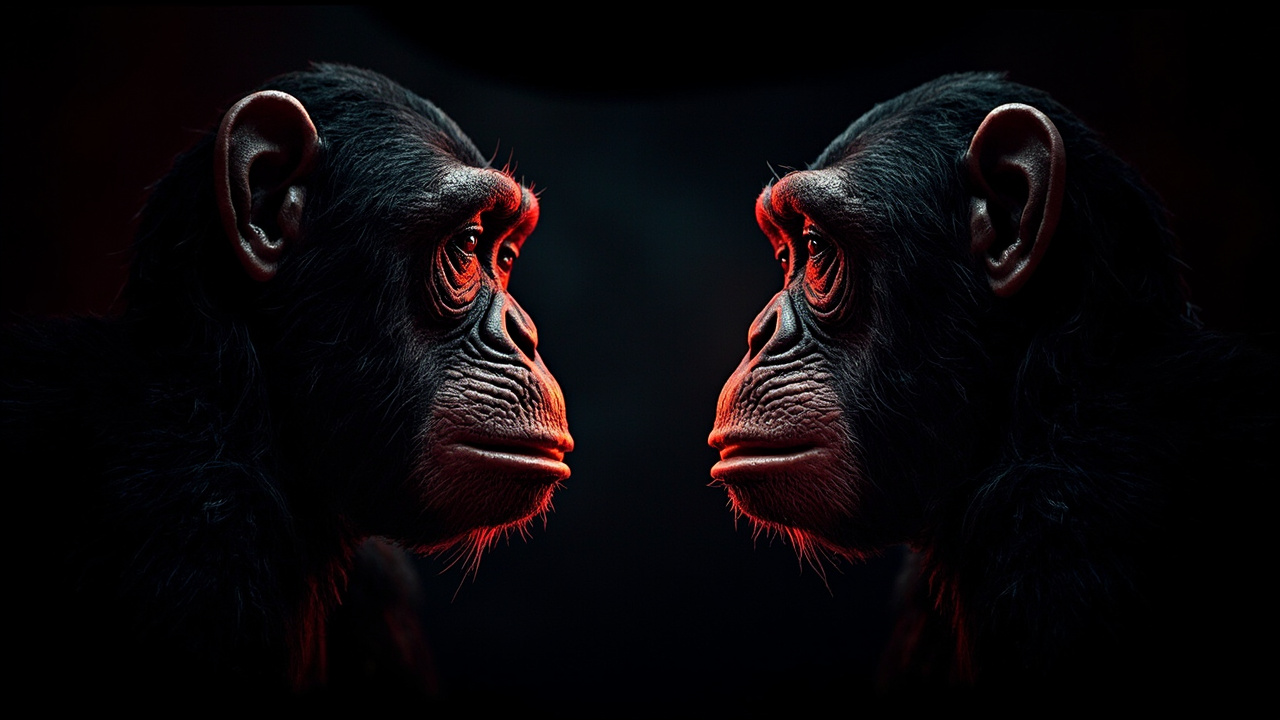
When a Scientist Decided to Play God (And the Soviet Government Paid For It)
Picture this: it's the 1920s, the Soviet Union is experimenting with radical ideas, and somewhere in a laboratory, a scientist is genuinely convinced he can create a human-chimp hybrid. This isn't a sci-fi novel premise. This actually happened. And it's way weirder than you'd expect.
Meet Ilia Ivanov: The Man With No Chill
Let me introduce you to Ilia Ivanov, a Russian zoologist who started with a pretty reasonable goal. He bred horses to create better livestock for the Russian Empire. Cool, useful stuff. But somewhere along the way, his brain went "why stop there?"
He started hybridizing everything in sight. Zebras and donkeys? Sure. Cows and bison? Why not. Different rodents? Let's go. By 1910, he was basically drunk on the power of crossbreeding and made a bold prediction: humans and apes could mix too.
Most scientists would've laughed this off over drinks and moved on. Ivanov? He decided to make it his life's mission.
The Soviet Government Actually Said Yes
Here's where it gets truly wild. Instead of being shut down immediately, Ivanov convinced the Soviet government to fund his hybrid dreams. I'm not kidding. The Kremlin actually approved money and resources for this.
In 1925, he packed his bags and headed to French Guinea (West Africa), determined to catch chimps and make his crazy vision real. Imagine the local reaction: "Yeah, hi, we're here from Moscow to breed your apes with humans."
He started with what seemed like a reasonable first step: take human sperm, inseminate a female chimp. The chimp's name was Nora. Reasonable? Maybe. Successful? Not even close.
The Plot Thickens (And Gets Darker)
So Nora didn't get pregnant. No biggie, right? Wrong. Instead of accepting defeat like a normal person, Ivanov decided to flip the script. He'd try inseminating women with chimp sperm instead.
Here's the part that makes you uncomfortable: he did this in the Soviet Union, on unpaid women, without their full understanding of what was happening. When women expressed concerns, Ivanov dismissed their worries as "primitive thinking." This dude had serious ethical blind spots, to put it mildly.
Even the Soviet government—not exactly known for their squeamishness at this time—said "whoa, hold up." They explicitly told him he couldn't do non-consensual experiments. So he... sort of listened, but kept experimenting anyway. Because if there's one thing you should know about obsessed scientists, it's that they don't like being told no.
Why This Was Never Going to Work (And Why He Didn't Know That)
Here's the biological reality that Ivanov apparently didn't fully grasp: humans have 46 chromosomes. Great apes have 48. That's not a minor difference you can just ignore—it's a complete incompatibility. It's like trying to fit a USB-C cable into a micro-USB port. The hardware just doesn't match.
No amount of determination, Soviet funding, or questionable ethics could overcome basic genetics. None of the women became pregnant. None of the chimps got pregnant either. The whole thing was doomed from the start, biologically speaking.
How This Actually Ended
By 1930, the Soviet government was running out of patience. They had nothing to show for their investment except ethical violations and zero scientific progress. Ivanov was arrested, exiled to Kazakhstan, and died in prison two years later.
As for the chimps who survived his experiments? Some of them ended up in space during the Soviet space program. Yeah. They went from being part of a bizarre hybridization experiment to literally becoming cosmonauts. That's a weird consolation prize.
Why Does This Story Matter?
Ivanov's story isn't just a historical oddity to laugh at. It's actually a pretty important lesson about how smart people can believe truly ridiculous things when they're confident enough (or obsessed enough). It shows how ambition without ethics is dangerous. And it demonstrates how even governments can get caught up in dubious science if it promises something exciting.
Plus, it raises questions about why this happened. Was Ivanov just a deluded eccentric? Or was there a darker agenda—like using pseudo-science to challenge religious ideas about human uniqueness? Historians are still debating his true motivations.
What we do know is that he became known as the "Red Frankenstein," and for good reason. He pushed boundaries that absolutely should not have been pushed. And honestly? I'm glad we have stronger ethics review boards now.
Science is amazing and should be encouraged. But maybe—just maybe—we should've learned from Ivanov that "just because we can attempt something doesn't mean we should."