
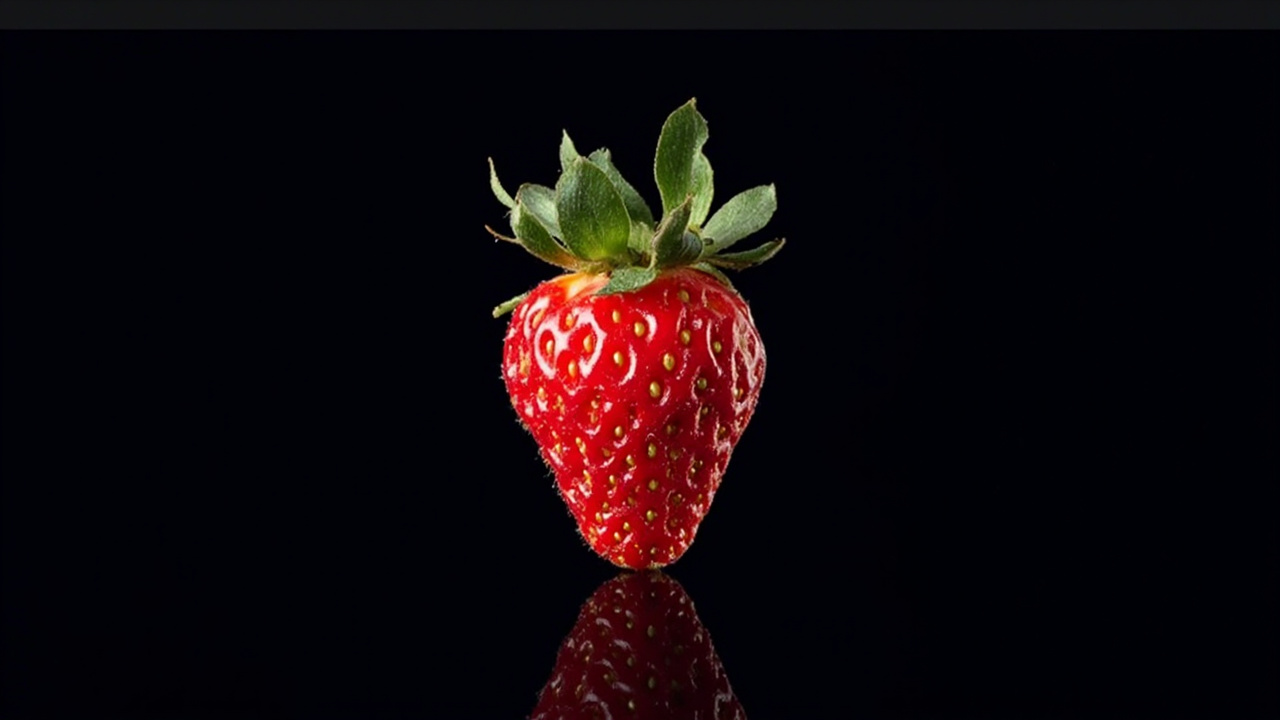
- Introduction (relatable strawberry opener)
- What makes strawberries so genetically complicated
- The detective work of figuring out polyploid genomes
- How the new method works (transposable elements as time stamps)
- What they found about strawberry evolution
- Why this matters / closing thoughts
Picture this: you're enjoying a juicy strawberry on a warm summer day, and you're probably not thinking about polyploid genomes or long terminal repeat retrotransposons. But maybe you should be—because that simple fruit sitting in your hand has one of the most convoluted genetic backstories in the plant kingdom.
I recently dove into some fascinating research that completely changed how I think about strawberries. And honestly? It's made me a little obsessed with what's hiding in our food's DNA.
So What's the Big Deal About Strawberries?
Here's the thing: strawberries are octoploid. That means they have eight sets of chromosomes instead of the usual two you'd find in most organisms. (Humans, for comparison, are diploid—we have just two sets.) Eight sets! That's like having four different genomes all crammed into one plant, all working together.
But here's where it gets really interesting. Those eight chromosome sets didn't just randomly appear. They came from different ancestral species that somehow merged together over millions of years. The question has always been: which ancestors? And when exactly did this genetic mashup happen?
The Problem With Traditional Detective Work
Scientists have long tried to trace polyploid genomes back to their roots by comparing them to known ancestor species. Sounds logical, right? The trouble is that many of those original ancestors have gone extinct. Others might still exist but haven't been discovered yet. It's like trying to solve a family mystery when half your relatives have vanished without a trace.
This is where it gets frustrating for researchers studying plant evolution. They've been stuck relying on whatever diploid ancestors they could find and sequence—and hoping those are actually the right ones.
Enter: The Jumping Genes That Time Travel
Now here's where the research I found gets genuinely clever. A team from the U.S. Department of Agriculture and partner institutions developed a new way to trace these genetic lineages. Instead of hunting for ancient ancestors (which, again, might be extinct), they looked at something called long terminal repeat retrotransposons.
These are essentially "jumping genes"—sequences of DNA that can copy and paste themselves into different parts of a genome. Once they insert themselves somewhere, they stay there. And here's the beautiful part: they accumulate in patterns that are unique to specific evolutionary lineages. They're like molecular time stamps, preserving evidence of past events.
The researchers created a bioinformatic framework that analyzes these patterns across chromosomes. By comparing how similar these retrotransposons are to each other in different parts of the genome, they can identify distinct subgenomes and estimate when major genome-merging events occurred. It's basically reading the strawberry's genetic diary.
What They Found
When applied to the cultivated strawberry (Fragaria × ananassa), the technique revealed something remarkable: four distinct subgenomes and evidence for three sequential allopolyploidization events happening roughly 3-4 million years ago, then 2-3 million years ago, and finally under 2 million years ago.
That's ancient history! We're talking about evolutionary mergers that occurred long before humans were even a twinkle in our ancestors' eyes.
The findings also confirmed close relationships between two of the strawberry's subgenomes and specific wild species (Fragaria vesca and Fragaria iinumae). But here's the plot twist: some of the strawberry's genetic ancestors might have been extinct or remain unsampled. They left their genetic mark on the strawberry, but we've never seen them.
Why This Matters Beyond Just Strawberries
I think this is where the real excitement lies. The method isn't just useful for solving strawberry mysteries—it could help us understand the evolution of all polyploid crops. We're talking wheat, cotton, coffee, potatoes... many of our most important food plants are polyploid.
And beyond agriculture, this research touches on something bigger: understanding how life adapts and diversifies over geological timescales. Whole-genome duplication has been a major driver of plant evolution, helping species become more resilient, more diverse, and better suited to their environments. The strawberry is just one example of this process playing out over millions of years.
A Little More Wonder With Your Berries
Every time I eat a strawberry now, I'm going to think about those millions of years of evolution compressed into one small, red, delicious package. I'm going to think about the extinct ancestors we'll never know, whose genetic legacy lives on in the berries we grow in our gardens and see at farmers' markets.
There's something both humbling and awe-inspiring about realizing that something as common as a strawberry has a genetic history more complex than we ever imagined. It makes you wonder what other "ordinary" things in nature are hiding mind-blowing secrets just waiting for the right technology to uncover them.
So the next time you're enjoying a strawberry, take a moment to appreciate not just its sweetness, but the incredible evolutionary journey it took to get to your plate. Some stories are written in stone—others are written in retrotransposons, quietly marking time in the genome of a fruit you might have never thought twice about before.
Source: ScienceDaily