
[markdown content]
Okay, I need you to picture this with me.
It's July 4, 1989. A Soviet pilot named Colonel Nikolai Skuridin takes off from an airbase in Poland for what should be a routine training mission. Within minutes, smoke is pouring from his MiG-23 "Flogger" fighter jet. The plane is descending. He's convinced he's about to die.
So he does what pilots are trained to do: he ejects.
He parachutes safely down to the ground, probably relieved to be alive. But here's where things get absolutely wild.
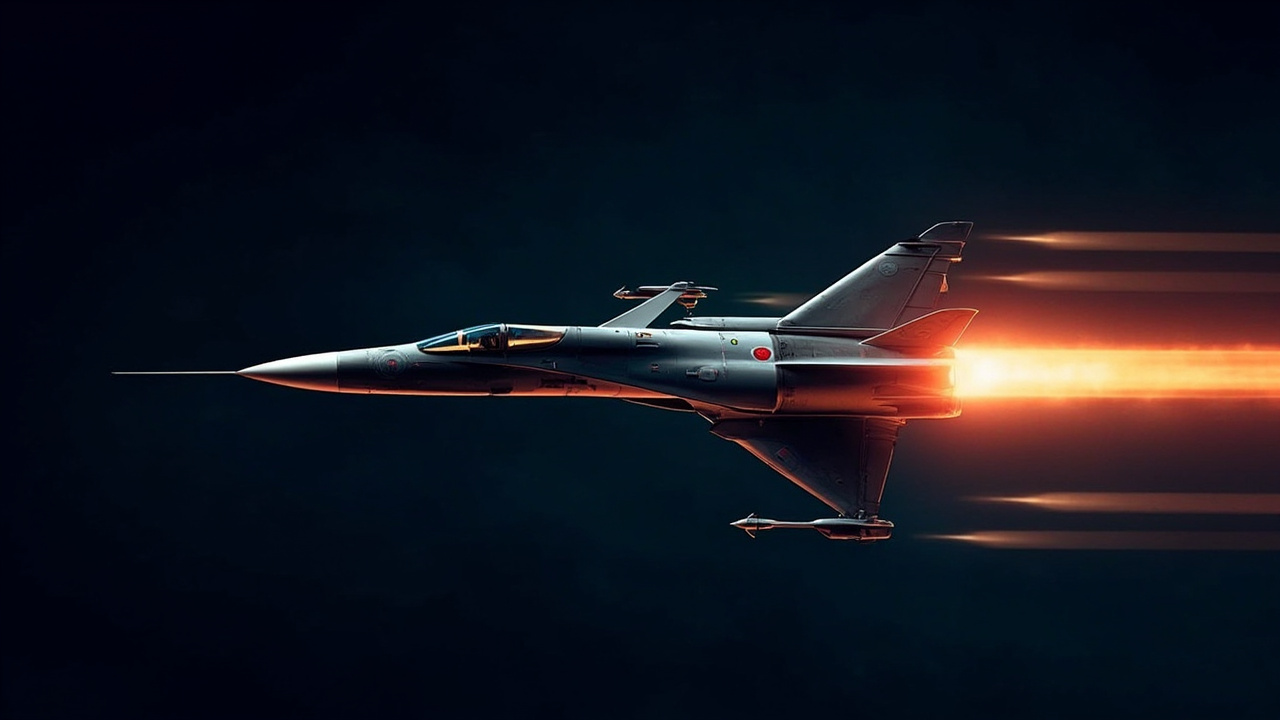
The MiG-23 kept flying.
Not just for a few miles. Not just across the Baltic Sea. This thing flew 560 miles without a pilot, crossed into NATO airspace, was intercepted by American F-15s, and eventually crashed into a farmhouse in Belgium—killing 18-year-old Wim Delaere.
I genuinely cannot make this up.
How Does a Plane Even Do That?
Here's the crazy part: when Skuridin ejected, he didn't fully shut down the engine. He just switched it to a lower power setting. And apparently, the violent act of ejecting—jettisoning the seat, the canopy, all of that—shifted the plane's center of gravity just enough to make the MiG's nose tilt upward.
Suddenly, the dying plane started climbing.
It hit 35,000 feet. Then 39,500 feet. It was flying on autopilot at 170 knots, essentially following the same trajectory Skuridin had been flying when he decided to bail. The plane essentially recalibrated itself and said "nope, I'm good."
Meanwhile, the pilot is on the ground looking up at his empty plane flying away from him. Can you imagine the confusion?
The American Pilots Had No Idea What They Were Seeing
When the MiG-23 crossed into NATO airspace over West Germany, two American F-15 pilots scrambled from the Netherlands to intercept it. As they caught up to the bogey at supersonic speeds and then slowed down to match its pace, they noticed something was... off.
They described it later: "You're looking at a MiG-23 just like the pictures you've studied your entire fighter pilot life, but it just doesn't add up. What's he doing here? Why is he alone? And why is he traveling at 170 knots?"
Then they realized: the canopy was missing. And so was the pilot.
It took 20 minutes of radio traffic to convince NATO ground control that nobody was actually flying this thing. They were essentially chasing a ghost plane across the sky.
They Couldn't Shoot It Down
Here's the truly heartbreaking part of this story. The MiG was unarmed—no missiles, no bombs—so it wasn't an immediate threat. That gave NATO time to figure out what to do.
But the Americans realized something: shooting the plane and breaking it into pieces could actually be more dangerous for civilians below than letting it fall in one piece. They calculated that the plane would likely crash into sparsely populated farmland, not heavily populated areas.
So they watched. They followed it all the way across the Netherlands and into Belgian airspace.
Then they saw it: a puff of smoke and a vapor trail. The MiG had run out of fuel.
With no power left, the plane began its shallow descent toward earth. The Americans had armed their weapons, but calculations showed the debris field would probably miss the cities. They made the call to let it fall.
The MiG crashed at 10:37 a.m., roughly an hour after it was first spotted on radar. It hit a farmhouse near Kortrijk, Belgium.
Wim Delaere was just 18 years old. A student. He was in the wrong place at the wrong time.
The Pilot's Regret
Colonel Skuridin publicly expressed his sympathies the next day. He said, and I imagine this haunts him to this day: "If I could have foreseen such tragic consequences to this pilotless flight, I would have stayed in the plane to the end."
I think about that quote a lot. He made the right call in the moment—ejecting from what he believed was a failing aircraft. He had no way of knowing what would happen next. And yet, he still carries that weight.
This story is equal parts fascinating, absurd, and tragic. It's the kind of thing that sounds like a plot from a action movie, except it really happened. A Soviet pilot survived. An American pilot documented it. And a Belgian teenager paid the price for a chain of events nobody could have predicted.
Sometimes truth really is stranger than fiction.