
Okay, I've got to tell you about one of the most incredible treasure hunts you've probably never heard of. And honestly? It sounds like something straight out of a movie.
Picture this: It's 1942, the middle of World War II, and a British cruiser called the HMS Edinburgh is making its way across the Barents Sea. On board? A payment from Joseph Stalin himself—465 gold bars meant to buy weapons and supplies from the United States. This was serious business, folks. The Soviets needed equipment, America had it, and gold was the currency.
But here's where things go sideways.
German forces spotted the Edinburgh and its convoy, and they weren't about to let all that lovely gold reach its destination. Two torpedoes from a German U-boat slammed into the ship. The damage was catastrophic. Fifty-eight sailors lost their lives, and despite the remaining crew's best efforts to keep the ship afloat, another attack forced the convoy to make a gut-wrenching decision—they scuttled the Edinburgh, letting it sink roughly 800 feet down into the icy Barents Sea.
And there it sat. For almost four decades.
Now, here's what gets me about this story. The gold didn't just disappear. It was documented, insured, and technically someone's property. But with the Cold War brewing and diplomatic tensions running high, nobody really wanted to be the one to say, "Hey, let's go grab Stalin's gold from the ocean floor." It took until the late 1970s for someone brave (or maybe just stubborn) enough to take on the challenge.
Enter Keith Jessop.
Jessop was a salvage director who looked at this seemingly impossible task and said, "You know what? I can do this." He put together a consortium, convinced investors to fund the operation under a "no cure, no gain" deal—which meant if he failed, he got absolutely nothing—and set out to find a ship that had been underwater for nearly 40 years.
Can you even imagine that pressure? Not just the literal pressure of being 800 feet deep, but the weight of having investors counting on you to find treasure that might not even be there anymore.
The search alone sounds exhausting. Jessop's team had to piece together survivor accounts, dig through old records, and even talk to Norwegian fishermen who'd noticed their nets getting caught in a strange spot. Eventually, they narrowed down the search area and used sonar to locate the wreckage in April 1981.
When they finally confirmed it was the Edinburgh, I love imagining what that moment felt like. After all that searching, there she was—lying on her side on the ocean floor, but remarkably intact.
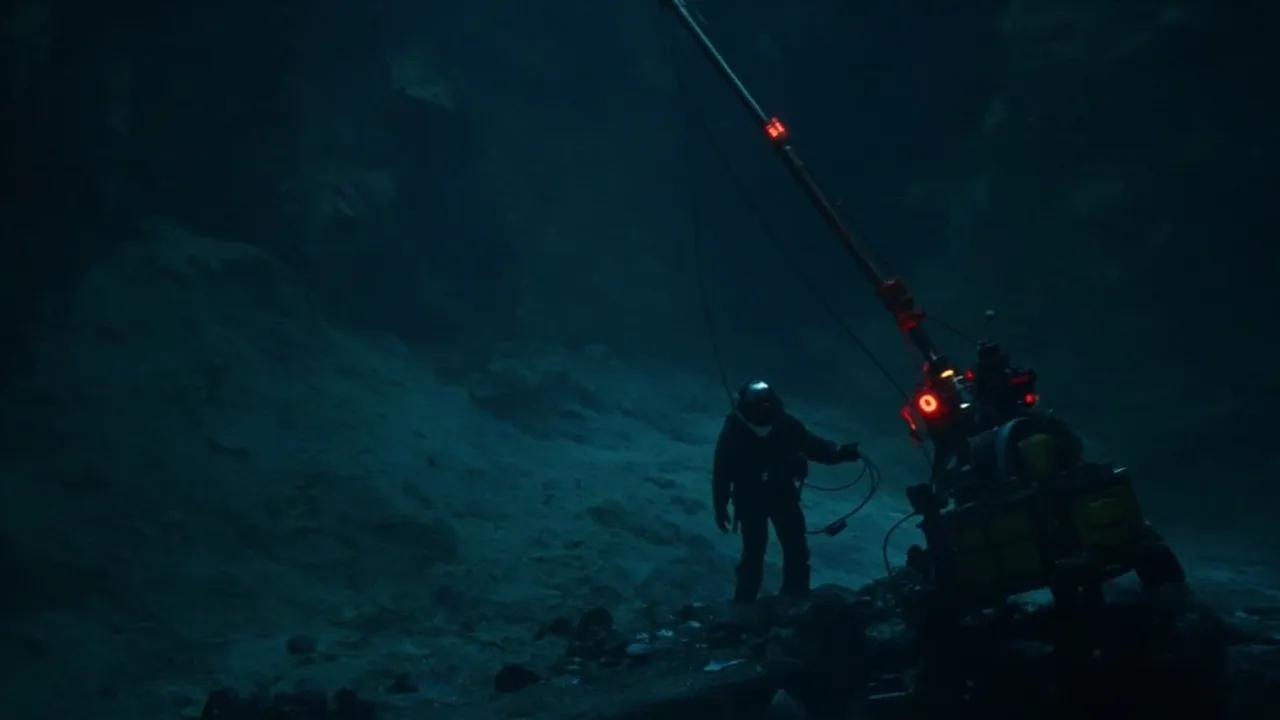
But here's where things got really interesting (and by interesting, I mean absolutely terrifying). The divers couldn't just swim in through a door. They had to live inside a controlled, pressurized environment for up to 30 days at a time to avoid decompression sickness. They breathed a special mixture of helium and oxygen to prevent nitrogen narcosis—which, by the way, sounds like something that would make you feel like you're having hallucinations underwater. Not ideal when you're trying not to die.
And remember how I mentioned the ship had been attacked by torpedoes? Well, their original plan was to enter through the torpedo hole. But debris had blocked the passage, so instead, they had to literally cut through the hull and spend an entire week clearing a path to the bomb room—which, oh joy, still contained live ammunition.
At this point, I would have been out. Just... nope. Thank you, next career.
But these divers kept going. And then, on September 16, 1981, 27-year-old Jon Rossier made the call that probably echoed through every radio on that ship: "I've found the gold! I've found the gold!"
They brought it up in cages, 40 bars at a time. Each bar weighed 23 pounds, which means they were hauling nearly a thousand pounds of gold at once from nearly 800 feet below the surface. Can you even fathom the logistics of that?
When all was said and done, they'd recovered 431 of the original 465 bars. That's roughly 93%—which, given the circumstances, seems like a miracle.
The gold was eventually split between the salvage consortium, the Soviet Union, and the British government. Some ended up at the Bank of England, where many were melted down. But some of the bars that came back to the Soviets? One observer reportedly called them "the very best Soviet gold." So there's that.
One of the divers later described the operation as "the maritime equivalent of a Moonwalk," and honestly? That feels right. It was groundbreaking, dangerous, and the kind of thing people didn't think could be done until someone actually did it.
What gets me most about this story isn't just the gold itself—it's the sheer persistence. The years of waiting, the diplomatic nightmares, the technical challenges that would make most people give up. And through all of it, someone believed it was possible.
I don't know about you, but I find that kind of determination genuinely inspiring. Maybe it's because we live in a world where we expect instant results, but this story reminds us that sometimes, the really remarkable things take time.
So the next time someone tells you something is "impossible," maybe remind them of the time some very stubborn Brits recovered Stalin's gold from the bottom of the Arctic Sea.
Now that's what I call a success story.