
Wait, There's a Problem With Inkjet Printing?
Okay, so here's something wild I stumbled upon this week. You've probably used an inkjet printer at home — maybe you've printed out a recipe or a photo of your cat being ridiculous. The ink squirts out in tiny droplets, lands on paper, and dries. Simple, right?
But hold on — scientists are now using this exact same technology to manufacture things like microchips, sensors, and other teeny-tiny electronic components. Like, we're talking about printing circuits that are smaller than the width of a human hair.
And here's where things get tricky: when those microscopic droplets dry, they don't always behave the way we want them to.
The Annoying "Coffee Ring" Problem
Ever notice how when you spill coffee on your desk and it dries, there's a dark ring around the edge, but the middle looks pretty light? That's the infamous "coffee ring effect," and it's a massive headache for anyone trying to print precise patterns.
When a droplet of liquid evaporates, the stuff dissolved inside (particles, nanoparticles, whatever you're working with) tends to get pushed toward the edges as the liquid retreats. For your morning caffeine mess, that's just an ugly stain. But for someone printing the components of a medical sensor or a flexible display? That uneven drying can completely wreck the device's performance.
The Old Solution Created New Problems
For years, manufacturers have dealt with this by adding chemicals called surfactants to their inks. These chemicals change the liquid's surface tension — basically, they make the droplets dry more evenly instead of forming rings.
Sounds perfect, right? Well, not so fast.
Here's the catch: those chemical additives don't just disappear. They stay behind in the final printed material. And for advanced electronics, that's a dealbreaker. You don't want random chemicals hanging around inside your microchip or gas sensor. They can interfere with electrical properties, reduce sensitivity, and generally make your device behave in unpredictable ways.
So we've been stuck between a rock and a hard place. Accept uneven drying, or deal with leftover chemicals. Until now, that is.
Bubbles to the Rescue!
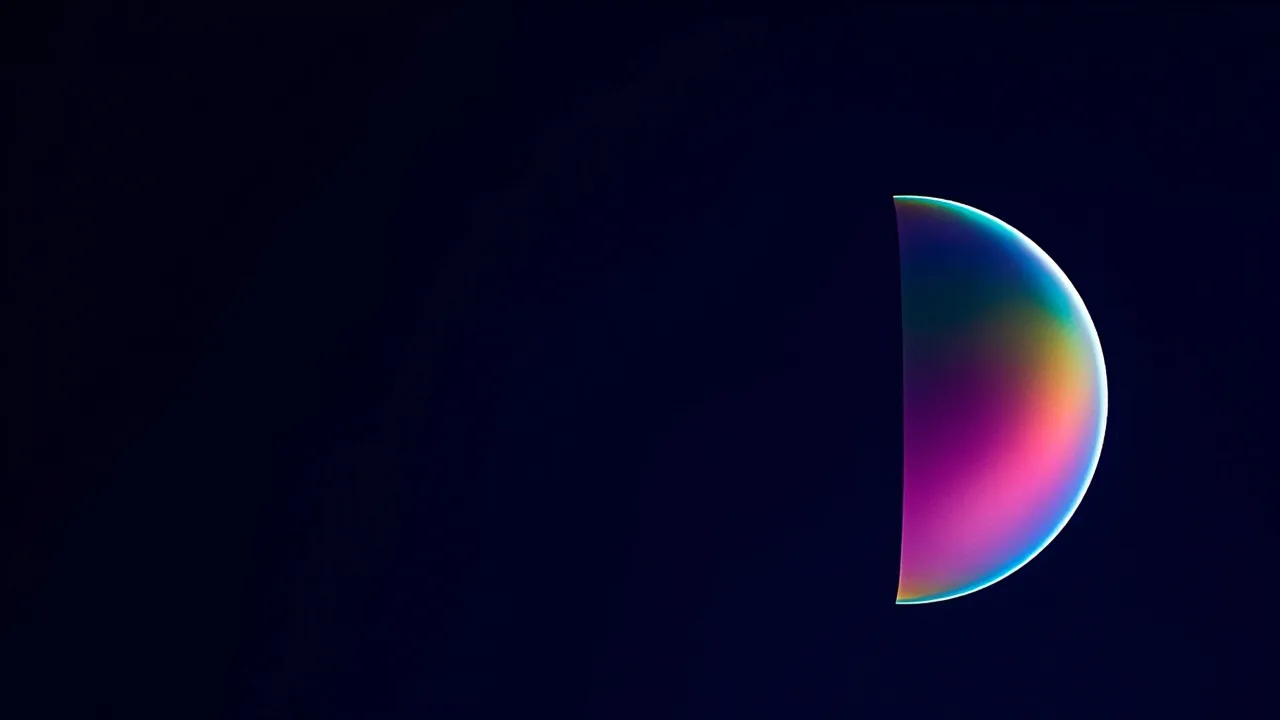
Now here's where things get genuinely exciting. A research team at Tokyo Metropolitan University has found a brilliantly simple solution: add bubbles. Not regular bubbles like you'd see in your soda — we're talking about nanoscale ultra fine bubbles, which are millions of times smaller.
Think of them like tiny, invisible balloons floating around inside the ink. The researchers pass the ink through a special generator that fills it with these nano-bubbles, then use it in a regular inkjet printer. The droplets land on the surface, dry out, and the bubbles simply... vanish. Poof. Gone. No residue left behind.
But here's the really cool part: by changing how many bubbles are in each droplet, the researchers can completely control the final drying pattern.
- No bubbles? You get that annoying coffee ring effect.
- A few bubbles? The ring starts to smooth out into a more even coating.
- Lots of bubbles? Now the particles collect toward the center instead of the edges!
It's like having a remote control for your droplet drying patterns. You want rings? Bubbles out. You want uniform coatings? A few bubbles. You want particles clustered in the middle? Crank up the bubble count.
And the best part? The nanoparticles themselves don't change at all. Their properties, their electrical charges, everything stays exactly the way it should be. The bubbles only affect the liquid's behavior during drying, then they conveniently disappear like little ink-printing ninjas.
Why Should You Actually Care?
Let me give you a few examples of where this could matter in your life:
Better gas sensors: Researchers use nanoparticles like graphene for sensors that can detect tiny amounts of dangerous gases. The sensitivity of these sensors depends on how the particles are arranged. With bubble-controlled printing, we could create much more sensitive — and more reliable — detection devices.
Cleaner electronics: Conductive nanoparticles used in printed circuits work best when their surfaces are pristine. Since the bubbles leave nothing behind, we get cleaner, better-performing electronic components.
More precise manufacturing: This could make it easier to produce next-generation micro-devices without the trade-offs that currently limit what we can print.
Simple Ideas Are Often the Best Ideas
What I love about this research is how elegant it is. Instead of developing complicated new chemicals or radically changing the printing process, the team just added bubbles. That's it. Bubbles.
There's something satisfying about a solution that's almost embarrassingly simple once you think of it. We've known about ultra fine bubbles for a while — they're already used in things like water purification and cosmetics. But applying them to control ink drying? That's a genuinely new angle.
It reminds me of how adding salt to water can change how pasta cooks, or how a tiny adjustment to your coffee-to-water ratio can transform your morning brew. Small changes, big results.
The Bottom Line
We might be looking at a future where printed electronics, sensors, and micro-devices are more precise, more reliable, and easier to manufacture. All thanks to the humble nano-bubble.
Science is weird and wonderful sometimes, isn't it? Next time you see a bubble floating in your drink, take a moment to appreciate it. Those little guys might just be revolutionizing how we build the technology of tomorrow.