
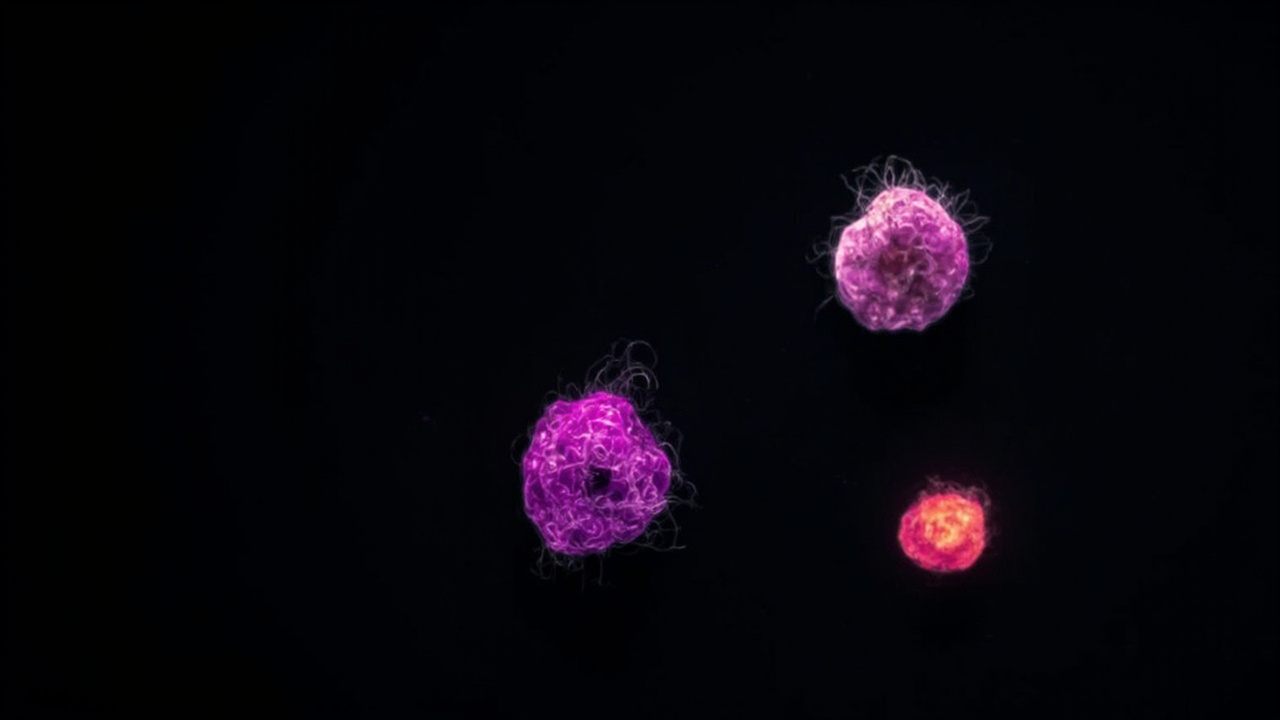
The Tiny Creatures That Could Carry Life to Other Worlds
Okay, I need to tell you about tardigrades, because learning about them genuinely makes me feel like we're living in the most exciting time in human history.
You know those moments when you stumble onto something so cool that you want to grab everyone you know and say "Did you hear about this?!" That's where I'm at right now.
Tardigrades. You might have heard of them. They're these adorable, gummy-bear-shaped microorganisms that are basically the superheroes of the animal kingdom. People call them "water bears" or "moss piglets" and honestly, both names are perfect.
But here's where it gets really interesting.
These Little Guys Could Survive in Space
I've always thought space exploration was cool, but tardigrades take it to another level. Scientists have literally sent these tiny creatures into the vacuum of space—complete with oxygen deprivation, freezing temperatures, and intense radiation—and they survived. Not just survived, but actually thrived once they got back to Earth.
How? They've got two incredible biological tricks up their nonexistent sleeves.
First, they have this protein called Dsup (which stands for damage suppressor) that basically shields their DNA from radiation. Think of it as their personal radiation-proof armor.
Second, they can enter something called cryptobiosis—essentially a deep sleep mode where they push out all their water, curl up into a little ball, and wait. In this state, they can survive for decades without food or water. Just... waiting. Patient little champions.
So Could We Actually Start Life on Other Planets?
This is where my brain starts doing somersaults.
Scientists have posed this wild thought experiment: Could we use organisms like tardigrades to essentially "seed" life on other worlds? Mars, maybe? Europa (one of Jupiter's moons)? Somewhere else entirely?
The short answer from experts is: it's possible, but incredibly complicated.
Here's the thing—surviving and thriving are two very different things. Take the Moon, for instance. NASA is building a lunar base (how cool is that?!), but the Moon's surface is absolutely brutal for any kind of life. No atmosphere means no protection from radiation or extreme temperature swings. There's also basically no water. Tardigrades might technically survive there in their dormant state, but they wouldn't be reproducing or doing much of anything interesting.
And get this—some tardigrades might already be on the Moon. In 2019, an Israeli spacecraft crash-landed while carrying these little creatures. So we might have accidentally turned the Moon into a tardigrade hotel. Nature is wild, right?
Mars: The More Promising Option
Mars is where things get slightly more hopeful, though "slightly" is doing a lot of heavy lifting there.
The surface of Mars is absolutely harsh—frigid temperatures, dust storms that would make your worst allergy day look like a breeze, and radiation levels that would fry us humans pretty quickly. Not exactly hospitable.
But underground? That's where it gets interesting.
Mars appears to have water trapped beneath its surface in the form of aquifers. And going underground would protect any potential life from that nasty radiation. One astrobiologist put it this way: while it might not be ideal because there wouldn't be much energy flow, we've learned from Earth's extremophiles that life can survive in places we once thought completely impossible.
This is honestly one of my favorite things about science—the humility of it. We're constantly discovering that life finds a way in circumstances we never imagined possible.
What Does This All Mean?
Honestly? I think the most profound implication here isn't about whether we can or should seed life elsewhere. It's about how much we still have to learn.
Every time we study these extremophiles—organisms that thrive where nothing else can—we realize how little we understand about the boundaries of life itself. And that, to me, is incredibly hopeful.
Whether or not humans ever establish permanent colonies on other planets, the fact that we're even asking these questions about tardigrades and cosmic seeding shows something beautiful about human curiosity. We're not just looking at the universe anymore. We're asking whether we might help shape it.
And isn't that something worth getting excited about?
What's your take on all this? Drop a comment below—I'd love to hear your thoughts on whether seeding life on other planets is something we should pursue or something we should leave to nature.
Source: Popular Mechanics