
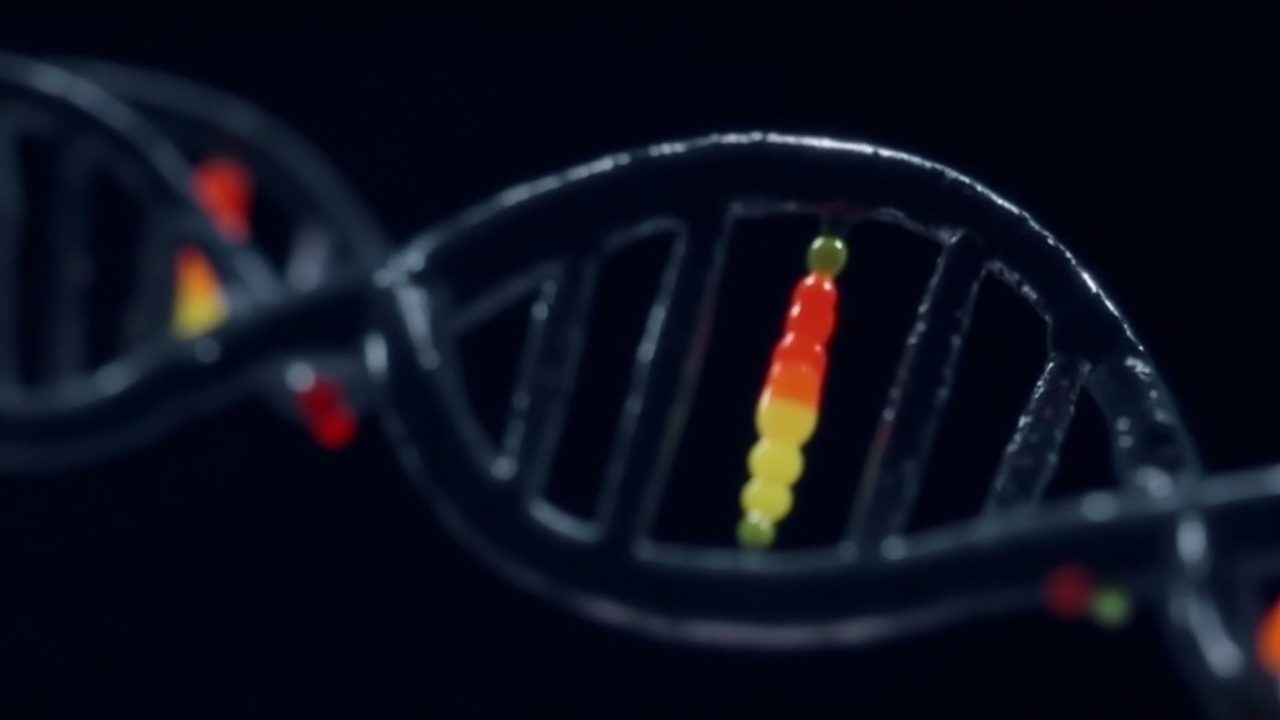
What Makes Us Human? It's Not What You'd Think
Here's something wild: you and a chimpanzee are basically genetic cousins. We're talking 99 percent of your DNA is the same. Yet somehow, we ended up as the species writing novels and building rockets while chimps are, well, being chimps. So what gives?
For a long time, scientists just shrugged and figured it had to be which genes were active. But a new study from Stanford and the Weizmann Institute says it's way more subtle than that—and honestly, way cooler.
The DNA Dimmer Switch You've Never Heard Of
Imagine your DNA isn't just an instruction manual that's either "on" or "off." Instead, it's more like a smart home with dimmer switches, timers, and all sorts of controls that decide exactly how bright each light gets.
That's essentially what DNA methylation does. It's this chemical tagging system where tiny molecules called methyl groups basically flag genes and say, "Hey, turn this down" or "Leave this one alone." It's not changing the actual gene—it's just controlling the volume.
The interesting part? There are different types of these genetic volume controls. Some are local (affecting just nearby areas) and some are global (influencing genes across different parts of your DNA). Scientists wanted to know which type was actually responsible for making us, well, us.
The Weirdest Experiment Ever (But in a Good Way)
Here's where it gets fun. Instead of just comparing human DNA to chimp DNA on a screen, researchers decided to actually fuse human and chimp stem cells together and see what happened. They grew hybrid neurons, liver cells, and muscle tissue—all in the same petri dish.
Before you freak out: they weren't trying to make some Frankenstein human-chimp hybrid. That would be ethically messy and scientifically pointless. The genius move was that by putting both cell types in the identical environment, they could figure out which methylation differences came from the DNA itself versus which ones came from broader cellular conditions.
Think of it like this: if you and your friend eat dinner at the exact same restaurant, any differences in how your food tastes must be because of how each dish was prepared, not because of the restaurant itself.
The Smoking Gun: Those Tiny Three-Letter Changes
So what did they find?
The real difference-maker turned out to be something called CpG sites—basically spots where the letters C and G sit next to each other in the genetic code. These spots are like magnets for methylation tags. When a single letter mutation creates a new CpG site, boom—a new place to add tags. When a mutation destroys one, poof—a tagging site vanishes.
Here's the kicker: these aren't just affecting that one spot. One tiny change can ripple outward and mess with methylation patterns up to 50 base pairs away. Over millions of years, these little ripples add up to massive changes in how our genes are controlled.
What Did This Actually Change About Us?
So we're different at the methylation level—but why should we care? What actually changed about humans?
Quite a lot, it turns out. These methylation differences affected genes involved in:
- How we think: genes related to brain development and synaptic plasticity (basically how neurons talk to each other)
- How we grow: delayed development patterns that give our brains more time to develop
- How we look: our distinctive faces, skulls, and teeth shape
- Our health vulnerabilities: even weird things like why humans are more susceptible to hepatitis C
This isn't about changing what genes we have. It's about changing how loud or quiet those genes are in different tissues. And that's actually more interesting because it means the same genetic instruction manual can produce wildly different outcomes based on these chemical tags.
Why This Matters
One of the biggest mysteries in biology has been: "We share 99% of our genes with chimps, so where does the other 1% of human-ness come from?"
The honest answer has been: "It's complicated." But this study adds a huge piece of the puzzle. A significant chunk of what makes us human isn't about having different genes—it's about how we control the genes we inherited from our primate ancestors.
It's like realizing that you and your siblings grew up completely differently not because you have different parents, but because you were raised with different household rules, different access to resources, and different ways of doing things. Same raw material, wildly different outcomes.
The Bigger Picture
This research also cracks open the door to understanding why certain traits emerged. Researchers can now point to specific methylation patterns and say, "This changed because of these tiny mutations in the CpG sites, which then cascaded into bigger differences."
And honestly? That's the kind of explanation that makes sense of evolution. It's not usually about one giant genetic mutation that changes everything overnight. It's about accumulating small changes—in this case, in how genes are switched on and off—that compound over millions of years into completely different species.
Next time someone says you're 99% the same as a chimp, you can smile and say, "Yeah, but we control that 1% way differently."
Source: https://www.popularmechanics.com/science/health/a71272751/dna-switch