
I'll write about:
- The Zoraptera problem - what it is
- Why it was so hard to classify
- The two competing theories
- The Chinese Academy of Sciences solution
- Why this matters
- Make it conversational and fun
The Case of the Misunderstood Angel Insects
Okay, I have to admit—when I first heard about this story, I couldn't stop thinking about it. It's one of those science mysteries that seems almost too trivial to be true, yet it consumed researchers for an entire century.
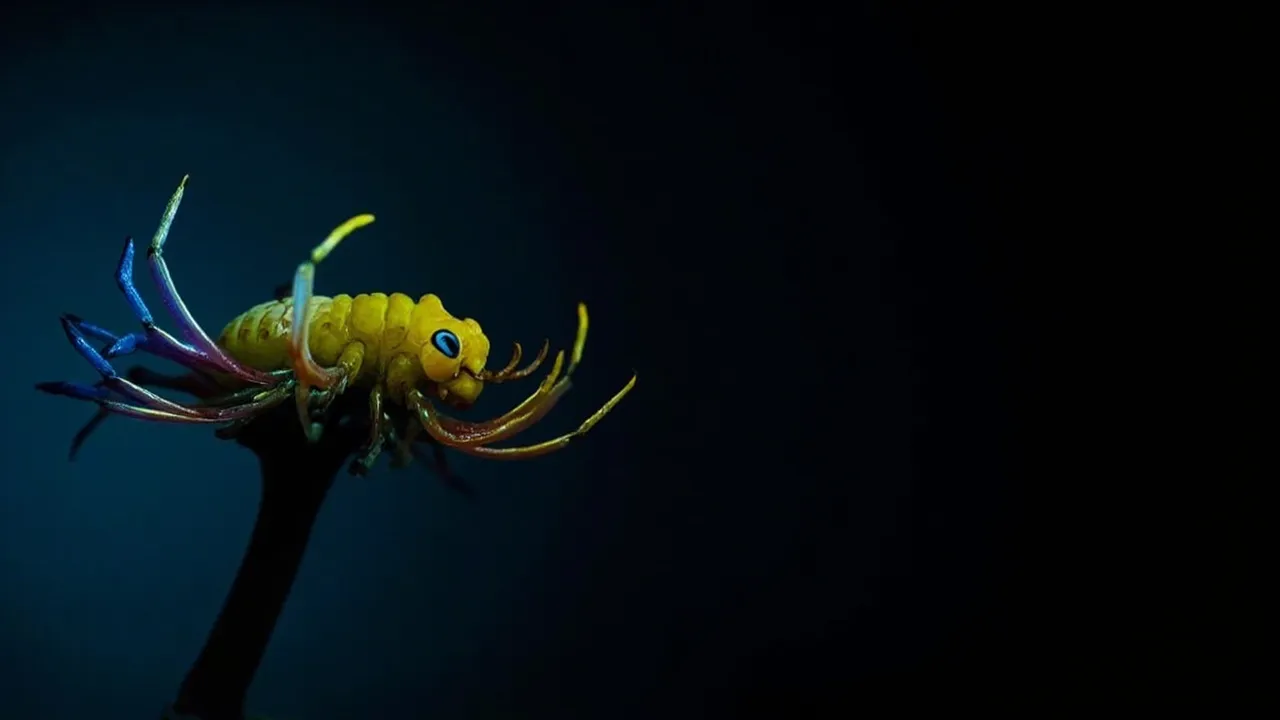
Picture this: You've got this tiny insect, about 2-3 millimeters long, that lives in decaying wood and eats fungus. Scientists discovered it in 1913, named it Zoraptera (which means "pure wingless"—a name that was already wrong since many of them actually have wings), and then immediately faced a problem. Where exactly did this little creature belong on the Tree of Life?
And I mean immediately. Because here's the thing about insects—there are a LOT of them. Like, potentially 20 million species. Sorting them all into the right evolutionary categories is like trying to organize the world's biggest garage sale, except everything is tiny and some of it looks suspiciously similar.
A Century of Evolutionary Head-Scratching
The Zoraptera problem became known as the "Hundred-Year Conundrum," and honestly? That title is kind of adorable in a science-frustration kind of way.
These little angel insects (yes, that's actually what they're called!) share some features with termites, which added to the confusion. But they also have characteristics that don't match much of anything else. They sit at this interesting moment in evolutionary history, right around when winged insects were really taking off—and that makes figuring out their precise spot super important for understanding how flight itself evolved.
Over the decades, two main theories emerged. Some scientists believed that Zorapterans and earwigs (those creepy-looking Dermapterans with the pincers) were evolutionary buddies, branching off together as the earliest members of a group called Polyneoptera. This was the "Haplocercata-first" hypothesis.
Others argued that Zorapterans went their own way first, splitting off from everything else before earwigs did their own thing. This was called—you guessed it—the "Zoraptera-first" hypothesis.
The debate raged on. Papers were published. Counter-papers were published. I imagine a lot of heated conference discussions over coffee.
The Plot Twist: It Was (Probably) a Math Problem
Here's where it gets interesting. The researchers at the Chinese Academy of Sciences who finally cracked this case didn't discover some groundbreaking new fossil or witness some miraculous transformation. Instead, they figured out that scientists had been getting tripped up by statistical biases in their data.
Think of it like this: imagine you're trying to figure out which family someone belongs to by looking at their face. But your measuring tape is slightly off, and the lighting keeps changing. You're going to get some confused results, right?
The same thing was happening with the genetic data. Previous studies had limited genomic information from Zorapterans and weren't properly accounting for molecular biases that can creep into evolutionary analyses. The team built a much larger dataset and ran multiple models to filter out the statistical "noise."
And the winner? Zoraptera-first.
Zorapterans went solo, branching off from the Polyneoptera family tree all on their own before earwigs took their own separate path.
Why Should You Care About a Century-Old Bug Debate?
Fair question! Here's why this matters beyond just satisfying scientific curiosity:
First, these insects represent a crucial piece of the puzzle for understanding how winged insects evolved. Polyneoptera accounts for 98% of all hexapod species—that's the biggest and most diverse group of animals on Earth. Knowing when and how Zorapterans split off helps us understand the timing and mechanisms of major evolutionary innovations, including flight.
Second, the methodology the team developed—better modeling techniques combined with both genetic and physical evidence—can be applied to solve other contentious debates throughout the evolutionary tree. This isn't just a victory for bug enthusiasts; it's a roadmap for resolving other long-standing phylogenetic mysteries.
And honestly? Sometimes science is just cool because it reminds us how much we don't know, and how satisfying it is when we finally figure it out. A hundred years of researchers scratching their heads, and now we've got answers. That's pretty wonderful.
The Takeaway
So the next time you see a tiny insect skittering around some old wood, remember: that little creature might be a Zorapteran, and it took humanity a century to figure out exactly where it fits in our understanding of life on Earth. Science moves slowly sometimes, but it does eventually get there.
Now, if you'll excuse me, I'm going to go read more about what these angel insects actually do now that we've finally figured out where they came from.