
The Unhackable Internet is Getting Closer (And It Uses Tiny Light Particles)
If you've ever worried about your passwords being stolen or your messages being intercepted, I have good news: scientists are building something that makes hacking essentially impossible. And they just proved it actually works over long distances.
What Makes This Different?
You've probably heard about encryption before—it's that thing that scrambles your data so only the person you're sending it to can read it. The problem? Traditional encryption relies on math that computers can potentially crack, especially as computers get more powerful.
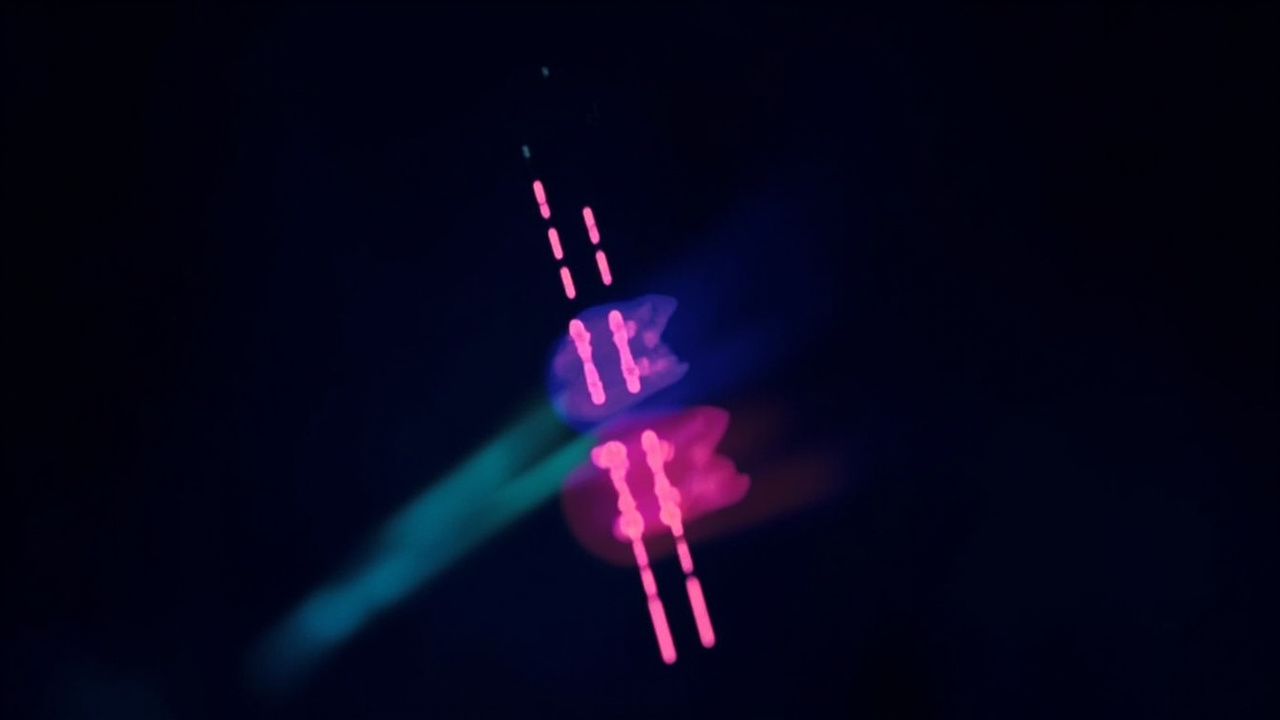
Quantum key distribution (QKD) is completely different. Instead of using math, it uses the actual laws of physics. Specifically, it sends secret codes using individual photons—tiny particles of light. Here's the wild part: if someone tries to intercept these photons or measure them, the laws of quantum mechanics guarantee that the system knows someone's eavesdropping. It's like having a lock that shatters into pieces the moment someone tries to pick it. You can't steal the key without leaving evidence.
The Real Challenge: Distance
Until now, quantum security systems were kind of like having a super-secure vault that only worked in your living room. Scientists could make them work, but only over very short distances. For a practical quantum-secure internet, you'd need these systems to work across cities, between data centers, maybe even between countries.
Enter this new research from teams in Germany and China. They just sent quantum-encrypted signals across 120 kilometers (that's about 75 miles) of standard fiber optic cable—the same cables that carry your regular internet traffic.
How They Pulled It Off
The breakthrough has two main ingredients:
Tiny quantum dots. Think of these as ultra-precise light factories. They're semiconductor devices so small you can't see them with a regular microscope, and they generate single photons on demand. The ones used here operate at the telecom frequency that already exists in our fiber networks, which is super convenient.
Time-bin encoding. This is the clever bit. Instead of encoding information in the photon's direction or color (which gets messed up by environmental noise), they encode it in when the photon arrives. Does it come at time A or time B? That difference carries the secret message. And because it's just about timing, it's naturally resistant to the temperature fluctuations, vibrations, and interference that normally destroy quantum systems.
The receiver has an interferometer—basically a sophisticated quantum detector with active feedback—that sits there 24/7, automatically adjusting itself to keep everything perfectly aligned. They ran it continuously for six hours without human intervention, which might sound boring but is actually a huge deal for a quantum system.
The Numbers That Actually Matter
So did it work? Better than expected.
The system achieved error rates below 11% even after the signal traveled 120 kilometers. That's low enough to maintain secure communications. The secure key generation rate was about 15 bits per second, which might sound slow, but it's actually suitable for real-world encrypted messaging.
That's the thing about quantum security—you don't need super-fast key generation. You just need reliable key generation that nobody can hack.
Why This Matters for Your Future
Here's what excites me about this: the researchers used existing fiber optic infrastructure. They didn't need to tear up streets or install new cables. They built their quantum system to work with technology we already have everywhere.
This is the bridge between "cool science experiment" and "something we'll actually use." Over the next decade, governments and corporations are going to start replacing critical infrastructure with quantum-secure systems. Banks protecting financial transactions. Government communications. Data centers. Maybe eventually, our everyday internet.
The quantum internet isn't coming tomorrow, but milestones like this one show us the path is getting shorter and clearer.
The Real Security Question
Now, I should be honest: "unhackable" is a strong word. What this really means is "unhackable using any known or theoretically possible quantum computer." If someone physically cuts your fiber optic cable, no amount of quantum mechanics will help you. But for the threat we're actually worried about—computational hacking—quantum keys genuinely change the game.
The irony? This technology became more important the moment we started worrying about quantum computers themselves. It's like we're building quantum-proof security just in time.