
Okay, I have to admit — the universe has a sense of humor.
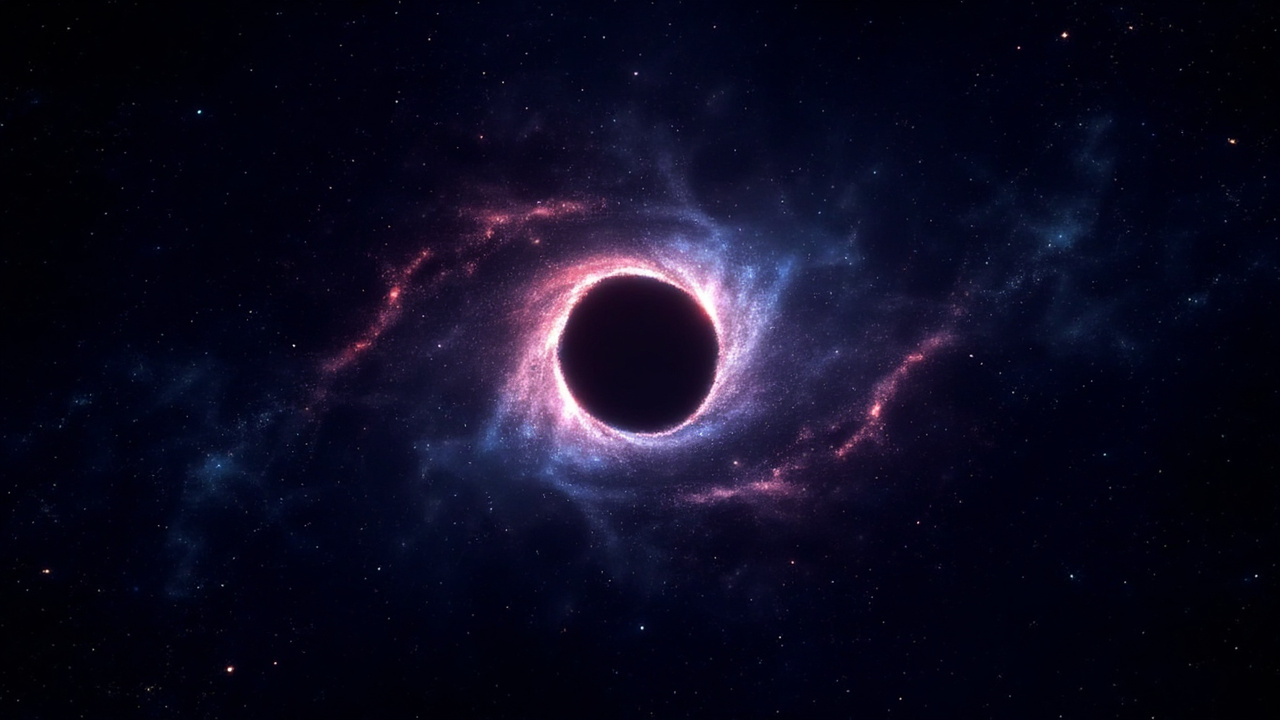
Here's what I mean. Supermassive black holes are among the most powerful and terrifying objects in the cosmos. Some contain billions of times more mass than our Sun, and they sit quietly at the hearts of most large galaxies, including our own Milky Way. You'd think something that massive and that consequential would be impossible to miss.
And for the most part? You'd be right. But there's one variety that's been driving astronomers absolutely crazy: the ones that come in pairs.
The Hunt for Cosmic Twins
When galaxies collide and merge — something that's actually pretty common over cosmic timescales — their central black holes can end up circling each other like an enormous, deadly dance. Eventually, they form what's called a supermassive black hole binary.
We've found some of these duos, but only when they're widely separated. The tight pairs, where both black holes are spiraling super close together? Those have been essentially invisible to us. That's a problem, because these close binaries are expected to produce the strongest gravitational waves in the universe.
But now, a team from the University of Oxford and the Max Planck Institute has published research that might just crack the case wide open. And honestly, their approach is genuinely clever.
Black Holes as Natural Magnifying Glasses
Here's the key insight: supermassive black holes don't just swallow light — they bend it. Thanks to their enormous gravity, they can warp the fabric of spacetime itself, causing light from distant stars to curve around them. This phenomenon, called gravitational lensing, can actually magnify stars behind the black hole, making them appear brighter.
A single black hole can do this, but only when alignment is nearly perfect. It's like trying to thread a needle from across a football field.
A binary system is different. When you have two black holes working together as lenses, they create what's known as a caustic curve — essentially a diamond-shaped region where light gets focused to extreme brightness. The critical difference? This region is much, much larger than what a single black hole could create.
"The chances of starlight being hugely amplified increase enormously for a binary compared to a single black hole," said Professor Bence Kocsis from Oxford, who co-authored the study.
The Flickering Light Show
Here's where it gets really interesting.
A single black hole just... sits there. But a binary? It's constantly in motion. The two black holes orbit each other, gradually losing energy by emitting gravitational waves (just as Einstein predicted). As they do, they spiral closer together and orbit faster.
As they move, their shared caustic curve rotates and changes shape, sweeping across a vast volume of stars behind the system. Any bright star that passes through this region gets dramatically magnified — and then, moments later, it happens again as the caustic keeps moving.
The result? Repeating bursts of starlight. Flashes of brightness that occur over and over as the binary dance continues.
This isn't just a one-time event — it's a pattern. And patterns, as any good scientist knows, are exactly what you're looking for when you're trying to find something hidden.
What the Flashes Can Tell Us
The really exciting part is that these repeating flashes aren't random. They follow predictable trends based on the properties of the black hole pair.
Because gravitational waves are constantly shrinking the binary's orbit, the caustic curve's shape and motion change in measurable ways. Those changes leave signatures in both the brightness and timing of the flashes. By carefully analyzing these patterns, astronomers could actually estimate the masses of the hidden black holes and track how their orbit evolves.
Think about that for a second. We're talking about objects located billions of light-years away, and yet their intimate gravitational dance might leave fingerprints we can detect from Earth.
No Need to Wait for New Gadgets
One of the most thrilling aspects of this research is that we might not need to wait for future technology. The team suggests that existing and upcoming sky surveys could already be hunting for these repeating lensing events.
Powerful new observatories coming online soon — including the Vera C. Rubin Observatory and the Nancy Grace Roman Space Telescope — should dramatically expand our ability to spot these cosmic flickers. And here's the kicker: we might identify supermassive black hole binaries years before dedicated gravitational wave detectors designed specifically for them come online.
"The prospect of identifying inspiraling supermassive black hole binaries years before future space-based gravitational wave detectors come online is extremely exciting," Professor Kocsis noted. "It opens the door to true multi-messenger studies of black holes, allowing us to test gravity and black hole physics in entirely new ways."
Why This Matters
I think what gets me most excited about this research is what it represents: the universe playing fair. These black hole pairs have been hiding from us not because they're impossibly obscure, but because we hadn't figured out their signature. Now we have.
There's something beautiful about the idea that the light from ordinary stars, carefully observed, can reveal the presence of some of the most extreme objects in existence. It's like the cosmos leaving breadcrumbs for us to follow.
The next time you look up at the night sky and see those countless points of light, remember: some of them might be flickering in ways that tell us exactly where the universe's most mysterious monsters are lurking. And now, finally, we're learning to read those signals.
How cool is that?