
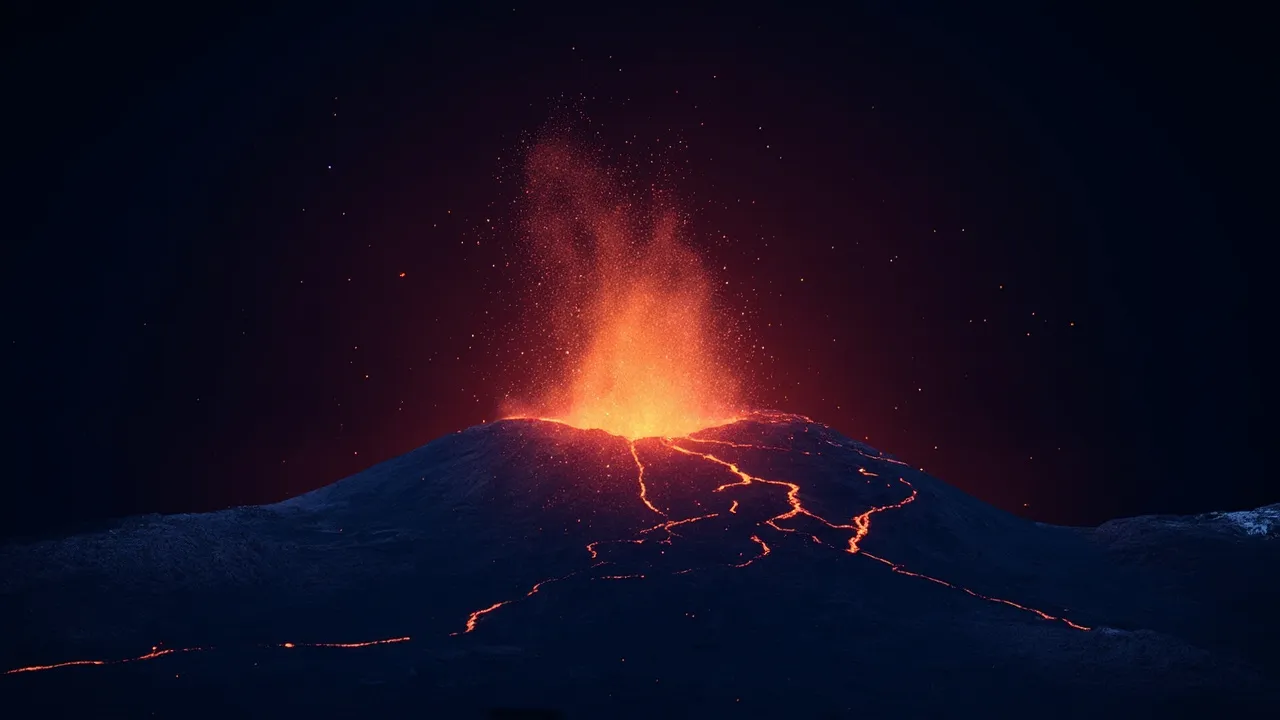
Have you ever tried to shake up a soda bottle and then open it? If you have, you know exactly what happens next: fizzy chaos everywhere. Well, it turns out volcanoes are basically giant, planet-sized soda bottles, and understanding how they "shake up" could save lives.
A team of scientists from Cornell just published research that completely changed how we think about volcanic eruptions. Their subject? Mount Etna in Italy — one of the most active volcanoes on Earth, and apparently also one of the most schizophrenic.
Two Eruptions, Two Completely Different Stories
Here's what's wild: The researchers looked at two major eruptions from Mount Etna's past, and they weren't even that far apart in geological time. One happened around 122 B.C. (yes, before the year 1), and the other about 4,000 years ago. But the way these eruptions happened could not have been more different.
The 122 B.C. eruption was a big one — we're talking Plinian level, the most explosive class of eruptions named after Pliny the Elder, who famously described Mount Vesuvius going apocalyptic in 79 A.D. But here's the thing: this eruption didn't just blast out of nowhere.
The magma started rising from about 22 kilometers underground. That's roughly the distance from the surface to the edge of space, if we're keeping things in perspective. But instead of racing to the surface like you'd expect from a major eruption, the magma got lazy. It rose slowly, then basically stopped and hung out at just 2 to 5 kilometers below ground for several weeks.
Can you imagine? Weeks of building pressure while the magma sat there, slowly releasing gas like a slowly deflating balloon. Then, finally, boom — the eruption happened. Weeks of anticipation for the main event.
Now Compare That to the Other One
The Fall Stratified eruption from roughly 4,000 years ago? Completely different personality. This magma shot up from even deeper — we're talking 24 to 30 kilometers down — and reached the surface in a matter of hours.
Hours. Not days, not weeks. Hours.
What's the difference between these two eruptions? According to Professor Esteban Gazel, who led the research, it's all about what gases were dissolved in the magma.
The Secret Ingredient: Invisible Gas
Here's where things get science-y but stay with me because this is genuinely cool.
Volcanoes contain volatiles — basically gases like water and carbon dioxide trapped inside the molten rock. Think of them like the carbonation in your soda. When conditions change, these gases can separate from the magma really quickly, creating all that pressure that leads to explosions.
The research team developed a technique using Raman spectroscopy to examine tiny crystals that formed inside the magma. These crystals contain microscopic gas bubbles — we're talking incredibly small, maybe 1 to 10% the thickness of a human hair. By analyzing these bubbles, they could figure out the pressure, which tells them the depth, which tells them the story of how the eruption unfolded.
What did they find? The eruption that took hours had a much higher concentration of carbon dioxide. The eruption that took weeks was more controlled by water.
Some volcanoes are mostly CO2 (like those in oceanic islands), and some are mostly controlled by water (like those in subduction zones). But Etna? Etna has both, competing for dominance. And when CO2 wins, things move fast and deep. When water takes over, the action happens at shallower levels and develops more slowly.
Why Should We Care?
Here's why this matters. If scientists can figure out what's going on underground at a volcano, they can make better predictions about what kind of eruption might happen next.
Imagine being able to tell whether a volcano is building toward a weeks-long event that gives people time to evacuate, or whether it's about to shoot magma up from the depths in a matter of hours with almost no warning. That information could literally save thousands of lives.
Professor Gazel compared volcanoes to bottles of soda, which I love. Open one carefully, and you can pour yourself a nice drink. Shake it up first, and you get an explosion. His lab is trying to figure out exactly how much shaking is happening beneath the surface.
The Takeaway
Mount Etna might look like a gentle giant from the surface — it's been actively erupting for centuries and is even a popular tourist destination. But dig a little deeper (literally), and you find a volcano with multiple personalities, capable of drastically different behaviors depending on invisible chemical battles happening miles below our feet.
The next time you open a soda bottle, maybe take a moment to appreciate that somewhere in Italy, the planet is doing something remarkably similar, just on a slightly larger scale. And thanks to scientists willing to analyze crystals thinner than a human hair, we're slowly learning to read the warning signs.
Pretty amazing, right?