
Okay, I need you to sit down for this one.
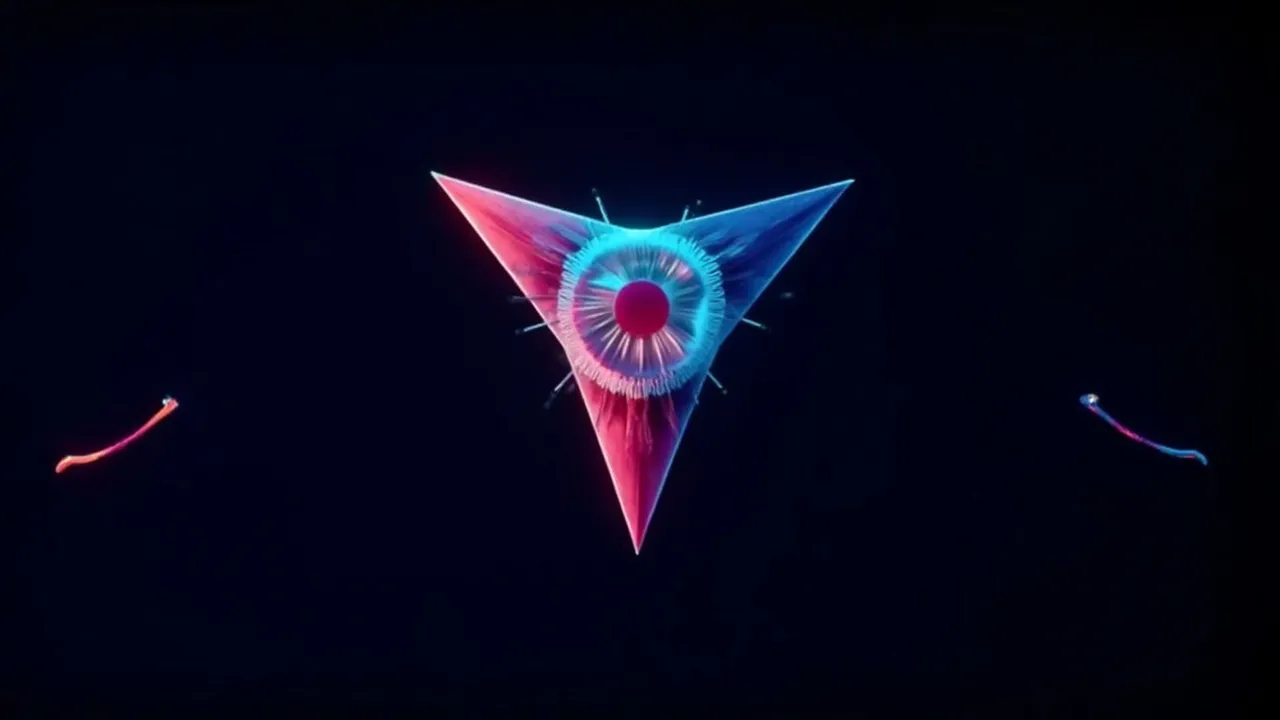
Somewhere, about 600 million years ago, there was a tiny worm-like creature floating around the ocean. It wasn't doing much — just chilling, filtering plankton from the water like some kind of ancient roomba. And get this: it had ONE EYE. Right in the center of its head.
A cyclops. An actual, literal cyclops.
And according to new research from Lund University and the University of Sussex, that weird little one-eyed ancestor might be your great-great-great- (like, a billion times) grandfather.
So What Happened to the Other Eye?
Here's where it gets really interesting. Before this creature went all lazy and stationary on us, it actually had two eyes — or at least, two spots that could detect light. Most animals that move around have paired eyes because, well, they help you figure out where things are, how far away they are, and whether that shadow is dinner or a predator.
But our little cyclops ancestor? It found a sweet deal living the stationary life. Just float there, eat plankton, don't really need to go anywhere. When you don't move much, those helpful paired eyes become kind of... useless. So over many generations, they just... went away.
But it kept ONE cluster of light-sensing cells right in the center of its head. This became what researchers call a "median eye" — basically a simple light detector that probably couldn't see much of anything detailed. Maybe it just helped the creature know if it was day or night, or which way was up. Fancy stuff, right?
The Comeback Story
Now here's where the plot twists. Millions of years later, descendants of this little guy started moving again. Maybe the plankton ran out. Maybe predators showed up. Who knows. But suddenly, being able to actually see became important again.
And here's the wild part: instead of evolving brand new eyes from scratch, these creatures repurposed parts of that old central eye. From that one simple eye in the middle of the head, new paired eyes eventually developed. Paired eyes that could actually form images.
This explains something that's puzzled scientists for a long time: why vertebrate eyes (that's us, fish, birds, cats, everything with a spine) look so different from the eyes of bugs and squid.
Why Are Our Eyes So Weird?
Think about it. Insects have compound eyes that stick out from the sides of their heads. Squid have these incredible camera-style eyes that evolved completely independently from ours. But vertebrate eyes? They're structured all differently.
The difference comes down to where the eye started during development. In us vertebrates, our retina — that light-sensitive tissue at the back of the eye that captures images — actually developed from brain tissue. That's why our eyes are literally connected to our brains in such an intimate way.
Insects and squid? Their eyes grew from skin cells on the sides of their heads. A completely different evolutionary path.
Professor Dan-E Nilsson from Lund University puts it simply: "The results are a surprise. They turn our understanding of the evolution of the eye and the brain upside down."
The Ancient Eye is Still Inside You
And here's the part that really blows my mind. Part of that original central eye might still be hanging around in your head. Right now.
It's called the pineal gland, and it's a small organ nestled in your brain. It's not involved in vision anymore, but it does something pretty important: it helps regulate your sleep cycle. When it gets dark, your pineal gland starts producing melatonin to make you sleepy. When the sun comes up, it backs off.
So every time you wake up refreshed after a good night's sleep, or feel groggy when jet-lagged, you can kind of thank that ancient one-eyed ancestor of yours. The cyclops lives on — just in a very different form.
Evolution is Messy (And That's What Makes It Cool)
This research really highlights something I love about evolution: it's not a straight line from simple to complex. It's messy. It's full of detours and compromises and things that make sense in one context but become obsolete in another.
Our ancestors didn't just "evolve better eyes." They lost eyes, kept a weird middle light-sensor, and then rebuilt a whole new visual system from those leftovers. We're essentially walking around with repurposed cyclops equipment in our heads.
That's both bizarre and kind of beautiful, don't you think?
Next time you look in the mirror, remember: you're the distant descendant of a tiny, one-eyed ocean dweller who couldn't be bothered to move. And somehow, through hundreds of millions of years of evolution, that strange beginning led to the incredibly complex visual system that lets you read these words right now.
Now that's what I call a glow-up.
Source: ScienceDaily