
Okay, I need to tell you about something that physicists are losing their minds over, and honestly? I think you will too once you understand what they've found.
The Party Where Light and Magnetism Finally Met
Imagine you've been at a party where two groups of people have been standing on opposite sides of the room for decades—never really talking to each other. That's kind of been the story with light and magnetism in materials. They existed in the same space but pretty much ignored each other.
Researchers at the City College of New York just published a review in Nature Materials that essentially documents what happens when those two groups finally decide to mingle—and it's awesome.
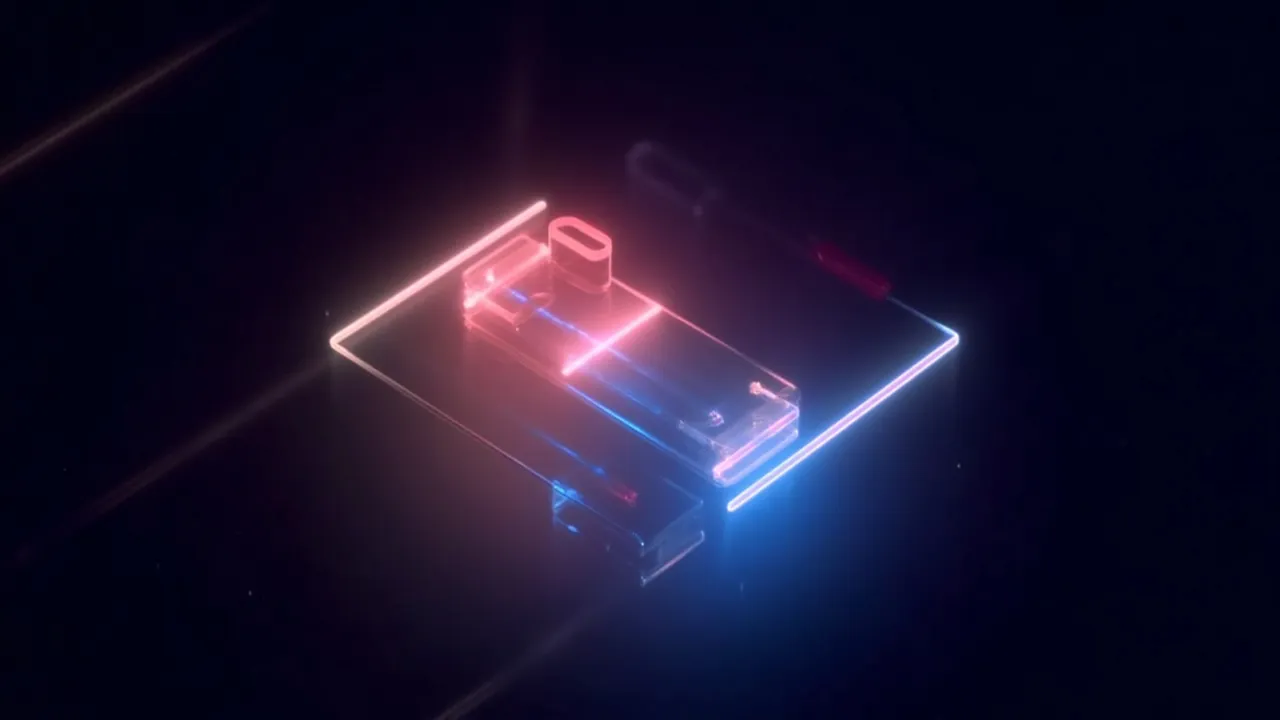
The key players here are these incredibly thin materials. We're talking just a few atoms thick. Seriously, these things make a sheet of paper look chunky. Within these whisper-thin crystals, something remarkable happens: light, electric charge, and magnetism become intimately connected rather than operating independently.
Meet the Excitons and Magnons
Let me break down the science without putting you to sleep, I promise.
When light hits a material, it can give an electron enough energy to jump around. But here's the cool part—that electron leaves behind a positively charged "hole" (because physics is dramatic, apparently). The electron and this hole stay linked together, forming something called an exciton. Think of them as tiny, electrically neutral dance partners that are really good at interacting with light.
Magnons are different. They're like waves that ripple through the organized magnetic structure of a material—collective vibrations traveling through the magnetic "arrangement" if you will.
For years, scientists tried to get these two to interact by gluing them together artificially—adding magnetic atoms to semiconductors or stacking thin materials on top of magnetic layers. It worked, but it was a bit like forcing two strangers to dance by tying their shoelaces together.
Nature's Got This
Then researchers discovered something beautiful: van der Waals magnetic semiconductors. These materials are special because excitons and magnetic moments can emerge from the same electronic orbitals. They're literally born together.
"This is like discovering that the two party guests who finally hit it off actually grew up in the same neighborhood," says Pratap Chandra Adak, a postdoctoral researcher in the team. "In these materials, light and magnetism no longer operate as separate channels."
An exciton isn't just passively waiting around after light kicks it into action. It can sense the magnetic structure around it and, under the right conditions, might even influence the magnetic state itself. They're not just tolerating each other—they're actively communicating.
What This Means for Your Future Gadgets
Here's where things get exciting. The team studied specific materials like chromium triiodide, nickel phosphorus trisulfide, and chromium sulfur bromide. What they found opens up some pretty wild possibilities:
Magneto-photonic memory: Using light to read magnetic data, which could mean faster and more efficient storage devices
All-optical logic: Circuits that process information using light instead of electricity (light is faster, produces less heat)
Quantum transducers: Devices that convert signals between different frequencies—imagine smoothly translating between microwave and optical signals. This could be huge for connecting different parts of future quantum computers
The researchers even mention something called "exciton polaritons"—hybrid particles that borrow properties from both light and matter. These little hybrids could transport optical information through materials in entirely new ways.
The Honest Truth
Look, I'm excited about this research, but I also want to be real with you: we're still in the early chapters of this story. Many materials haven't been studied yet. Scientists need better theoretical models to predict how all these quantum players interact simultaneously. It's complicated stuff.
As Menon, the professor leading the research, puts it: "Over the past few years, this field has moved from detecting magnetism in atomically thin crystals to actively exploring how magnetic order can control light-matter interactions."
We're talking about a field that's moving incredibly fast—from simply observing to actively manipulating and controlling.
Why Should You Care?
Because this research represents the kind of fundamental science that eventually changes everything. Nobody in 1947 thought transistor research would lead to smartphones in your pocket. Nobody in the 1950s thought laser research would lead to barcode scanners or eye surgery.
When light and magnetism start talking to each other at the quantum level, we're opening doors to technologies we can barely imagine right now. Faster computers, better sensors, new ways of processing information—it's all潜在的 (that's "potential" in Chinese, because physics is multilingual).
The next time someone tells you physics is boring, send them this way. There's a tiny, invisible party happening in materials thinner than you can imagine, and light and magnetism are finally learning each other's names.
Source: ScienceDaily (July 26, 2026) - https://www.sciencedaily.com/releases/2026/07/260715083523.htm