
The Unlikely Hero in the Longevity Revolution
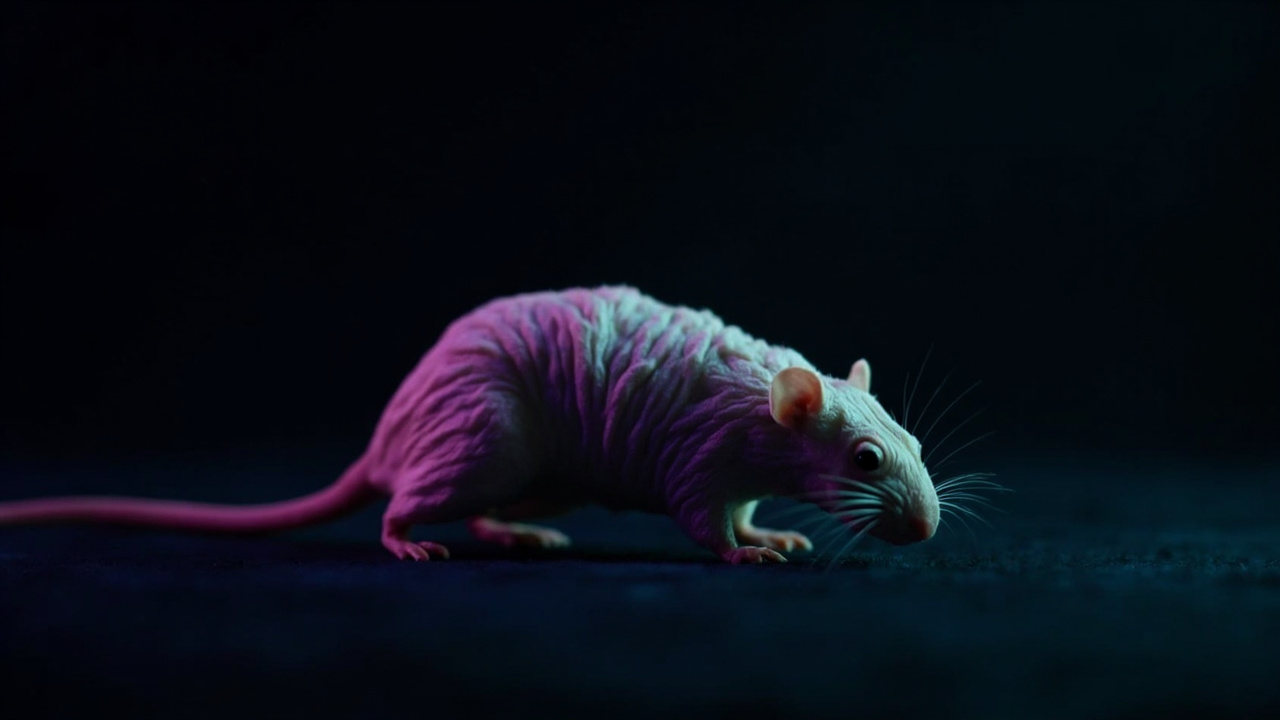
Let's be honest: naked mole rats are weird. They're wrinkly, practically hairless, and they live in underground colonies like tiny mammals on a mission. But here's the thing that's making biologists absolutely lose their minds — these unglamorous creatures barely age like normal animals do.
We're talking about rodents that can live 40+ years when their similar-sized cousins typically check out after 3 or 4. Even crazier? They seem to have a cheat code against cancer, inflammation, and basically everything that makes aging miserable. That's not just a biological curiosity — that's a genuine superpower, and scientists want to understand it.
The Gene That Started It All
Researchers at the University of Rochester became obsessed with one particular secret: a molecule called high molecular weight hyaluronic acid, or HMW-HA for short (try saying that three times fast). Naked mole rats absolutely pack this stuff into their bodies — about 10 times more than you or I have.
When the scientists started digging into what HMW-HA actually does, they realized it might be doing some seriously heavy lifting. This molecule appeared to be like a cellular bodyguard, protecting against tumors, tamping down inflammation, and generally helping these wrinkly guys stay young and vibrant.
The breakthrough question was simple but profound: What if we could give this same protection to another mammal?
Turning Mice Into Super-Rodents
This is where it gets exciting. The Rochester team didn't try anything crazy — they simply took the naked mole rat version of a gene called hyaluronan synthase 2 and engineered it into regular mice. This gene is basically the instruction manual for making HMW-HA.
All mammals have this gene, but the naked mole rat version is apparently the overachiever in the class. It produces way more of the protective molecule than the standard-issue mouse version.
The results?
The genetically modified mice started producing significantly more HMW-HA. More importantly, they showed measurable improvements across the board:
- Stronger resistance to both spontaneous tumors and chemically-induced cancers
- Less inflammation throughout their aging bodies
- Better gut health maintenance
- Overall improved quality of life as they got older
The Numbers (and Why They Matter)
Here's the part where I have to be honest with you: the mice lived about 4.4% longer than regular mice. That's... not a huge jump. If a normal mouse lives 3 years, we're talking about an extra 2-3 weeks.
But before you scroll away disappointed, consider this: the actual lifespan extension is almost beside the point. What matters is that scientists successfully proved you can take a longevity mechanism from one species and make it work in a completely different one.
Think about that for a second. For decades, aging researchers have been looking at long-lived animals and wondering, "Could that work for us?" This study is basically saying: yes, maybe it could.
Why This Isn't Just Mouse Science
The inflammation reduction is what really grabbed my attention here. Chronic inflammation is basically the underlying villain in pretty much every age-related disease we care about — from heart disease to cognitive decline to joint problems. If HMW-HA can genuinely reduce inflammation as mammals age, that's addressing one of the fundamental mechanisms of aging itself.
The researchers still aren't 100% sure how HMW-HA works its magic. It seems to influence the immune system in protective ways, but the exact mechanisms need more study. That's actually fine — sometimes in science, knowing something works comes before understanding exactly why.
The Road Ahead
Professor Vera Gorbunova, who led this research, dropped this lovely quote: "It took us 10 years from the discovery of HMW-HA in the naked mole rat to showing that HMW-HA improves health in mice. Our next goal is to transfer this benefit to humans."
Translation: we're potentially on the beginning of a long road, but the direction seems clear.
The broader implication here excites me more than any single gene ever should. Nature has already run 3.8 billion years of evolution experiments. Long-lived species have already figured out solutions to aging problems. Our job is basically to read nature's playbook and adapt those strategies for human biology.
This isn't going to be a quick fix. We're not talking about a pill you can take next year. But we're potentially entering an era where aging isn't viewed as an inevitable decline we have to accept — it's a collection of biological problems we can actually solve.
All thanks to a bunch of wrinkly underground rodents that were smart enough to figure it out first.